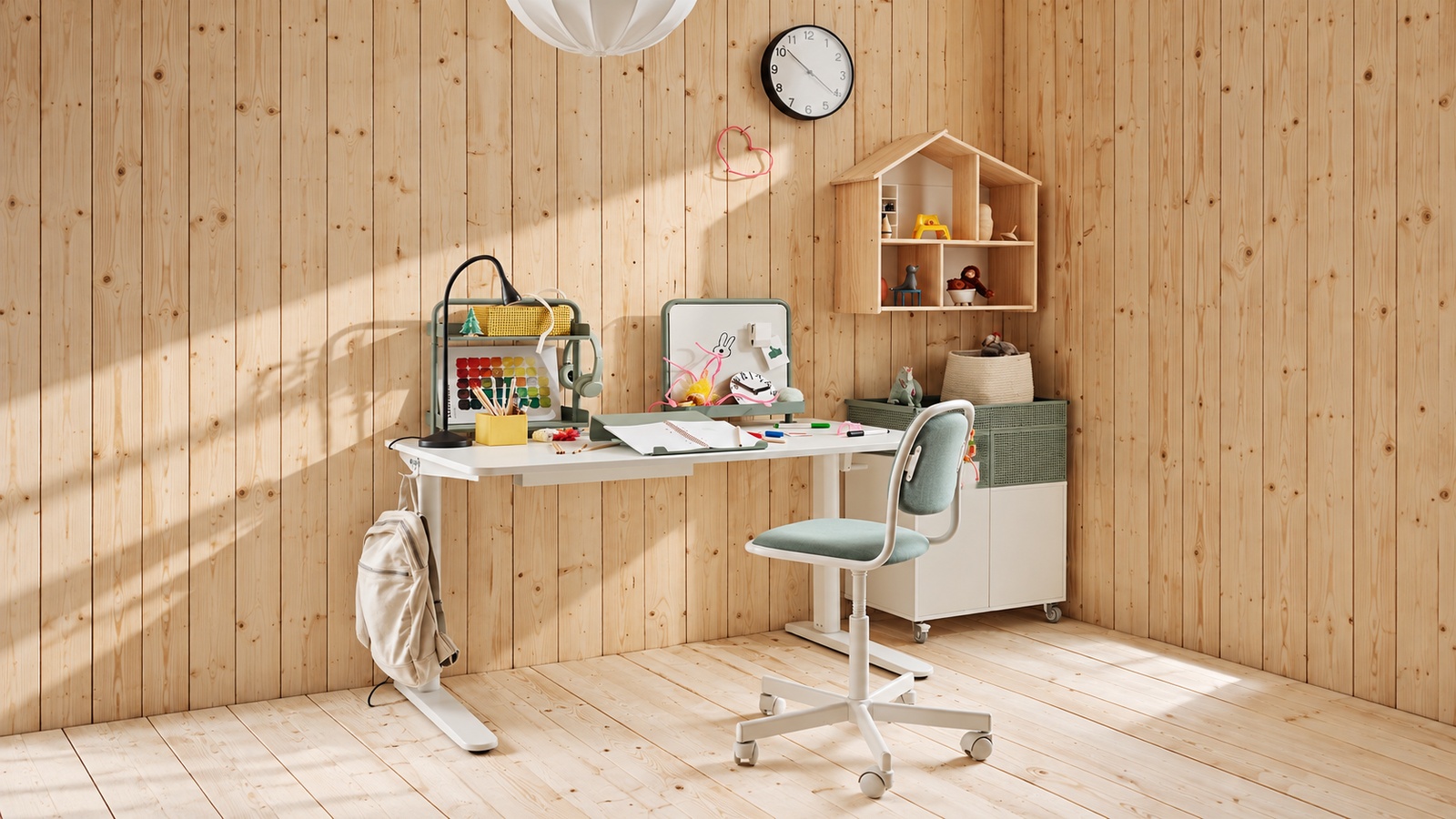
A green chair anchors the cream desktop
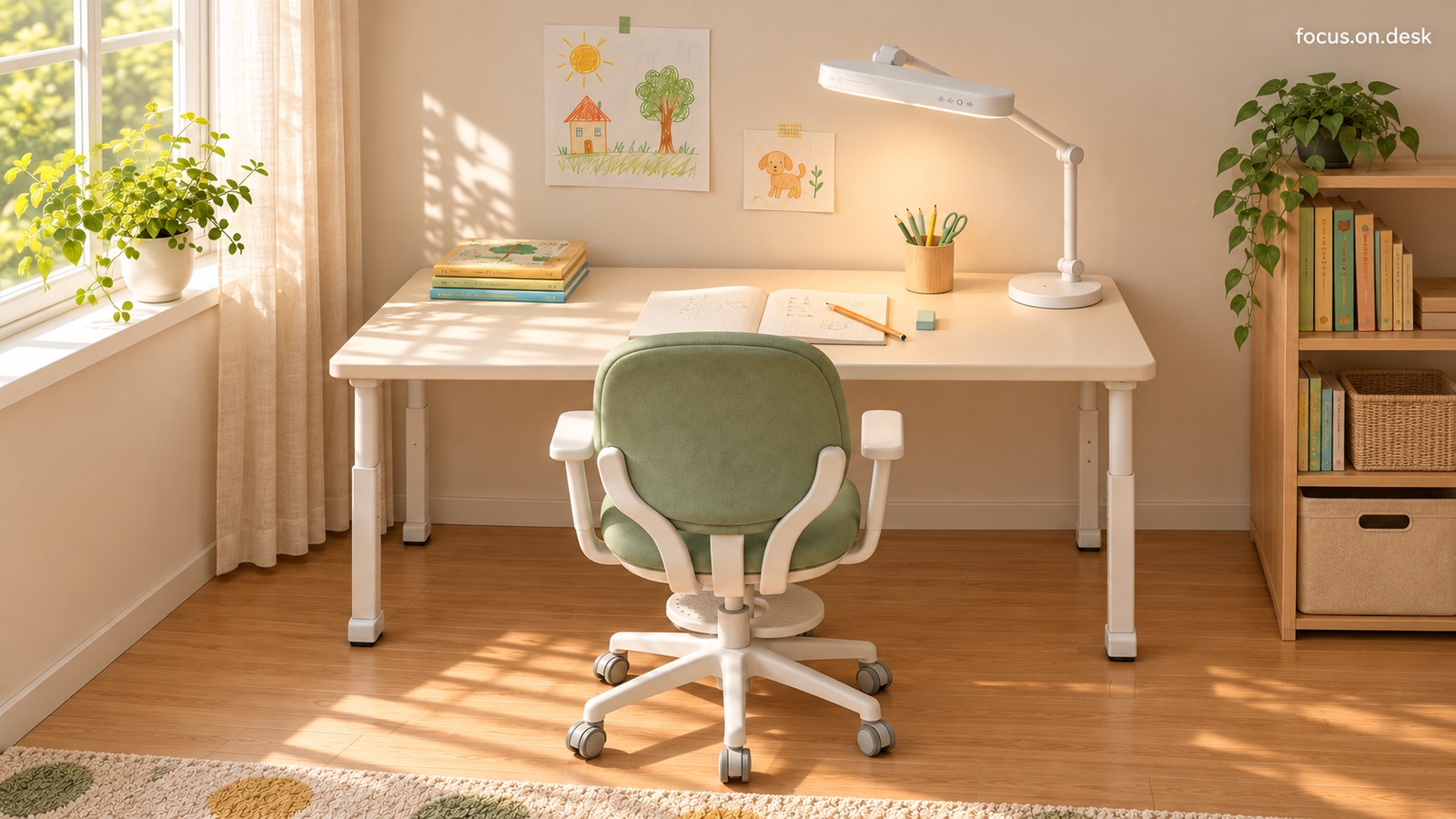
The desk, wall, and curtains are all light, but each has a slightly different shade. In front of them, the sage green backrest and seat create broad areas of color. The pale frame and legs connect to the desk's palette, while green motifs in the floor rug repeat the chair's color farther away.
A green study does not require painting the whole room green. Concentrate color in the chair and repeat it sparingly in wall drawings or small stationery items to retain the bright desk's character. Compare colors where you can see your own walls, curtains, and floor together, rather than relying on a single image on screen.
Reserve the center for an open notebook first
The overhead photograph shows a notebook in the middle of the desktop, with a pencil and eraser close by. Stacked books sit at the back left, while the pencil cup and task lamp are grouped at the back right. Even without knowing the furniture's dimensions, the open notebook makes the area's current purpose clear.
Before filling storage boxes, open the textbooks and notebooks you normally use together. Leave enough room to turn pages and rotate paper, then decide where stationery belongs. Judge the space by your most spread-out activity rather than assuming that the single notebook pictured represents enough room.
Books on the left, writing tools on the right
In the close-up, pencils and green scissors share one cup. Spare books and reading material sit opposite, with more books and boxes on a separate bookcase to the right. Frequently used tools and stored belongings do not all pile up in the middle of the desktop.
Adapt the sides to your dominant hand and habits instead of copying the photograph exactly. Check whether reaching for a pencil takes you across an open page, or whether taking out one book requires moving other objects. A place that is easy to reach should also be easy to put things back into if you want the arrangement to last.
Window light and a white task lamp create two lighting conditions
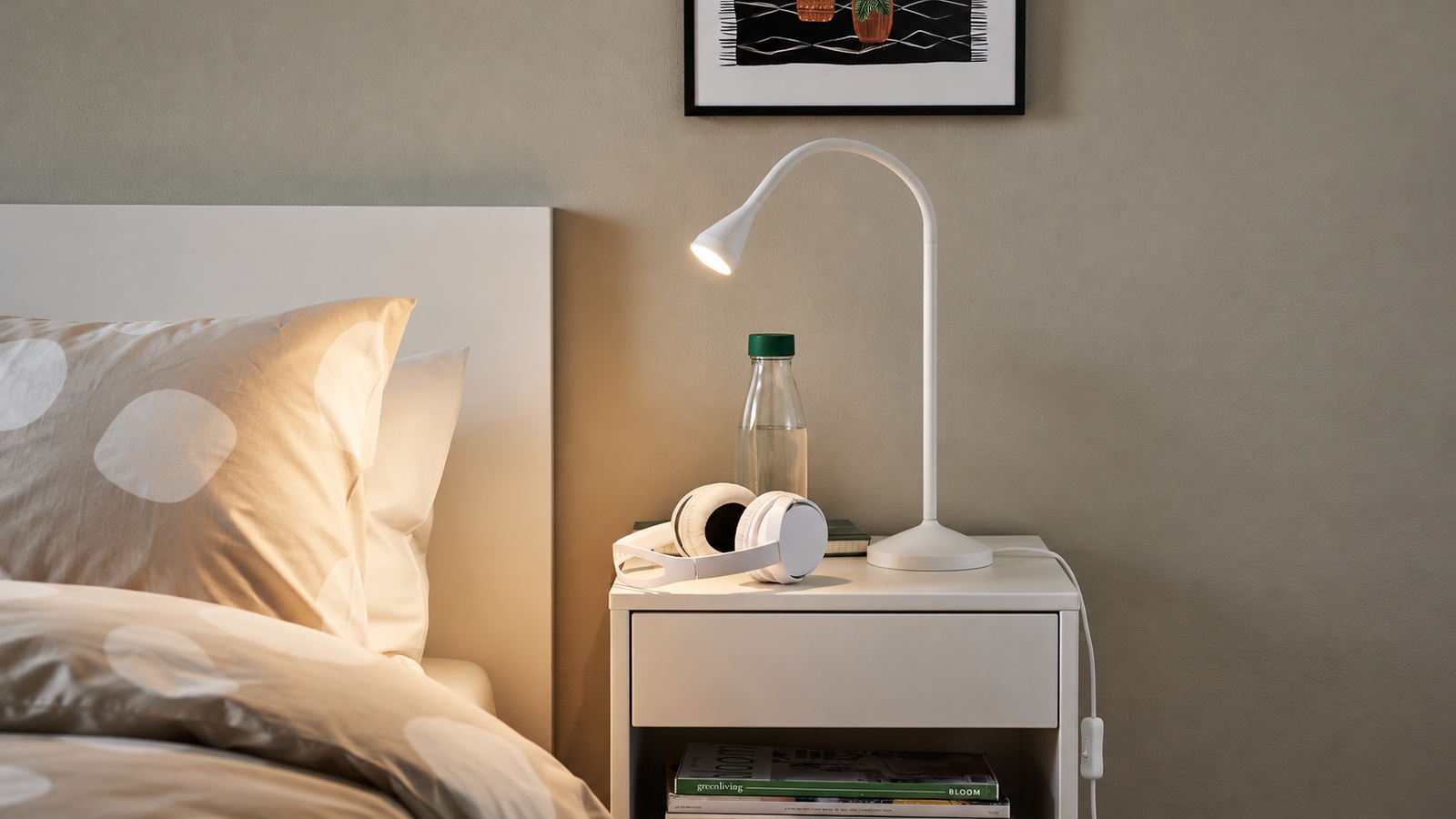
Light from the left-hand window leaves leaf and window-frame shadows on the desktop and floor. On the right stands a white task lamp with a long horizontal head. This bright daytime photograph cannot establish evening lighting or the lamp's brightness, but the notebook's position between the window and lamp offers a useful reference.
Open your paper and switch on the lamp at the time you normally study. Check whether your hand casts a strong shadow over the writing or whether the light source shines directly into your eyes. Assess the warmth of the photographed sunlight separately from the conditions that make text comfortable to read.
Small drawings and plants add personal touches
Small drawings of trees, houses, and animals replace large wall decorations. A windowsill plant and trailing leaves atop the bookcase bring the drawings' greens into the room. Because decorations do not cover the desk's whole frontage, there is still space for notebooks and writing tools.
When decorating with a child, choose one or two drawings and a background area where they can be swapped easily. As favorites accumulate, create a separate storage and rotation spot instead of piling them onto the desktop. Separating the display of drawings from today's study materials preserves both personality and usable space.
Product and styling notes
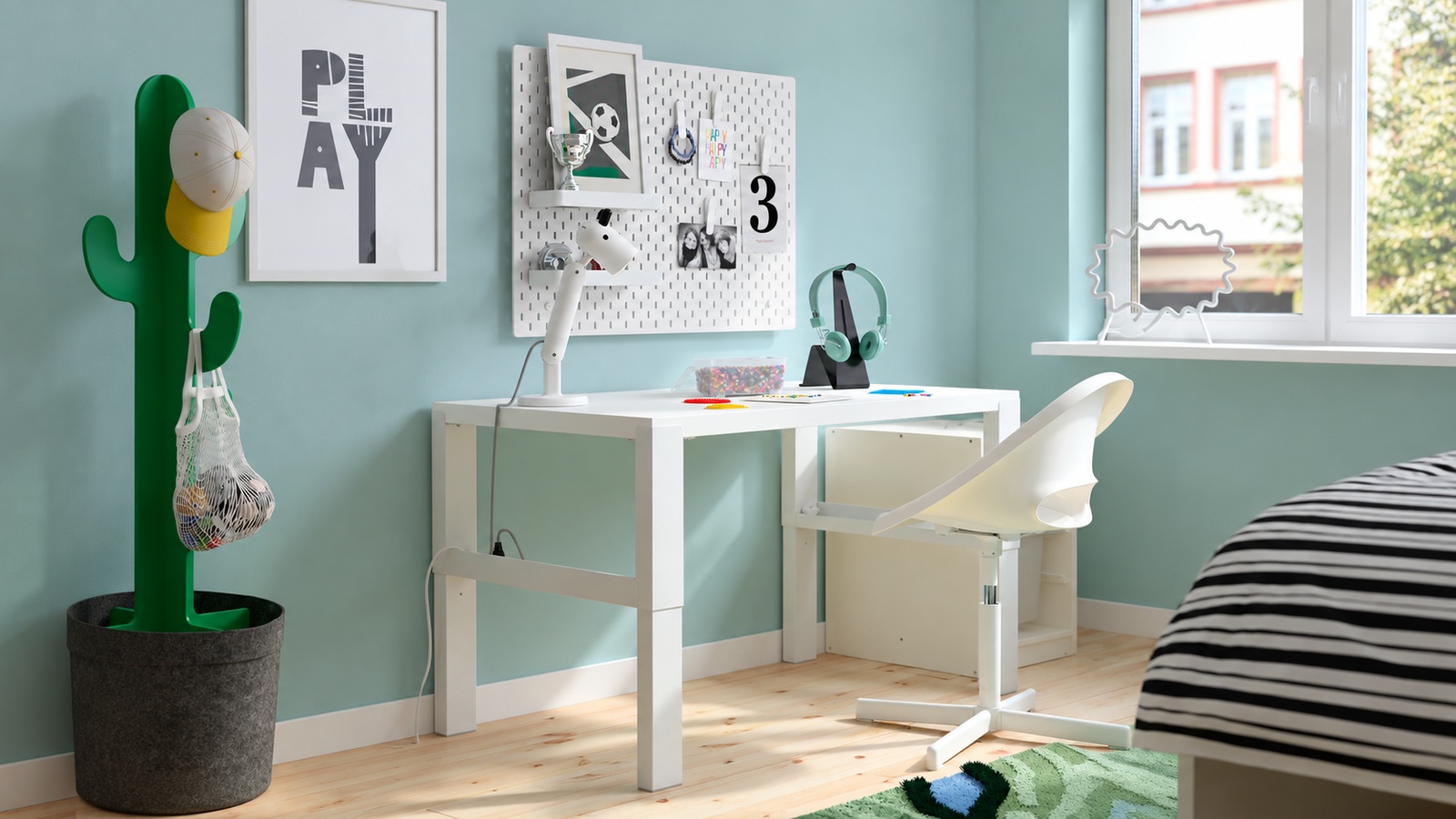
The three + product tags are shopping alternatives. PÅHL has side connecting rails, ÖRFJÄLL has neither armrests nor a footrest, and NÄVLINGE has a small round shade. These are not the same models as those pictured.
Explore this space further