DESK STORY · Work from Home
A Window-Side Walnut Desk with Plants
Wood & Natural · Work from Home desk setup

URITRIP
October 10, 2026 · 3 views
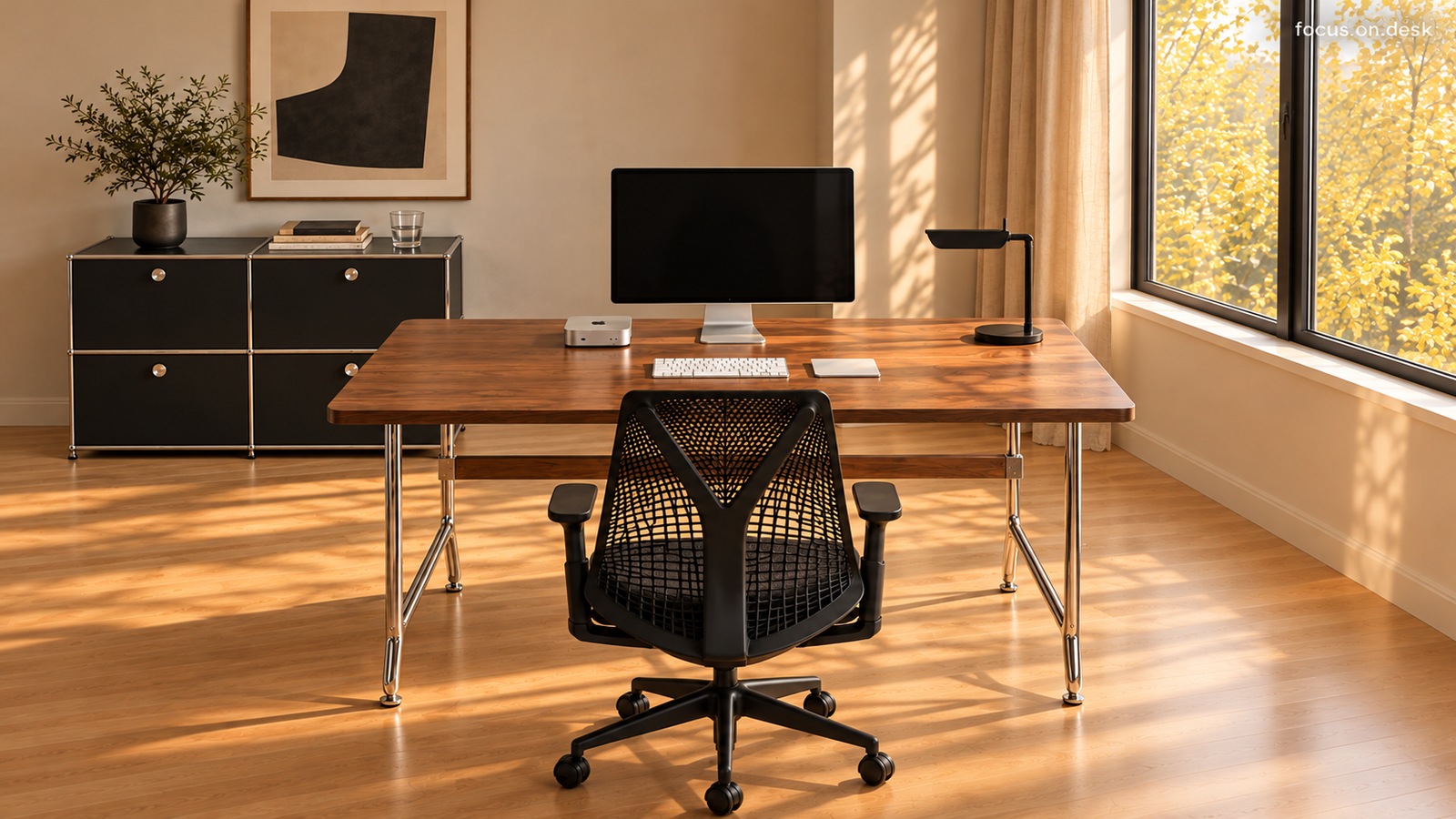
Want a warmer desk without adding many objects? In this window-side studio, a walnut-toned top, black equipment, and green plants make color and open space stand out before furniture. Explore both the whole room and its closer views.
Make the walnut-toned top the center of the room
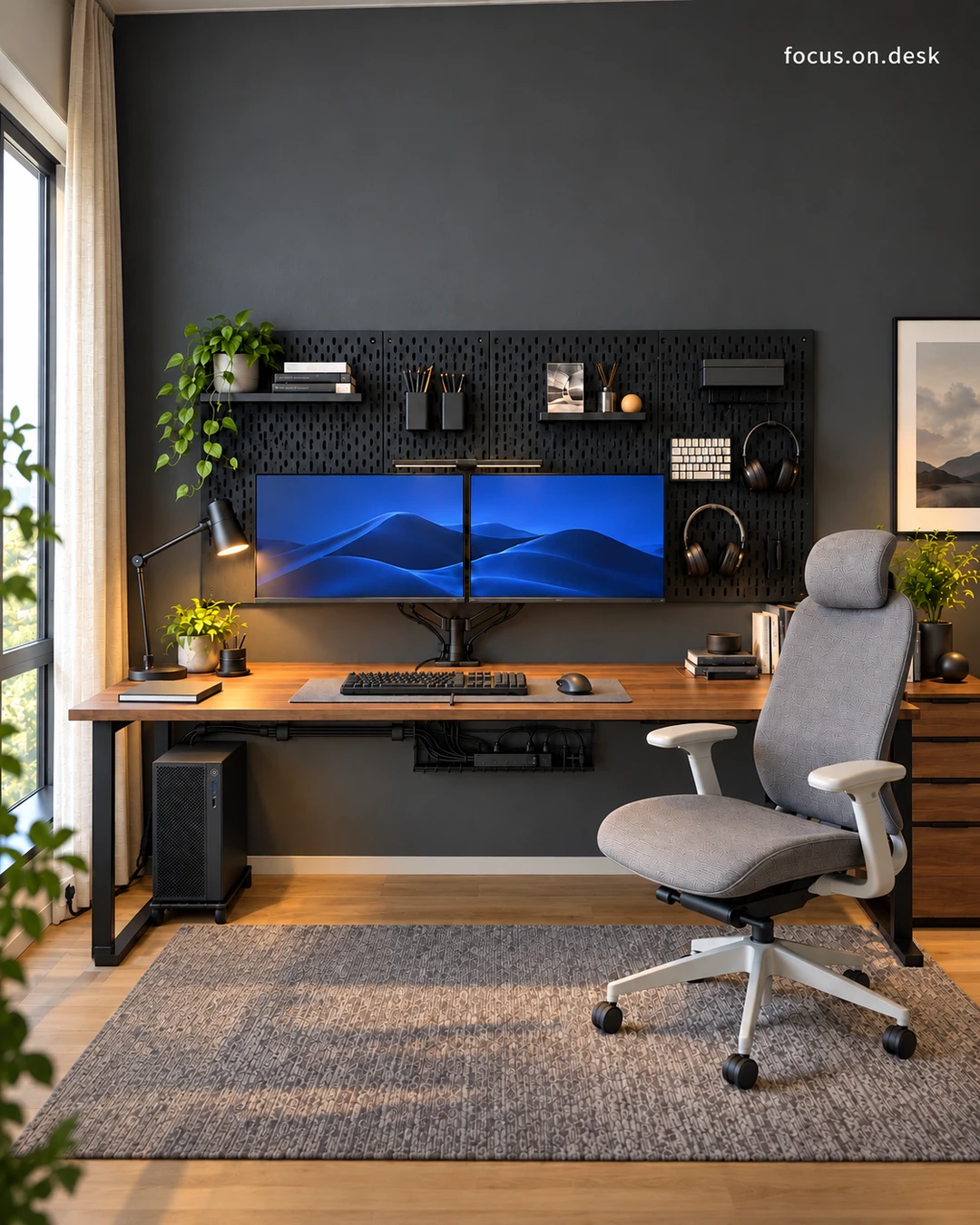
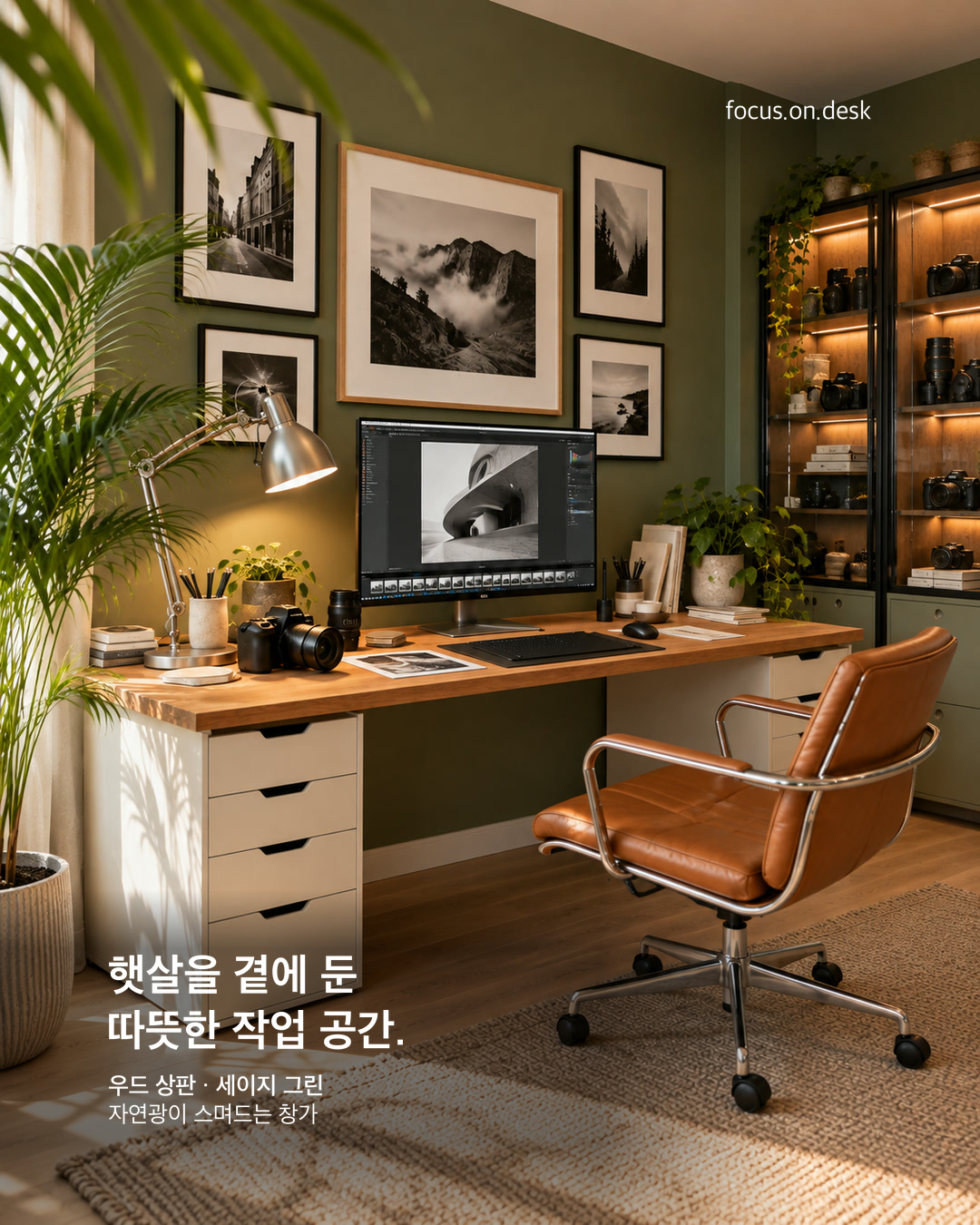
The desk forms a broad wood-colored surface. Black screens and input devices repeat a color that defines their outlines. The wood's warmth and the equipment's quiet presence remain together.
Count the colors already visible on your desktop before adding decoration. If wood and black are enough, keep storage boxes and mats simple. Finding connections among existing belongings is an accessible place to start.
Arrange window-side plants at different heights
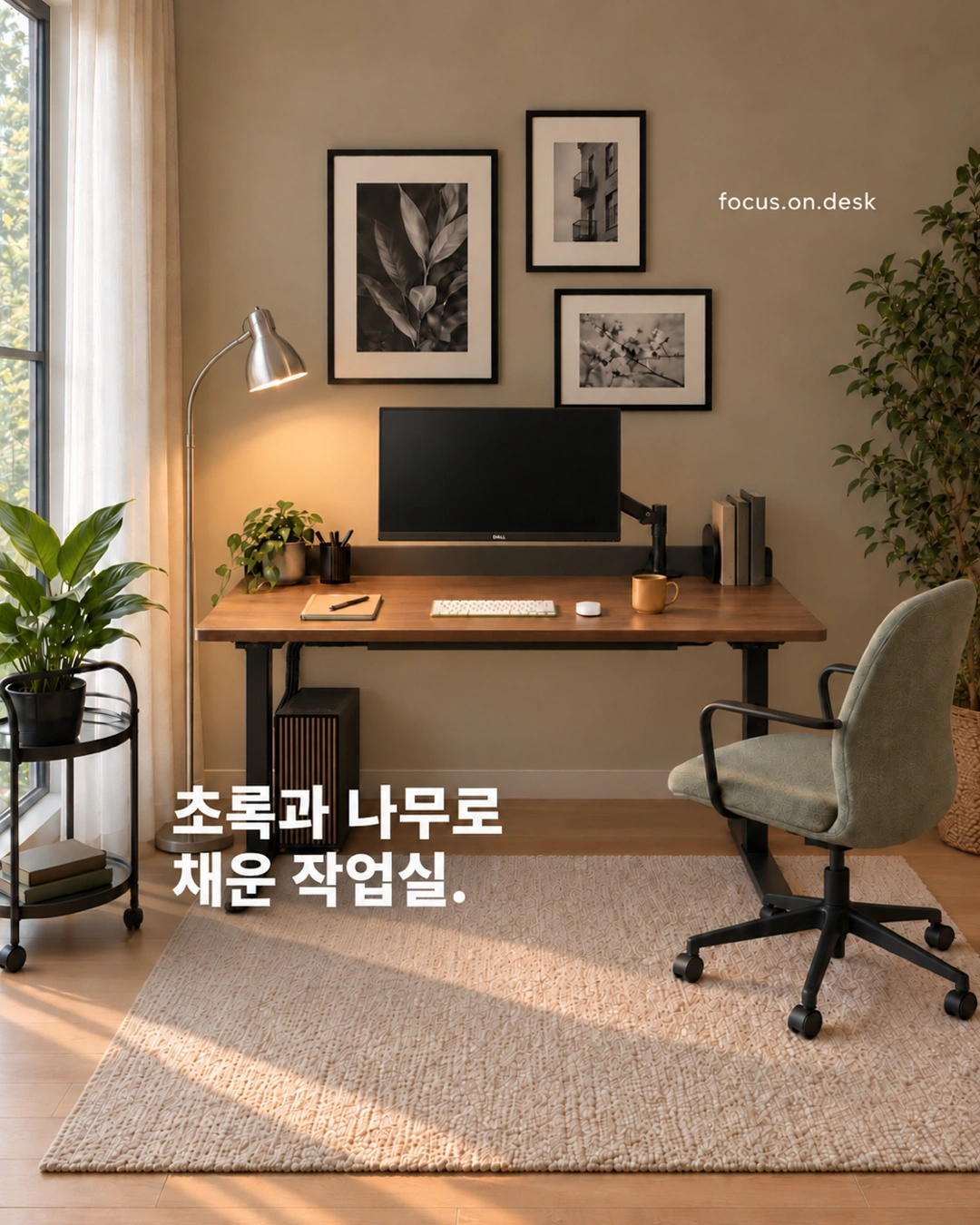
Plants on and around the desk show greenery at several heights. Their organic outlines contrast with the desk's straight lines as window light passes between leaves and furniture. Green is not concentrated only around the equipment.
Choose real plant positions by their light and care requirements rather than the photograph. Check whether watering requires moving devices and whether leaves obstruct the window. Leave room for maintenance between plant saucers and working tools.
Sage green and cream soften the dark furniture
A gray-green chair, light curtains, and cream rug surround the walnut. Lighter surroundings keep its grain distinct. Differences in brightness, more than the number of colors, divide this space.
When adding a dark desk to a small room, consider it with the walls, curtains, and floor. Brightening just one broad surrounding surface can change how the furniture appears.
Leave room for notebooks alongside input devices
The desktop includes both a screen-working area and a place to open paper. It appears to allow for two activities from the outset, instead of requiring decorations to be cleared whenever work changes. Notice the open area where hands move.
Open your usual notebook and move the mouse on your own desk. If they collide, remove an accessory or shift the mat. The tools' actual range of use comes before attractive alignment from the front.
Read wide and detailed photographs differently
Use the wide view to study colors across walls and floor, the overhead view for spaces between objects, and close-ups for texture and the working area. No single image needs to answer every layout question.
Borrow one element at a time: plant heights, input-device colors, or notebook space. Treat the images as references for observing a room rather than as a source of desk dimensions.
More desk stories to explore
Products in this photo 0
You can also tap + on the photo to see them