DESK TOUR
A Soft Pastel Desk Tour: A Place for Art and Stationery
A lavender device and mint headphones sit between a pink wall and cream desk. Explore a space where drawings gather on a corkboard, and tape and pens find a home in a small organizer.
- Layout
- Desk between window and bed · wall board and shelf · low storage beside the desk
- Palette and texture
- Pink · lavender · mint · cream · cork and fabric textures
- Key elements
- Display device · headphones · three-tier stationery organizer · artwork board · notebook
- About the images
- The supplied images and generated alternate views were adapted into 16:9 landscape compositions. Furniture and device models, measurements and room size have not been verified.
Six views explore the larger palette, desktop zones, wall display and storage for returning tools. This is a concept tour of arrangements in supplied images, rather than a record of an actual user’s routine.
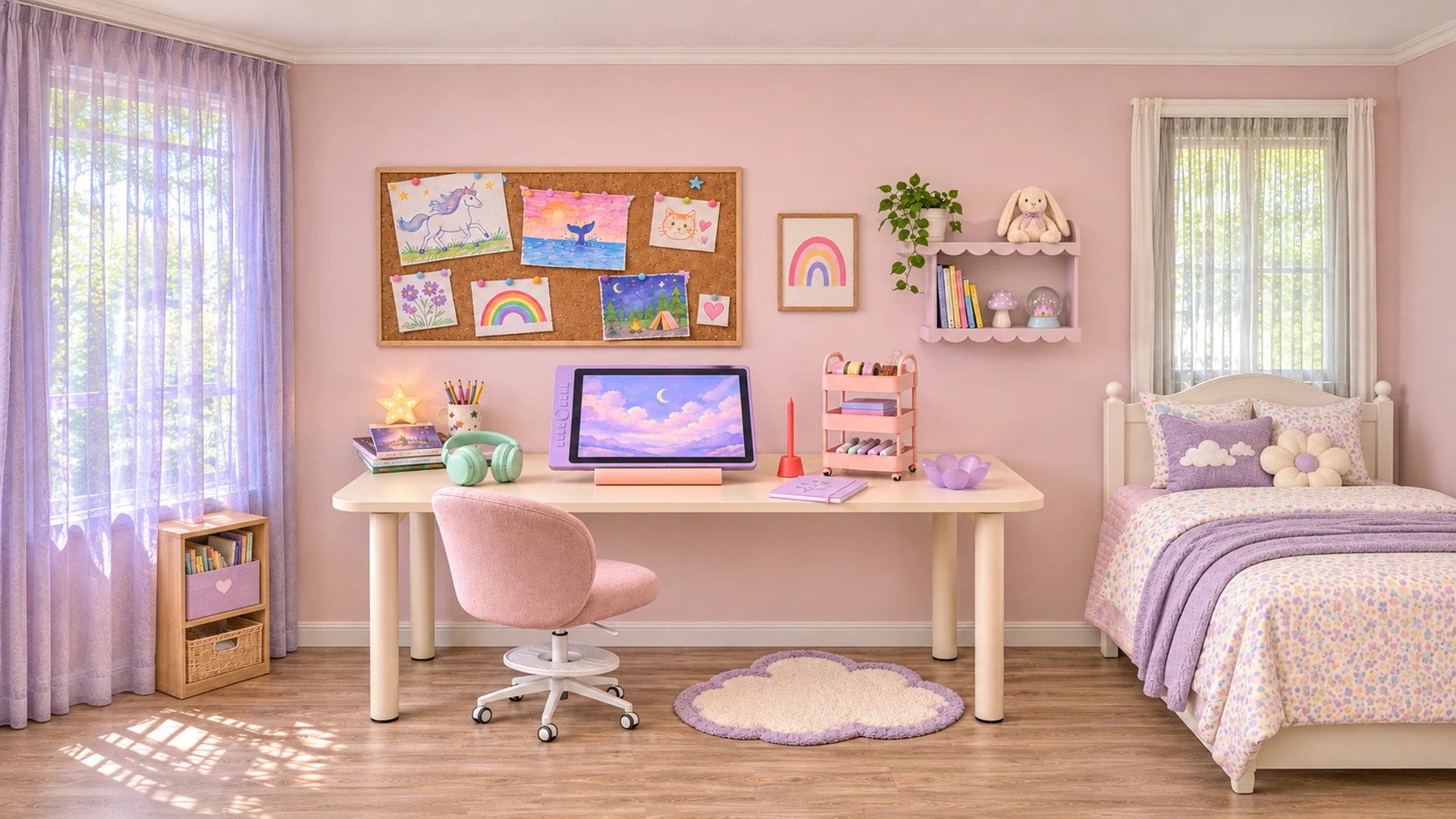
Pink walls and a cream desk give the colors a backdrop
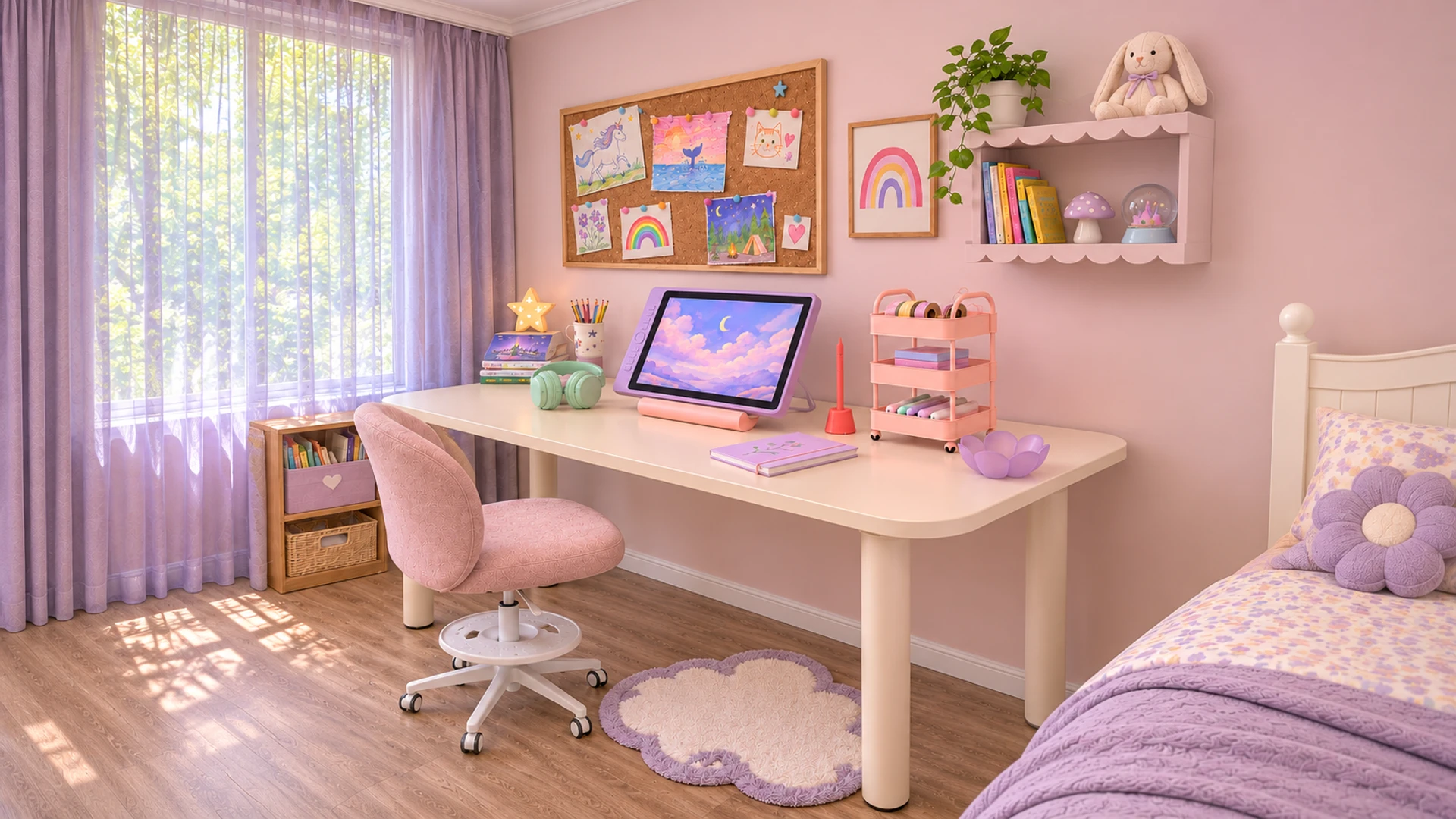
From the front, the broad pink wall and light desktop read as a shared backdrop. Rounded corners and thick cylindrical legs keep the desk’s shape simple. Cream shows between the differently colored objects, allowing each outline to remain visible.
Lavender repeats in the left curtain, display body, right-hand bedding and rug border. Pink connects the wall, chair and small stationery organizer at different scales. Mint headphones offer a smaller touch from another color family.
Even within a pastel palette, larger and smaller areas carry different weights. Rather than matching every pictured color, first look at your own room’s largest wall and furniture surfaces. If you already have a light desk, keep that backdrop and test favorite shades through a notebook or small container.
The cloud rug and small floral pattern on the bedding add shape, too. A large curve and a finer motif appear in different places. The size of a form and where it repeats contribute to the room as much as the color names.
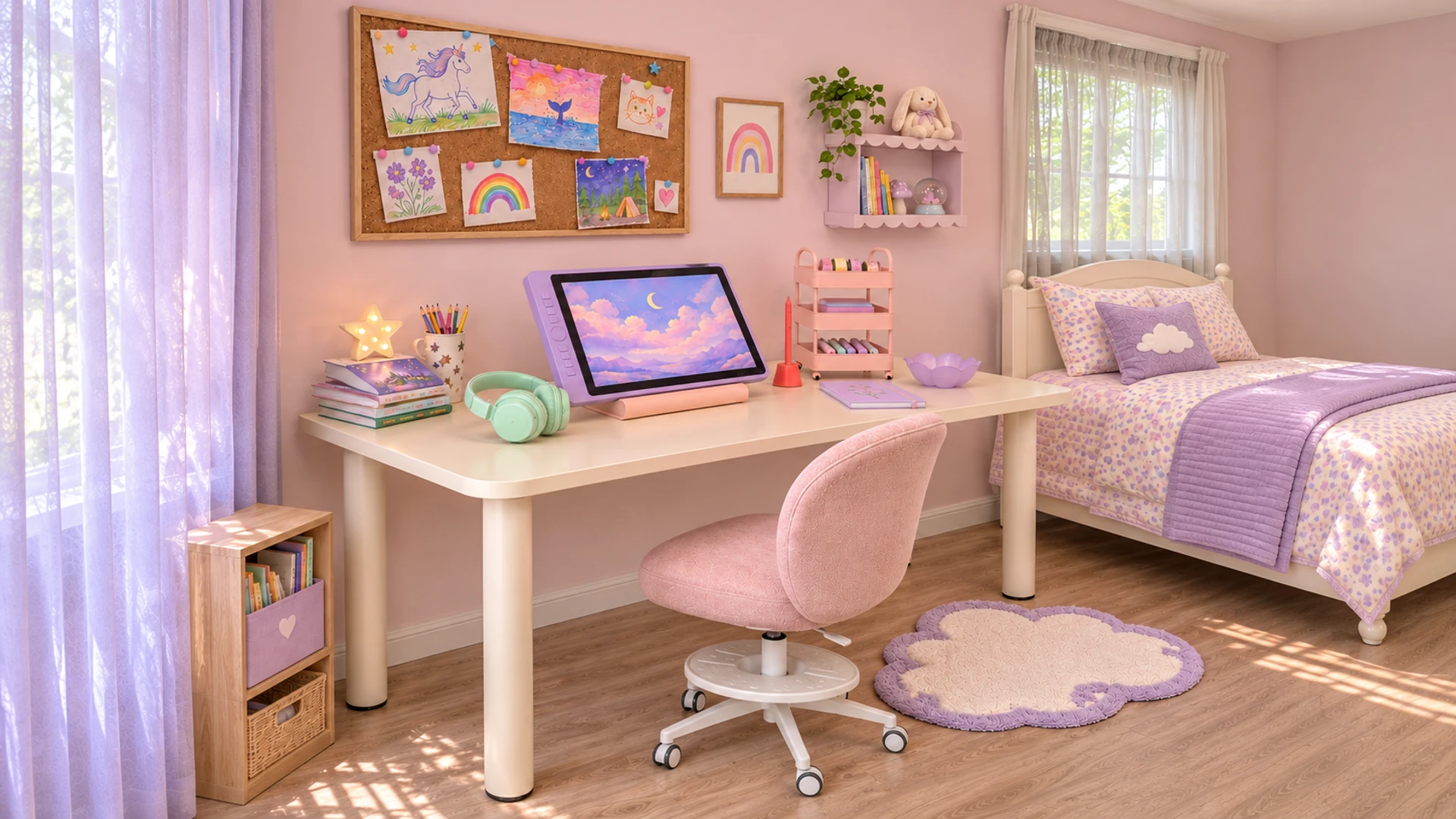
Room for the chair between the window and bed
The left oblique view brings together low storage by the curtain, the desk and the bed on the right. The chair is pulled away from the desk, with a small cloud rug beside it. Thick cream desk legs and the chair’s white wheeled base connect through light tones.
The seat and back appear softly upholstered in pink, while the display and organizer present smoother surfaces. Different finishes keep related pinks from merging into one flat area. It is a useful comparison between a larger fabric surface and smaller hard objects.
In a real room, try moving between bed and window-side storage with the chair pulled out. Fitting the desk is only part of the plan: sitting down, standing up and taking out a book should also flow. Check the rug separately when pulling the chair toward you and tucking it in.
Image heights and perspective cannot establish whether furniture fits your body. Try resting your arms and moving your feet with your own desk and chair. Once those larger pieces work, the organizer and headphones can shift around them.
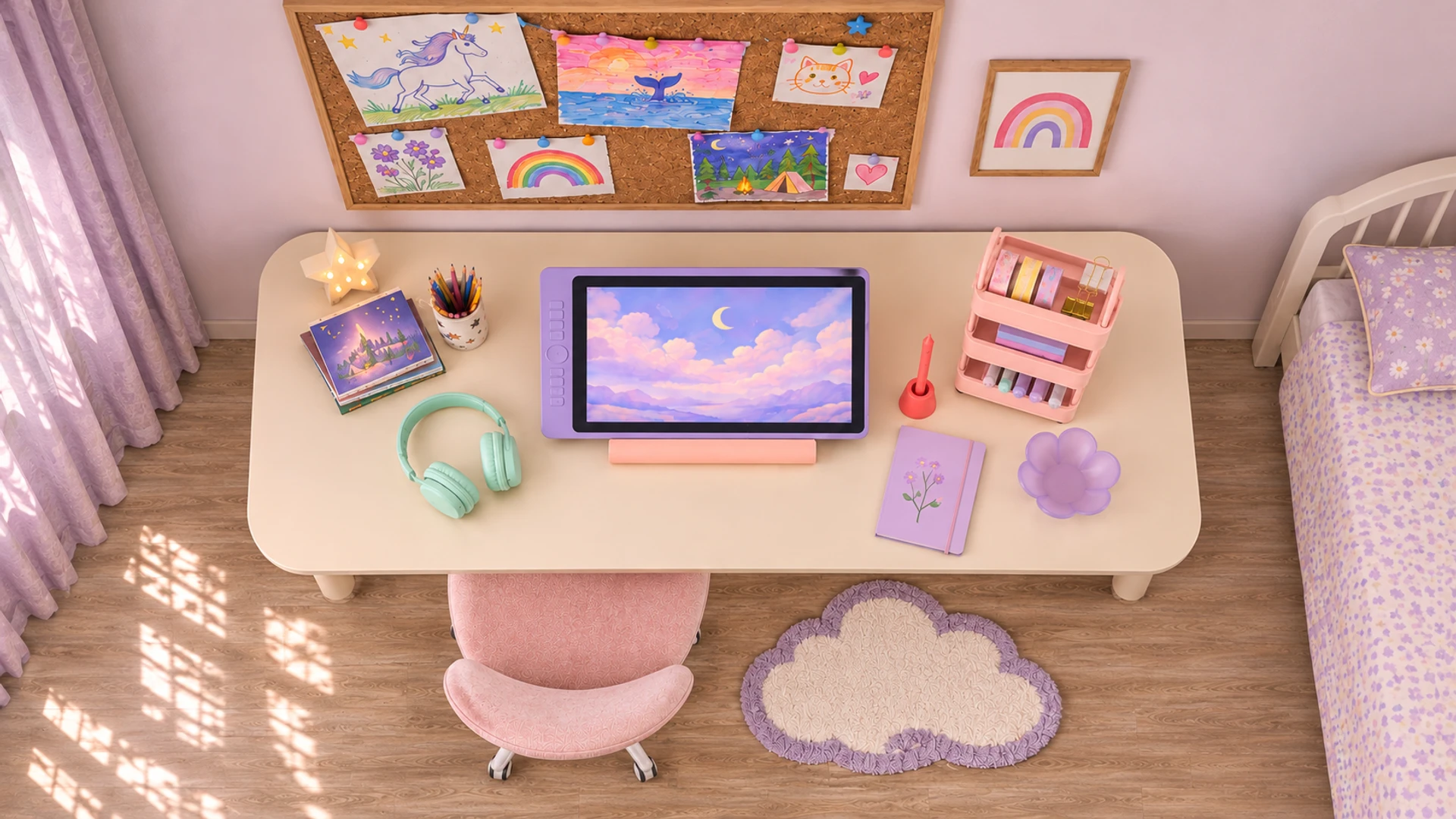
An overhead view of two places: screen and paper
From above, the display sits toward the middle back, with headphones at the front left. A notebook and flower bowl sit on the right, with a three-tier organizer and upright pen-shaped tool behind. Books, a star light and pencil cup occupy the back left.
Despite the number of objects, the area in front of the screen stays relatively open. It suggests swapping what is out for screen use and drawing on paper. This does not establish an actual routine, but the distinction between a hands-on surface and a device area is visible.
The notebook is closed, so the pictured gap cannot establish room for a large drawing sheet. Put your largest paper on your own desk and move your arms over it. Also test where the headphones and bowl can go so the working surface becomes available immediately.
The bowl is an accent through shape alone, but choosing its contents can give it a storage role. It might hold one small tool in use, or be cleared when an activity ends. Decide what one container does before adding more empty ones.
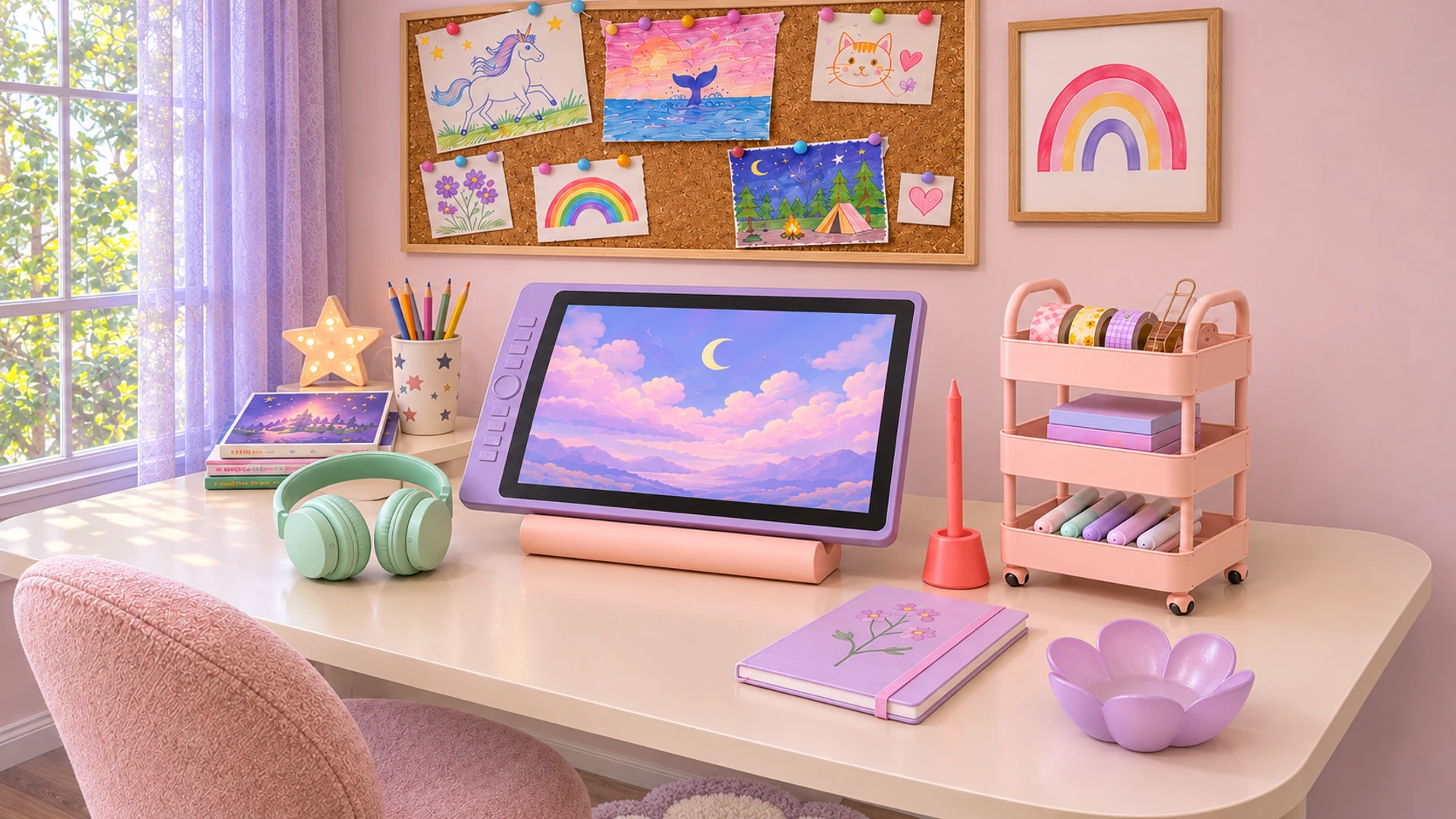
A small stationery organizer beside a lavender screen
Up close, buttons and a dial appear on the device’s left, with a support behind. It resembles a pen display, although its model and functions have not been verified. Pink clouds and a crescent moon connect visually with the drawings and notebook colors.
The pink organizer is a miniature three-tier unit on the desktop, rather than a large floor cart. Tape and clips sit at the top, flat boxes in the middle and pens below. Different stationery shapes have separate levels instead of sharing a single pot.
When filling your own storage, start with where frequently used tools are easy to grasp, rather than a pleasing color order. Do you have to lift a box before taking out a pen? Is returning tape awkward? Compare the visual order with the sequence of your hands.
Leave a notebook in front of the device if it is what starts the activity, and move spare supplies to nearby storage. Separating today’s tools from stored extras gives each tier a clearer purpose. Lay out your own stationery before looking for the same organizer.
Headphones and a flower bowl reveal different surfaces
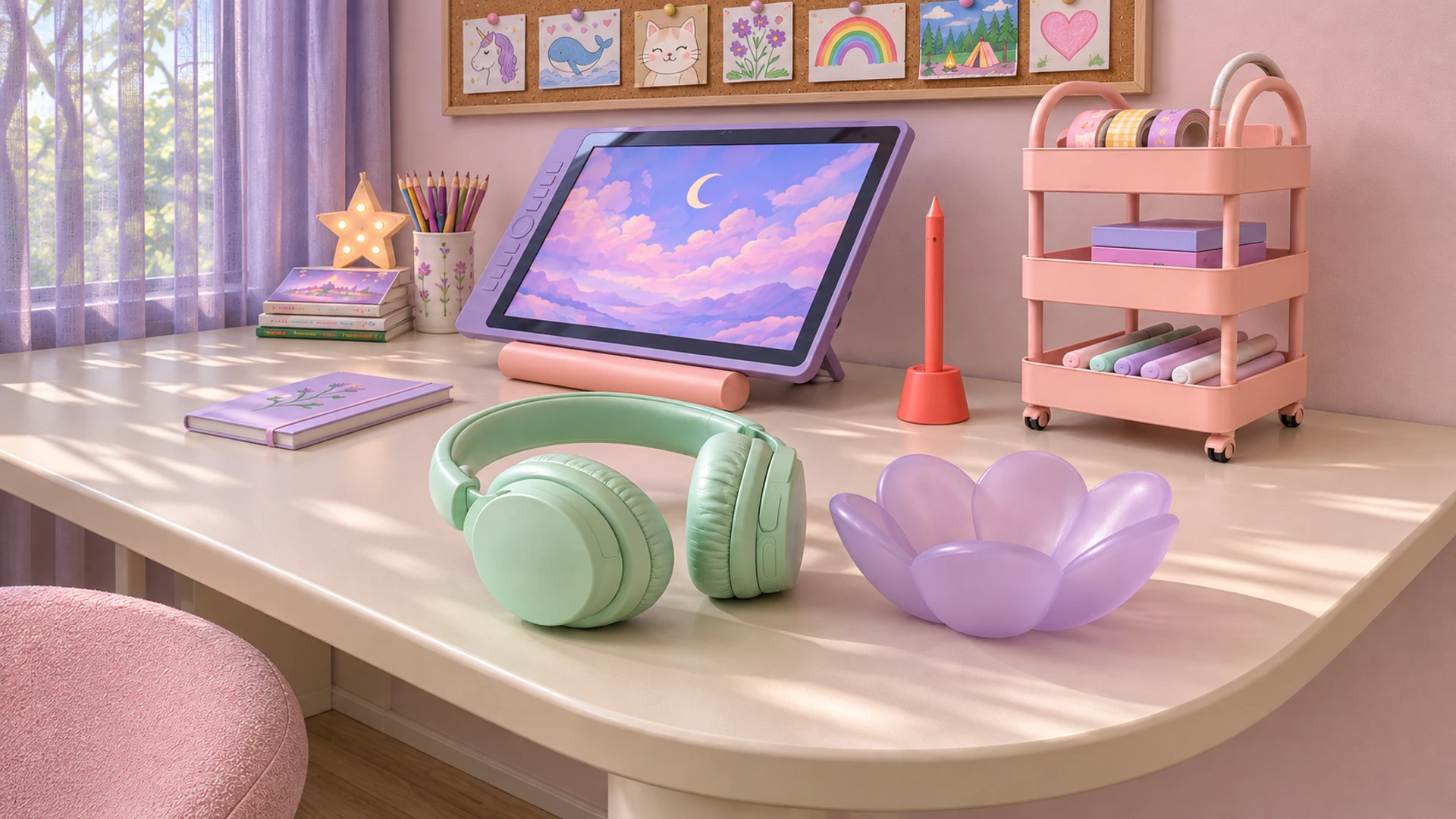
The detail view enlarges the mint headphone cushions and lilac bowl’s petals. Behind them, the organizer adds a smoother pink surface, while the desk remains a broad cream backdrop. Rounded outlines and contrasting surfaces stand out alongside the palette.
Chair fabric, cork grain and thin curtains offer further textures. The exact fibers and surface materials cannot be established from the image, but varying texture within soft colors is an idea to explore. Compare your existing notebooks, small containers and fabric items first.
Flowers recur at different scales in the notebook illustration, bowl and bedding pattern. A form can repeat in different proportions without using an identical motif throughout. Leave a plain surface beside an intricate outline, such as the petal bowl, so its shape remains clear.
Headphones are a color accent, but also an object that gets used and put down again. Their resting place after use can change how much front space remains. You can start planning around where one existing item returns before adding another object in a matching color.
A board for drawings and a shelf for things to look at
From the right, the corkboard, rainbow print and scalloped wall shelf follow across the wall. Unicorn, whale, flower, rainbow, camping and heart drawings gather in different sizes. One surrounding frame connects them without requiring aligned paper edges.
The shelf holds books, a mushroom ornament and a small globe-shaped object, with a rabbit toy and plant above. Things to look at have moved upward instead of all sitting on the desktop. Frequently used stationery and display items can occupy different surfaces.
A place for finished art makes it possible to clear the next drawing surface. At home, decide where an older picture goes when a new one joins the board. A nearby file or paper box can make the changeover more straightforward.
Fixings and display heights need to suit your actual wall and the person using it. Changing artwork and reaching for small tools need not happen at the same height. Distinguishing frequent movements from occasional viewing can shape the wall arrangement, too.
How would you make room for favorite colors and drawings?
The room is about more than collecting pastel objects. Its character comes from repeated colors against a light backdrop, a wall for finished art, a home for tools and a surface ready for the next sheet.
Begin at home by laying out today’s paper and tools. Try where the finished drawing will go, and return the headphones and pens after use. A pretty organizer can wait until its role and required size become clear within that routine.
Work through color, paper space, changing artwork and stationery storage in the pastel study space guide. Explore the overall mood and portrait views in the pastel art desk gallery.
TAKEAWAY
Ideas to take to your own desk
Separate repeating colors from small accents
Look at the larger wall and desk surfaces, then choose where to repeat lavender and add a little mint.
Organize stationery by taking it out and putting it back
Test each level by the order in which your hands reach, as well as by the color arrangement.
Plan the next home for displayed artwork
Keep a file or box nearby for older drawings when you put up a new one.
- #Soft pastels
- #Pink and lavender
- #Art space
- #Stationery storage