DESK TOUR
A Midcentury Color Desk Tour: Room for Records and Books
A dark wood-tone desk stands against a wall divided into olive and cream, with an orange lamp and chair carrying the color across the room. Explore how choosing records and opening books can share one desktop.
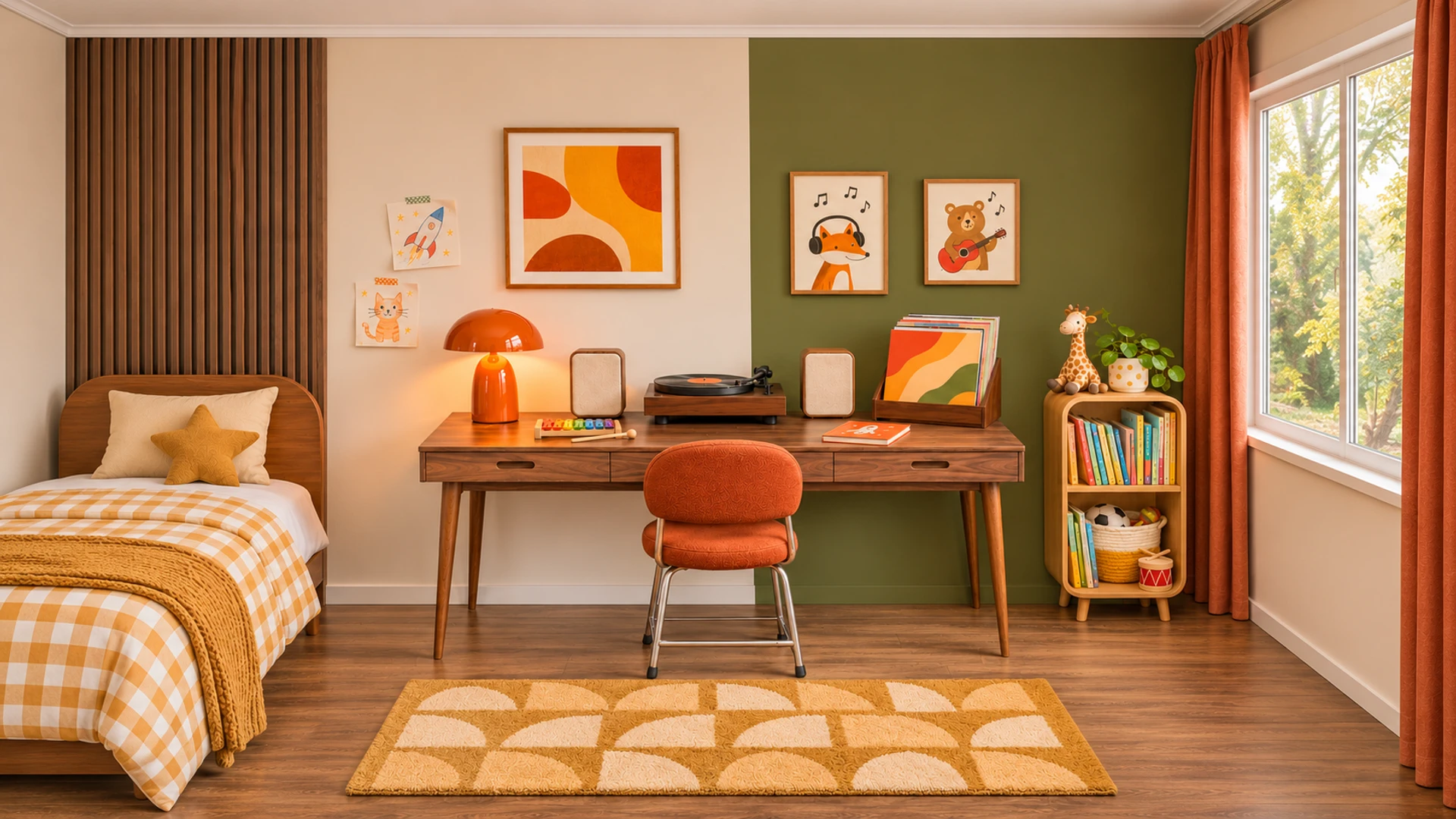
- Layout
- Desk between bed and window · audio equipment at the back · bookcase beside it
- Palette and texture
- Olive · orange · cream · dark wood tones · mustard
- Key elements
- Turntable and speakers · record rack · small instrument · books and basket
- About the images
- The supplied images and generated alternate views were adapted into 16:9 landscape compositions. Furniture and equipment models, measurements, wood species and room size have not been verified.
This concept tour looks at the palette, forms and placement visible in the supplied images. Six views move from the larger backdrop to close-up surfaces and the storage beside the desk.
A long wood-tone desk connects cream and olive
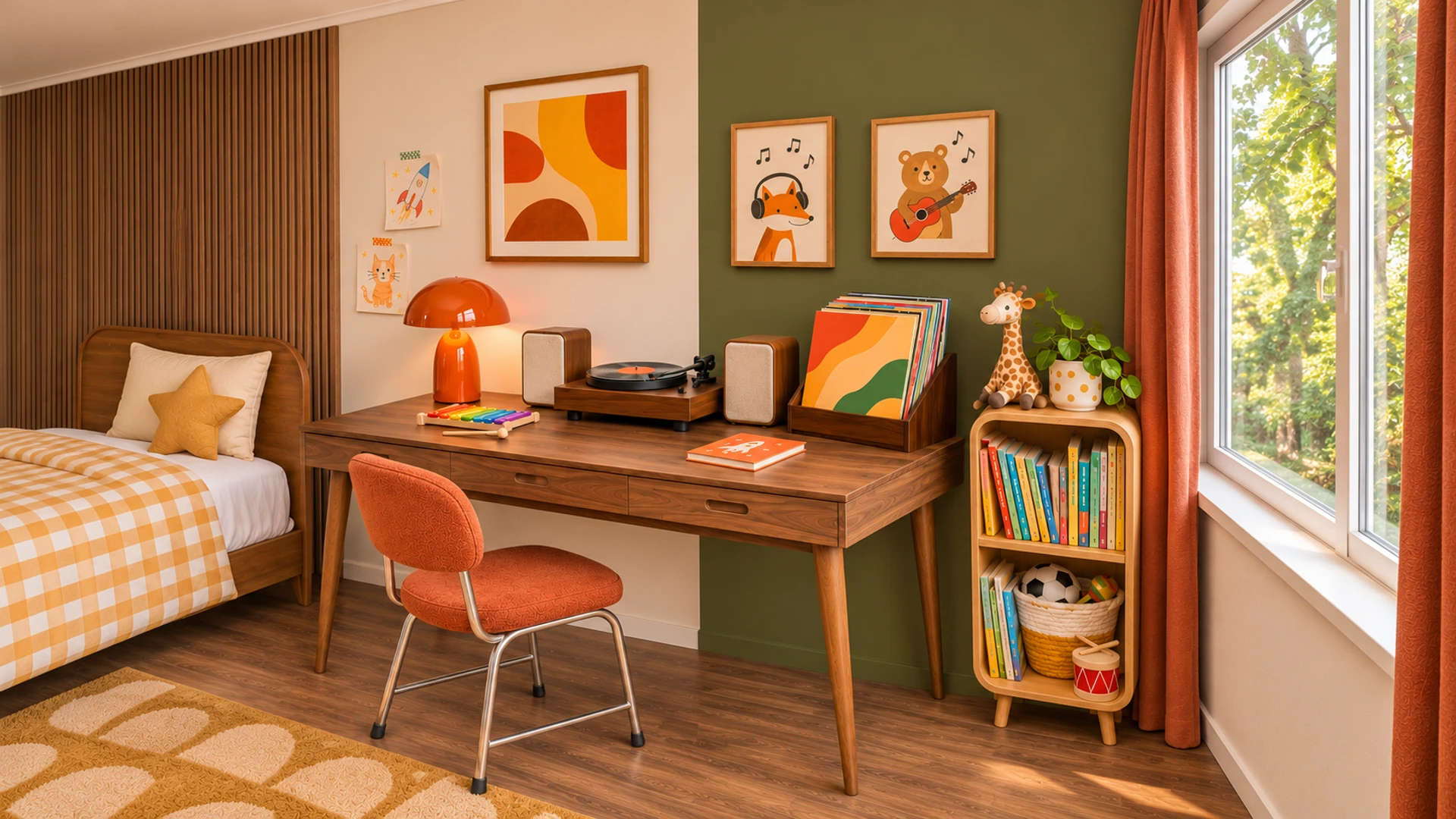
From the front, the divided wall and long desk establish the room’s structure. Cream on the left sets off the lamp and large abstract print, while olive on the right gives the music illustrations and record sleeve a backdrop. The desk crosses the division as one continuous surface.
The equipment and artwork are not perfectly symmetrical. An orange lamp and small drawings gather on the left, while the record rack and bookcase group on the right. Different heights stay connected through repeated wood tones and orange.
The checked bedding and rug use yellows lighter than the wall. Large half-circle motifs run across the rug in front of the desk, and the central orange chair links the darker top with the brighter floor area. The palette leaves differences in lightness and scale rather than matching every shade.
At home, look at your existing desk and bedding before painting a two-tone wall. You might keep one broad background and repeat smaller accents instead. Rather than importing every color from the scene, choose which existing surface will anchor your version.
Between bed and window, leave room for the chair to move
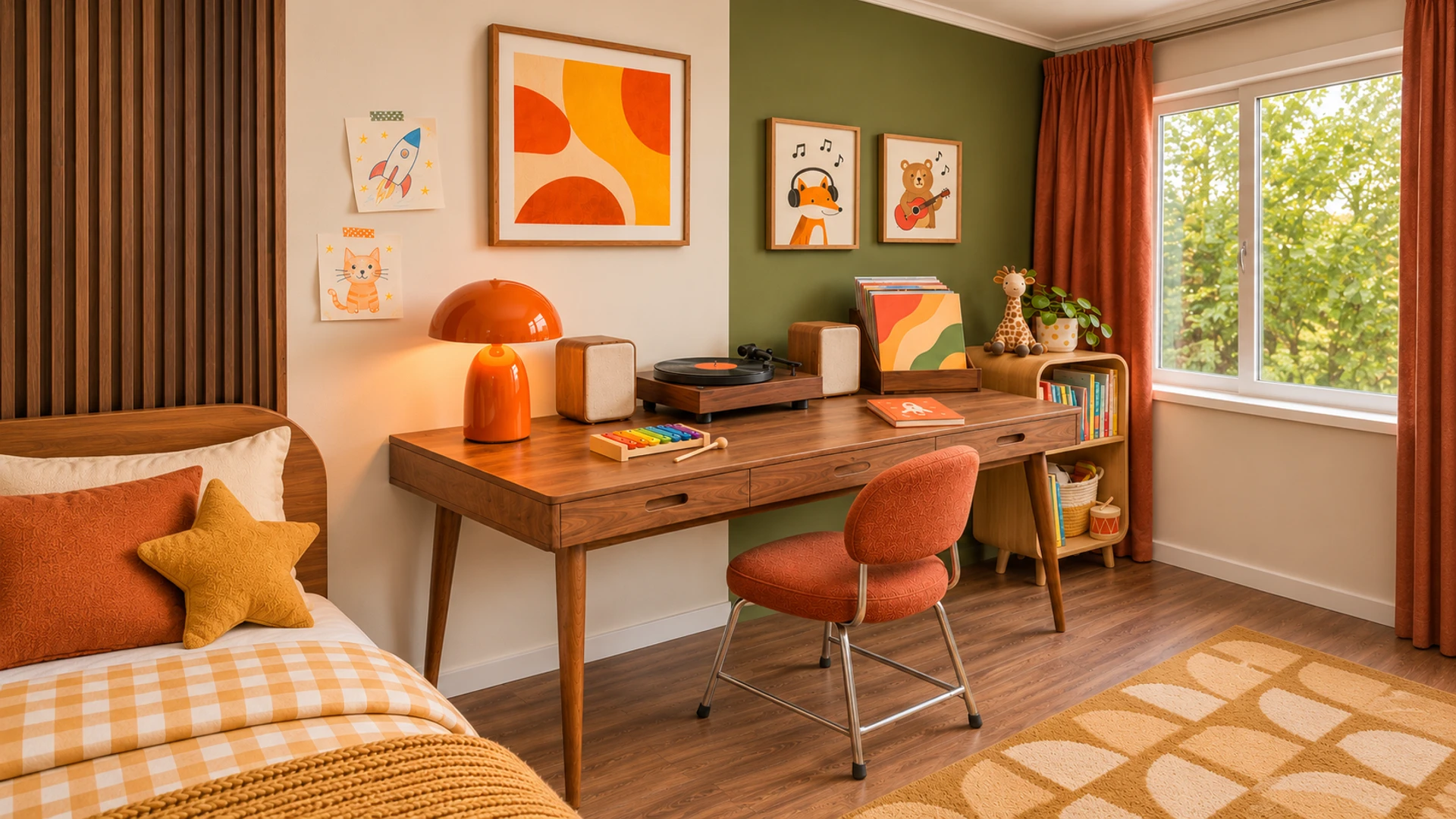
The left oblique view makes the closeness of bed and desk clear. Yellow checks on the bedding sit beside the orange lamp, while the curtain repeats a warm tone on the right. The window-side bookcase is a separate piece, rising slightly above the desk end.
Slender desk legs leave the lower area open, and the chair’s metal frame introduces a different line. Its softly textured orange seat and back also contrast with the smooth lamp. Changing forms and surfaces keeps the repeated color from becoming one flat block.
In your own room, check whether you can reach the bed and bookcase with the chair pulled out. Fitting the desk is only part of the arrangement: pulling in, sitting down and standing up should work naturally too. Establish clearance with your furniture rather than the proportions of an image.
Open the drawers and check for contact with the chair back or legs. Drawer interiors and cable routes are not visible here, so try your actual belongings beneath the desktop as well. Once the larger pieces work, the smaller colored objects can move around them.
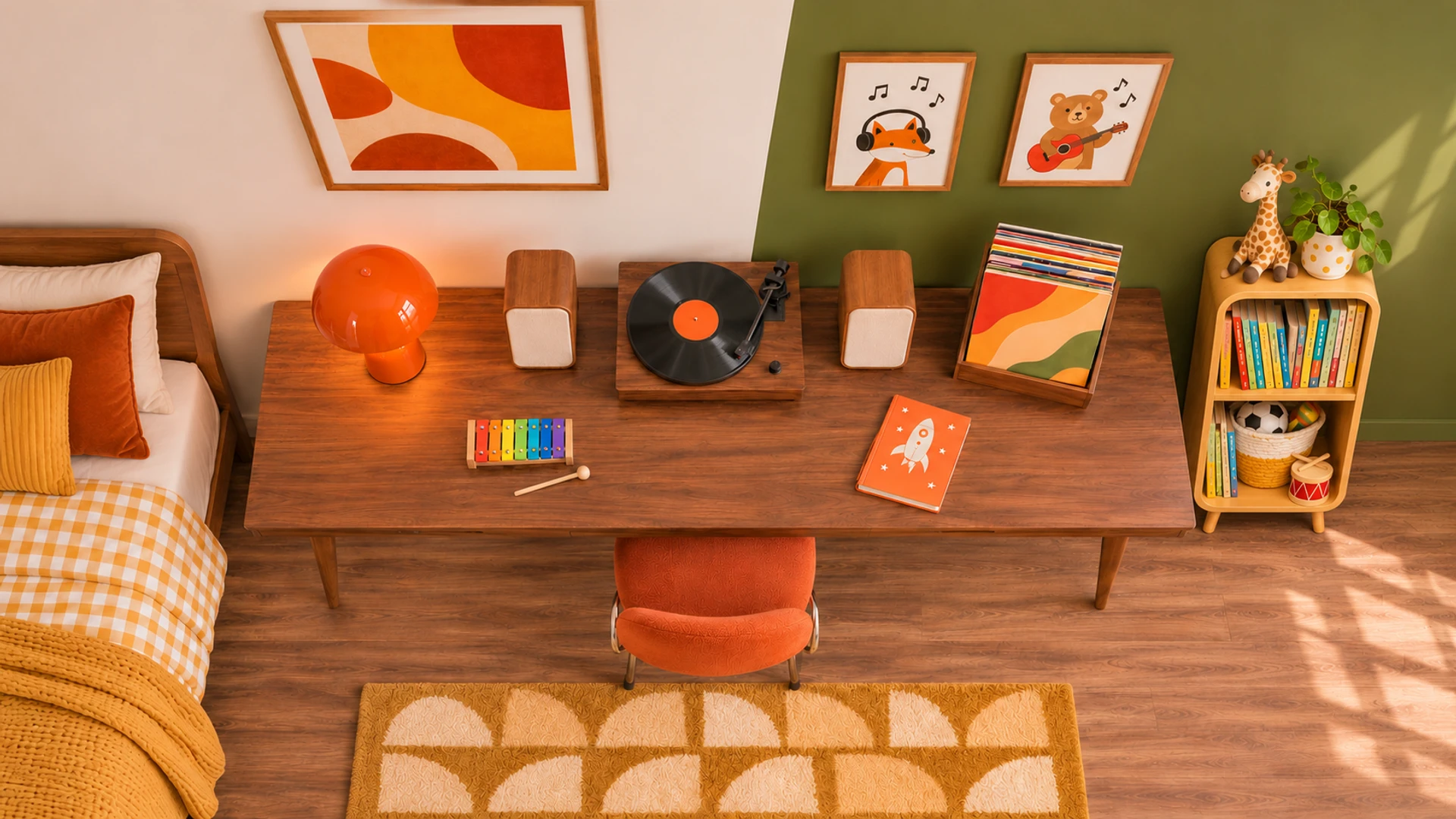
Audio equipment at the back, changing activities in front
From above, the turntable and two speakers form a row along the back, with records gathered on the right. A small instrument and mallet occupy the front left, and an orange book sits on the right. Equipment and hands-on activities are separated by depth.
The interesting part is that listening equipment does not take over the entire surface. Opening the book or moving the instrument could change the activity in front. Since the pictured book is closed, check the actual writing area with your largest book and notebook.
The images do not establish the audio connections or installation requirements. Use the scene to think about zones, and follow your equipment’s instructions for placement and spacing. Also try lifting a record and returning it: do other objects have to move first?
If the front continually becomes temporary storage, switching activities gets harder. Leave out only what is in use, such as today’s book or small instrument, and return other things to a nearby shelf. What matters is whether the front-and-back division works in everyday use.
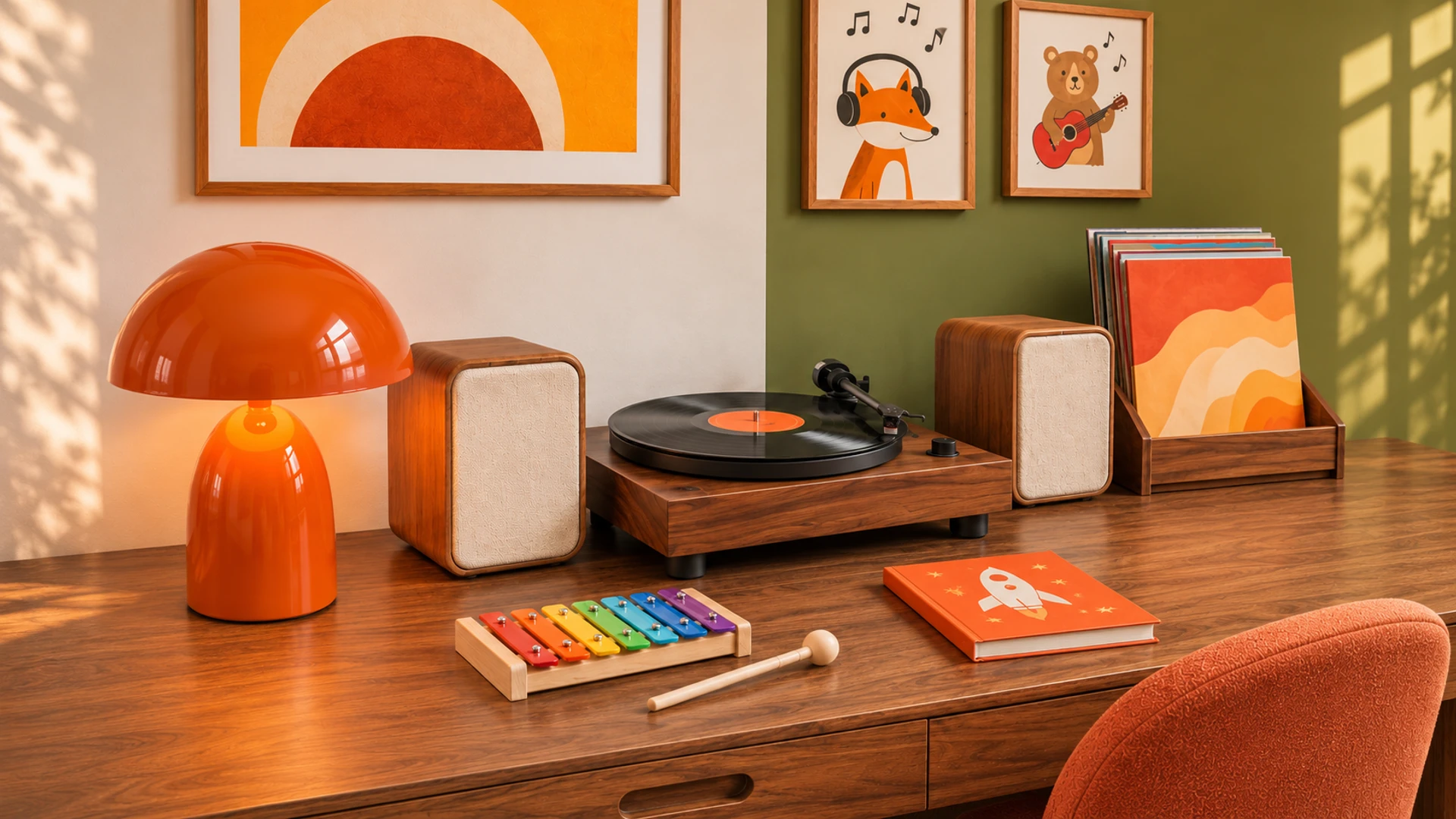
Record sleeves and a small instrument carry the music theme
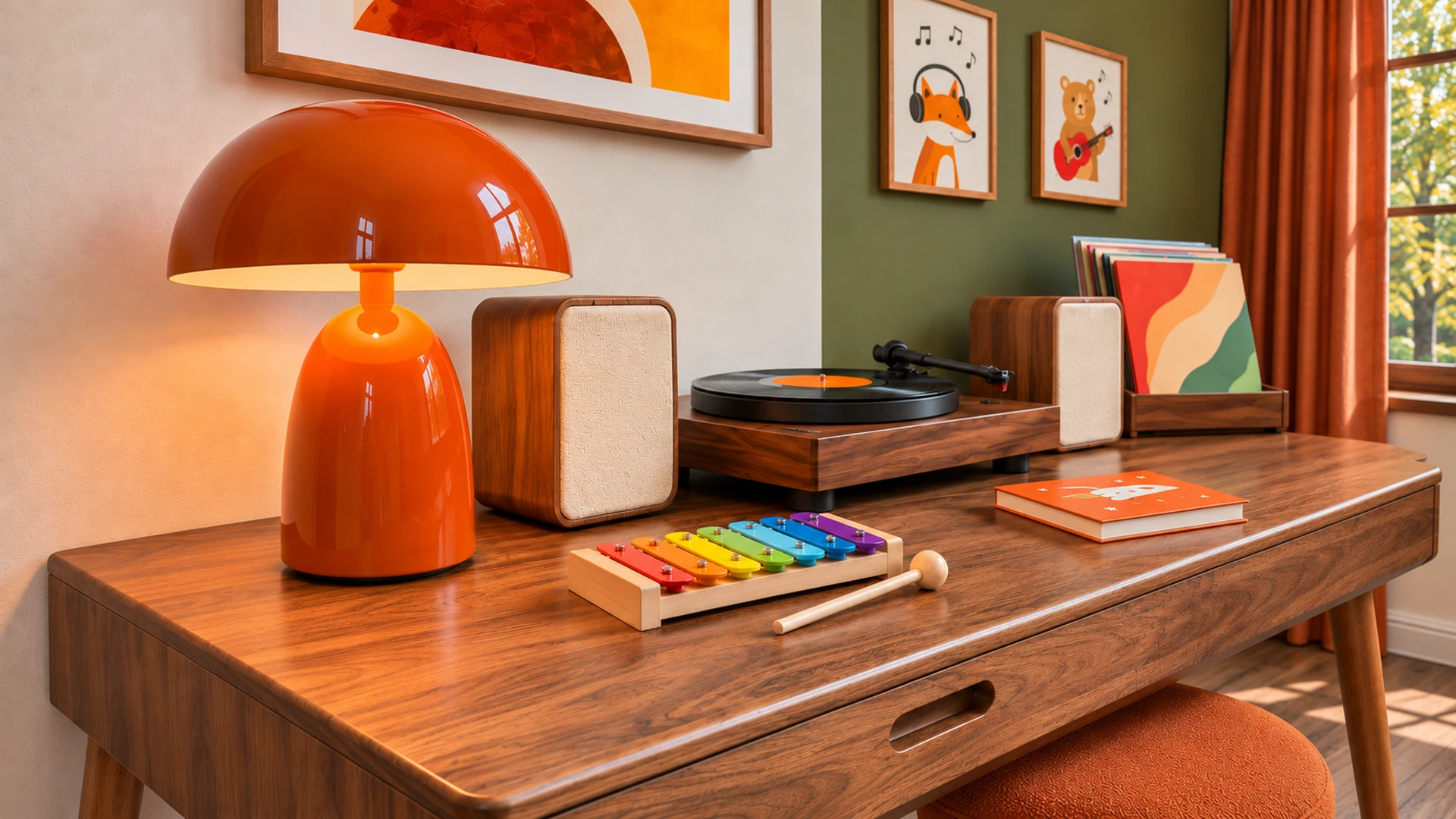
The close view centers on a black record with an orange label. Pale speaker grilles contrast with the dark wood-tone turntable, while colored metal bars line up in front. Black, cream and a small rainbow palette vary the predominantly orange scene.
The fox in the print wears headphones, and the bear holds a guitar. Music appears in paper artwork as well as equipment. We cannot know what records someone would play here, but the way pictures and objects connect around a favorite activity is an idea to borrow.
Forward-facing record sleeves make a small display area, too. Changing the front cover could alter the mood without touching the wall. In your room, begin by choosing one book or album you already own that you would enjoy seeing most.
Rather than displaying every small instrument and book at once, leave out today’s items to make the surface in front of the equipment clearer. Listening, making sounds by hand and reading need not happen at the same time. Think of them as activities that can take turns at the same desk.
Glossy orange contrasts with pale woven surfaces
Up close, the rounded shade reflects the window and casts a warm glow below. The speaker front has a light, closely woven appearance, while its wood-tone enclosure introduces grain running differently from the desktop. Reflection and texture bring variety to a warm palette.
The chair’s fabric belongs to a similar color family but catches light differently. It suggests that matching color codes are not essential for a cohesive arrangement. Compare a larger orange area with one that is slightly darker or softer to repeat a color without losing variation.
Recessed drawer pulls appear as elongated rounded shapes. Soft curves recur in the half-circle artwork, lampshade and chair back. Between the straight desk and rectangular frames, these smaller outlines soften the room’s more rigid lines.
The lamp establishes a mood in the picture, but does not demonstrate the light available for reading. Open a book at the time you usually use your room and try the lamp in place. Small adjustments while watching both color and hand shadows can bring the decorative and practical positions closer together.
Records on the desktop, books and smaller items beside it
On the right, the record rack sits near a separate rounded bookcase. Records can be chosen by their covers, while books are found by their spines. Rather than putting differently sized paper items into one container, each format has its own place.
Books, a basket, a ball and a small drum appear below. A basket can gather irregular shapes while often-chosen books remain visible. This does not establish an actual user’s system, but it suggests a distinction between display storage and grouped storage.
A giraffe toy and plant above create a taller outline than the desktop equipment. Height variation need not mean putting every tall object on the work surface. In practice, check whether the ornaments or curtain interfere when you take out a book.
Try taking a book out of your own shelf and returning it. If there is almost no spare room and the neighboring books always need shifting, the process becomes complicated. Keeping the desktop open also depends on leaving enough room for objects to go back beside it.
What order would you bring color and activities into your room?
Start with your existing furniture and the activities you want to do, rather than choosing an orange lamp or olive wall in isolation. Define where books open and equipment stays, then repeat small accents so decoration has a clearer place.
Can you open a book immediately on days when you are not listening to music? Where will the small instrument go afterward? Record sleeves and wall art can add personal taste on top of that plan. A routine for taking things out and returning them is more useful than collecting matching products.
Work through palette, audio placement, working space and storage in the midcentury study space guide. See the overall colors and portrait images in the music-filled study corner gallery.
TAKEAWAY
Ideas to take to your own desk
Separate the backdrop from smaller accents
Look at walls and furniture first, then try orange in smaller areas such as a lamp, book or fabric.
Test the front surface with open books
Use an open book and the movement of your arms to judge the working area, rather than a closed cover.
Leave room to put things back
Take out and return one record or book at a time, noticing whether anything else has to move first.
- #Midcentury color
- #Olive and orange
- #Vinyl records
- #Study space