DESK TOUR
A Japandi Desk Tour: A Place for Books, Puzzles and Quiet Making
Books, a brush and a wooden puzzle take the place of a computer in this study corner. Six views explore a rounded desk and chair, beige walls and fabrics, and the open surface left for making and learning.
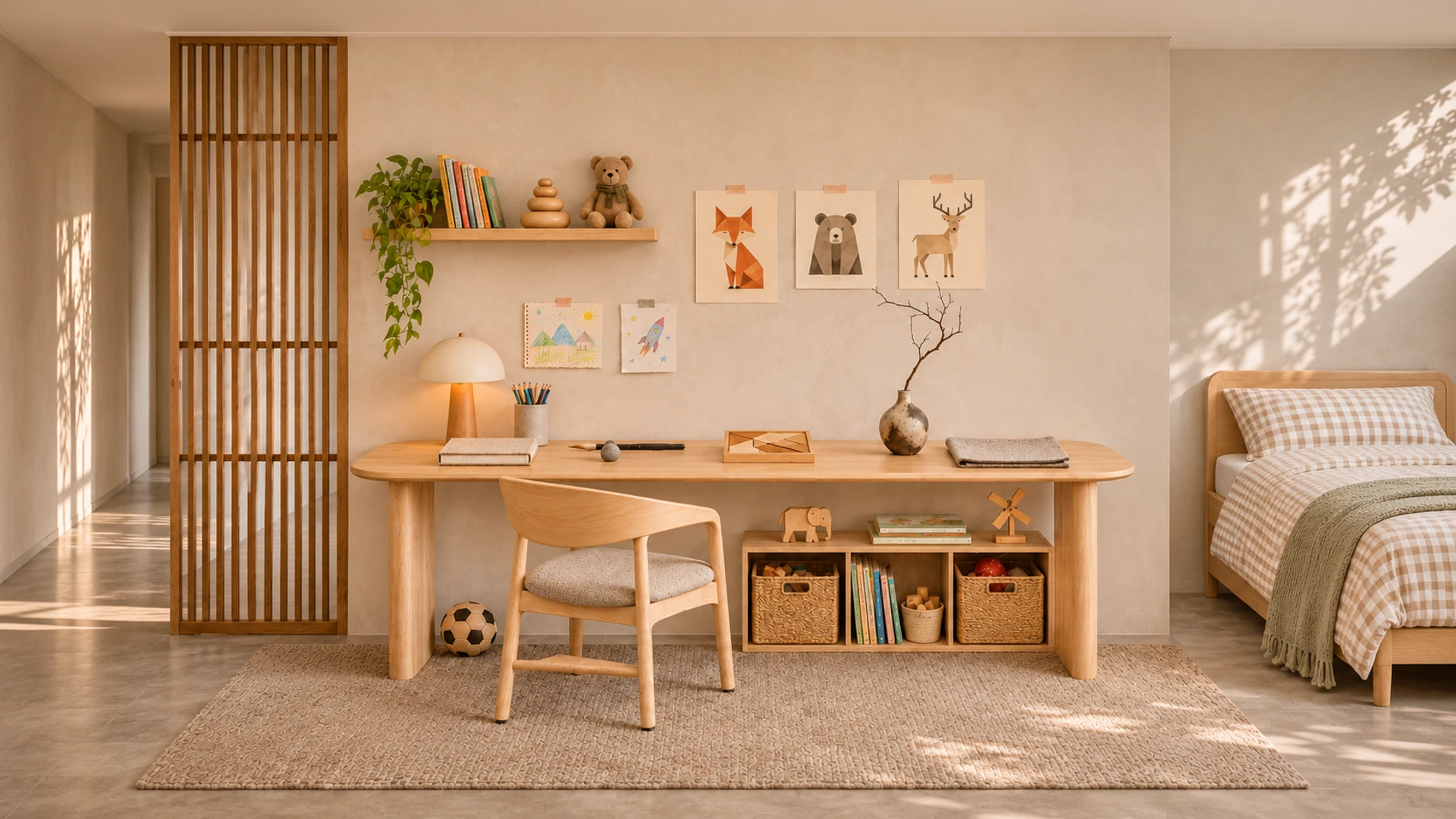
- Layout
- Long desk beside the bed · low bookcase beneath the desk · wall shelf
- Palette and texture
- Pale wood tones · beige · taupe · ceramic and woven surfaces
- Key elements
- Wooden chair · dome lamp · books and brush · wooden puzzle · baskets
- About the images
- The supplied front view and generated alternate angles were adapted into 16:9 landscape compositions. Furniture models, dimensions, wood species and room size have not been verified.
This concept tour looks at the colors, shapes and placement visible in the supplied images. Rather than assuming how someone lives here, it draws out arrangements you can try in your own room.
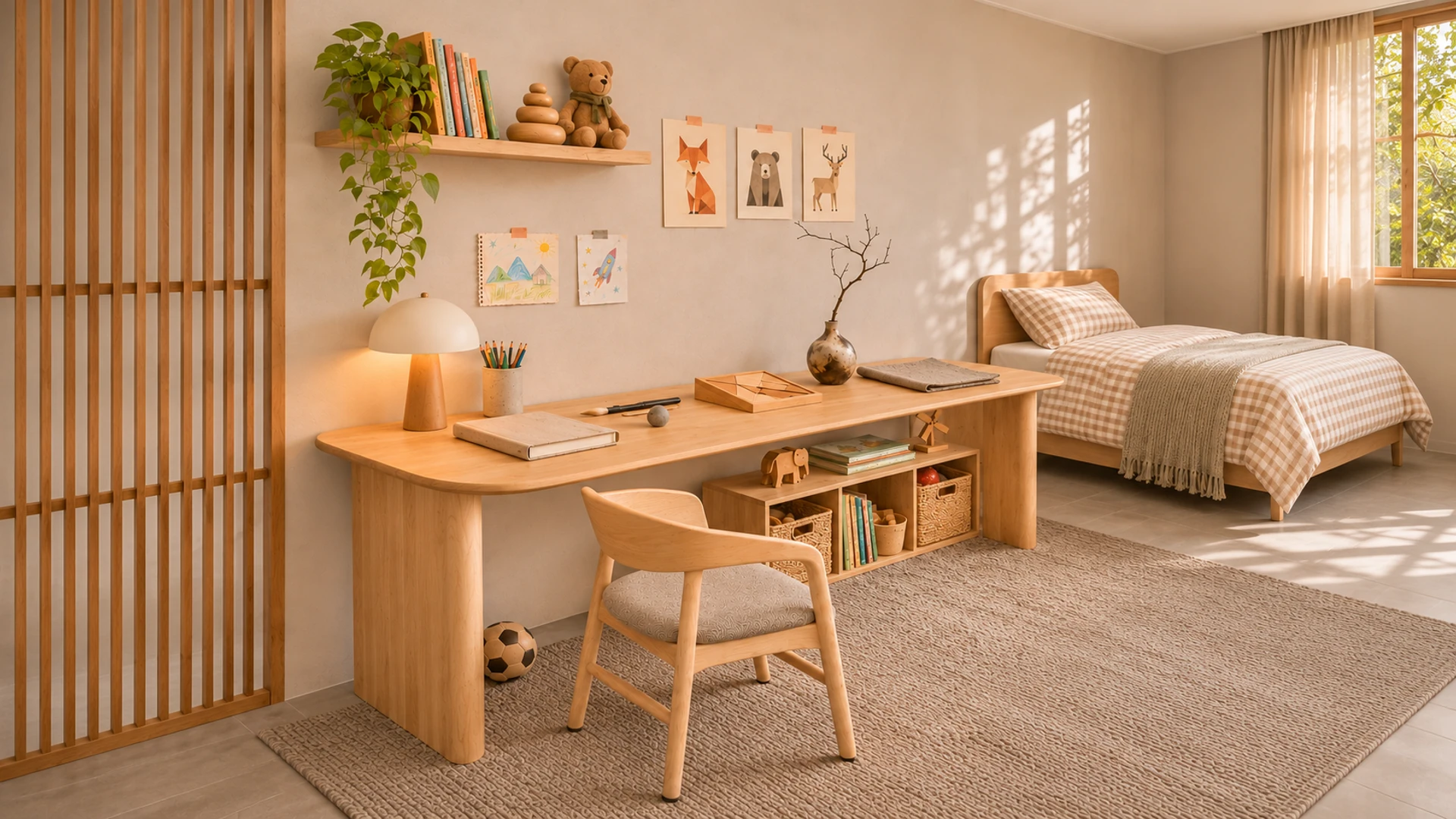
The long, rounded desk anchors the room
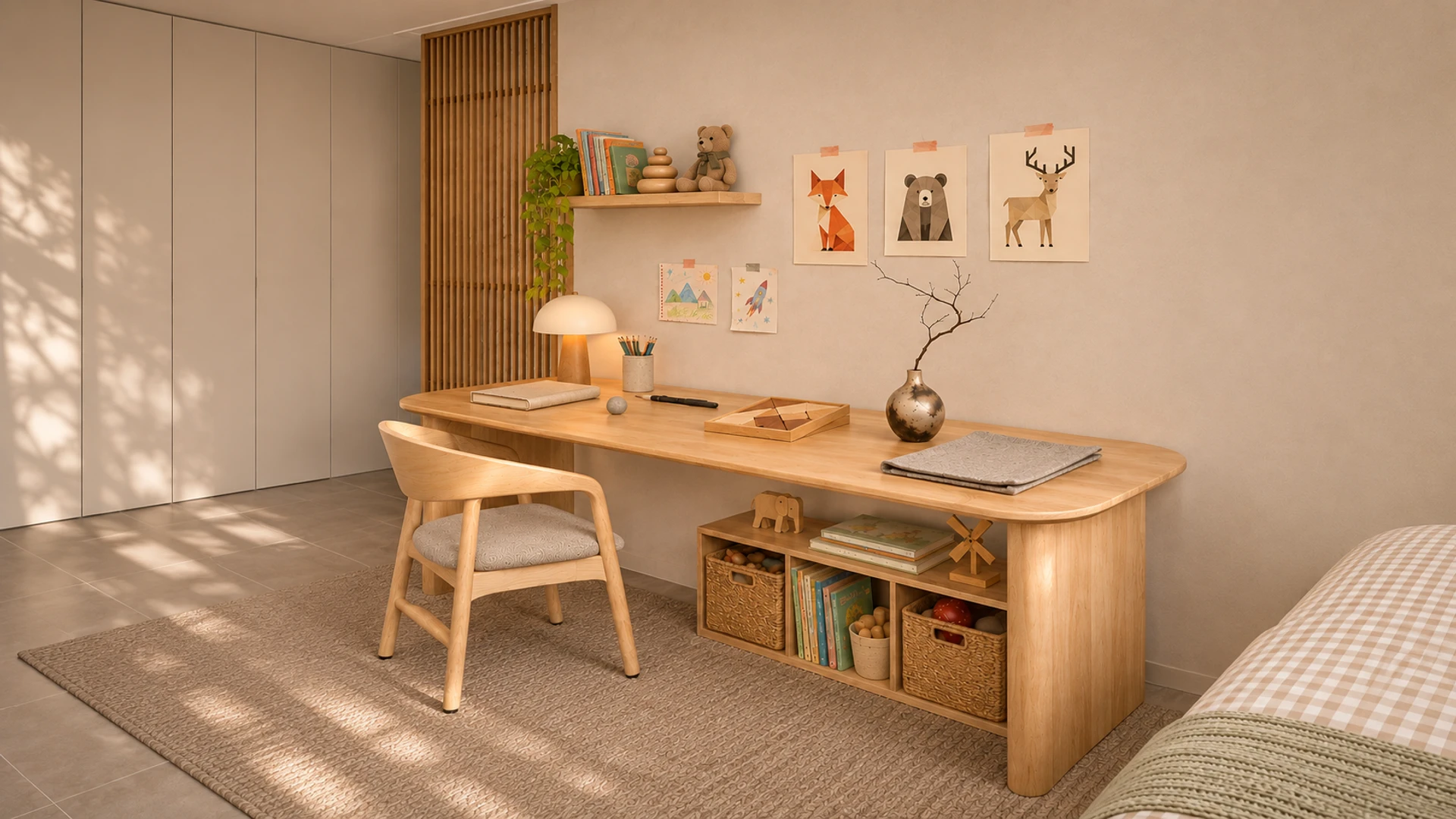
The view from the left brings the long desktop and broad supports into focus. Rounded ends and a curved chair back soften the outline against the straight wall and vertical slats. The pale wood finish adds a warm surface between the light stone-colored floor and beige wall.
Small-check bedding appears on the right. We cannot establish whether the bed and desk belong to a matching set, but similar tones and lightness connect them visually. On the left, slim slats rise above the furniture, contrasting with the long horizontal desktop.
To try the layout at home, look beyond desk width and check the route to the bed with the chair pulled out. Rounded corners still need clearance around them. Mark out the furniture footprint on the floor rather than judging lengths from the image perspective.
The broad supports are part of the visual appeal, but they also affect how much room your feet have when you move sideways or reach below the desk. Even a shape you love needs to work with your seated position and everyday movements.
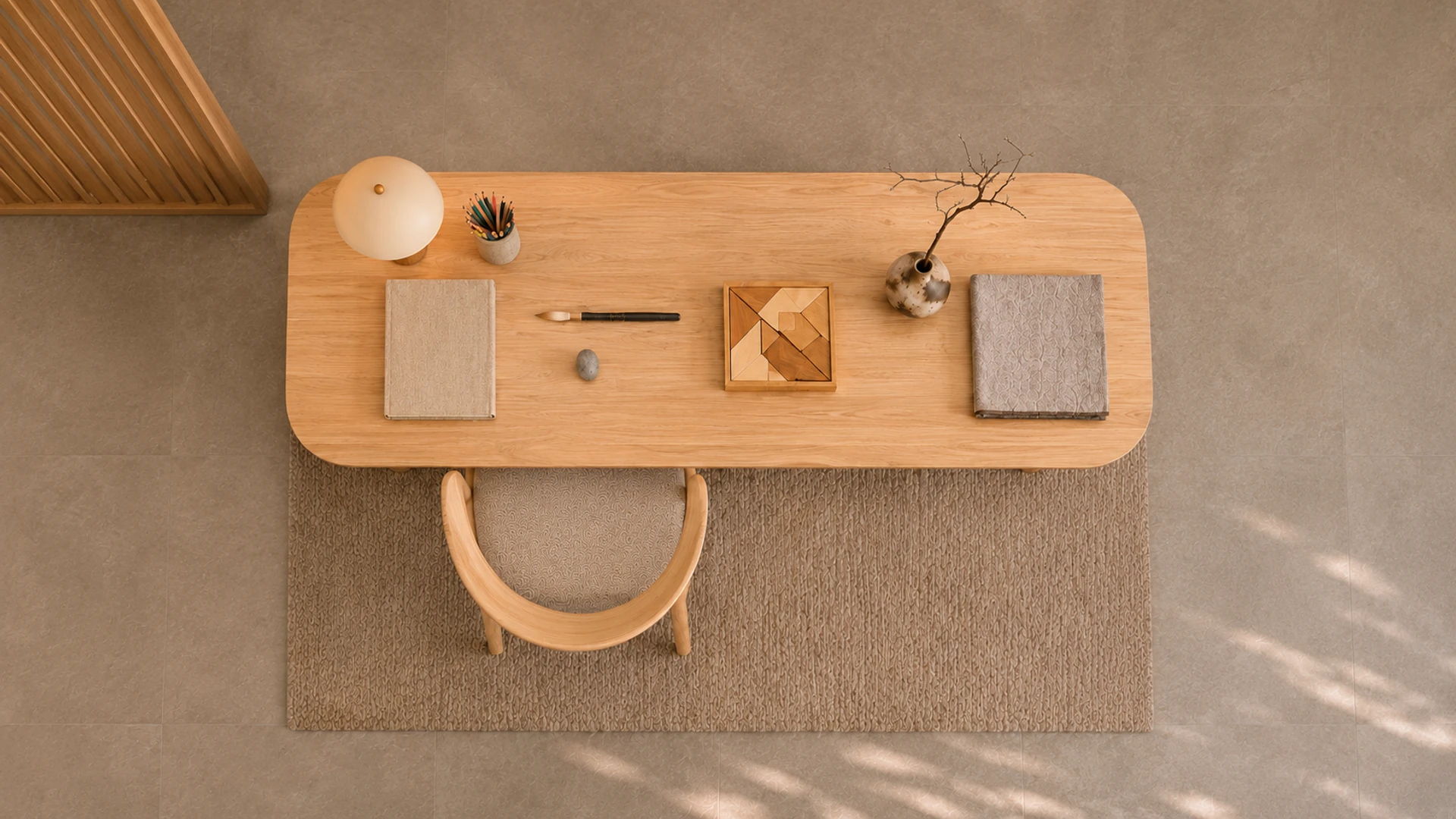
An overhead view of the space between books and tools
From above, the lamp, book and pencil pot gather on the left. A brush, small stone and wooden puzzle occupy the middle. The vase and folded fabric sit apart on the right, leaving broad stretches of wood visible between objects.
Without a computer or fixed screen, the center is not committed to one activity. You could move the puzzle tray to open a book, or close the book to work with shapes. This is a layout idea drawn from the scene, rather than a claim about an actual routine.
The book is closed and no one has their arms on the desk. The visible gap therefore does not prove there is enough writing room. Open your largest book and check whether turning pages or rotating paper brings your hands into the surrounding objects.
Something that reaches upward, such as the branch in the vase, can occupy more space than its base suggests. Compare the orderly overhead view with your view when seated to judge the distance between decoration and working area more precisely.
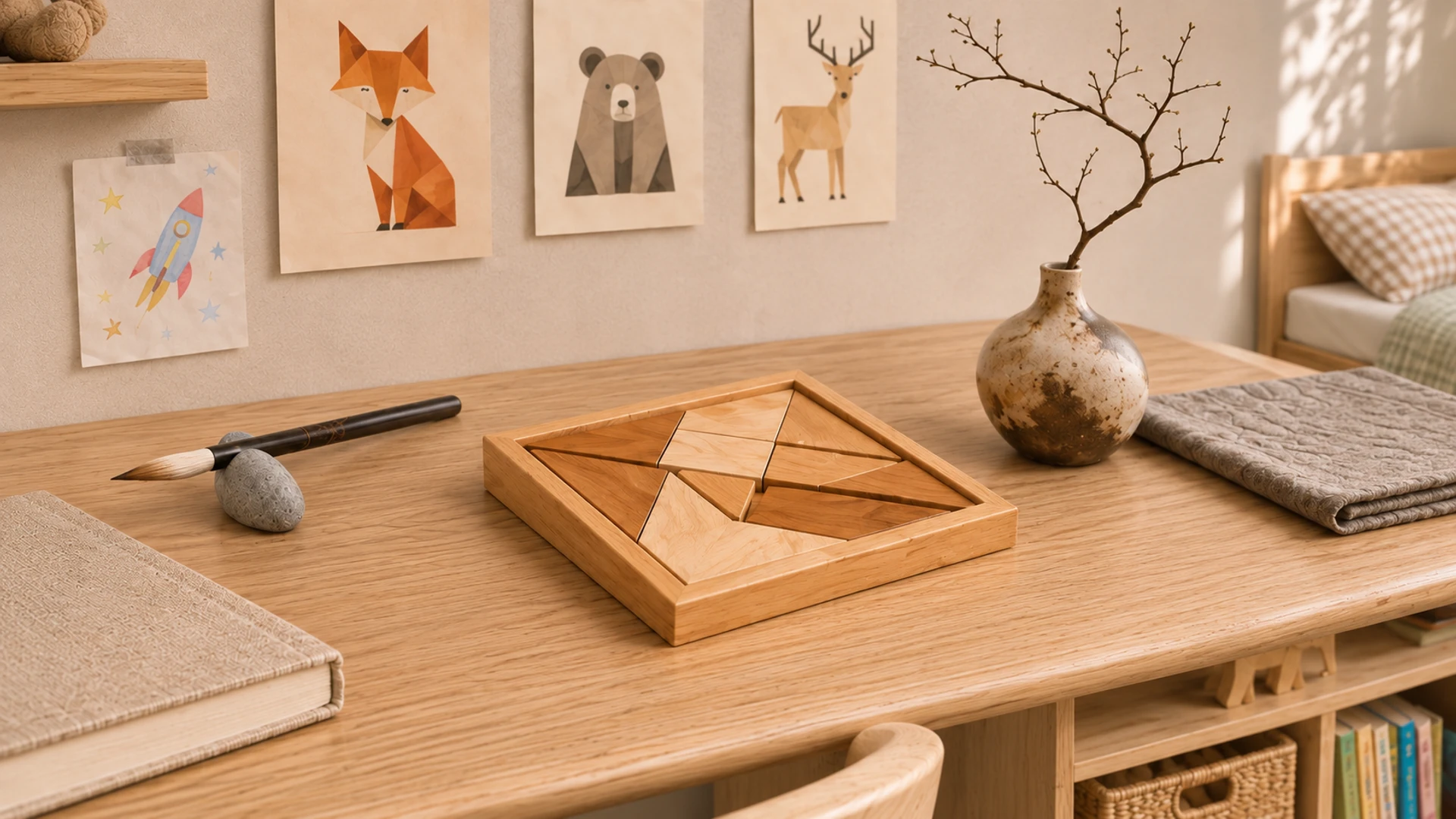
A brush and wooden puzzle make room for hands-on activity
The close view centers on a tray of wooden puzzle pieces in different tones. A black-handled brush, small stone and apparently cloth-covered book sit nearby. With no screen on the desk, the outlines and surfaces of these smaller objects come forward.
The tray gives the puzzle pieces a defined boundary. At home, consider whether you could carry it to a nearby shelf with the pieces still inside when you finish. The puzzle’s exact materials, age suitability and product details have not been verified.
If you use a brush with paint or ink, plan a suitable work mat and somewhere to clean up rather than copying its placement directly on the wood surface. Styling a scene and preparing for a real activity call for different arrangements. Leave the book and fabric easy to move, too.
There is no need to lay out a whole day’s activities at once. Start with today’s book and tools, then return finished items to the low bookcase. The useful idea here is less about owning fewer objects than about deciding what stays out and what goes back.
Wood, fabric and ceramic within a quiet palette
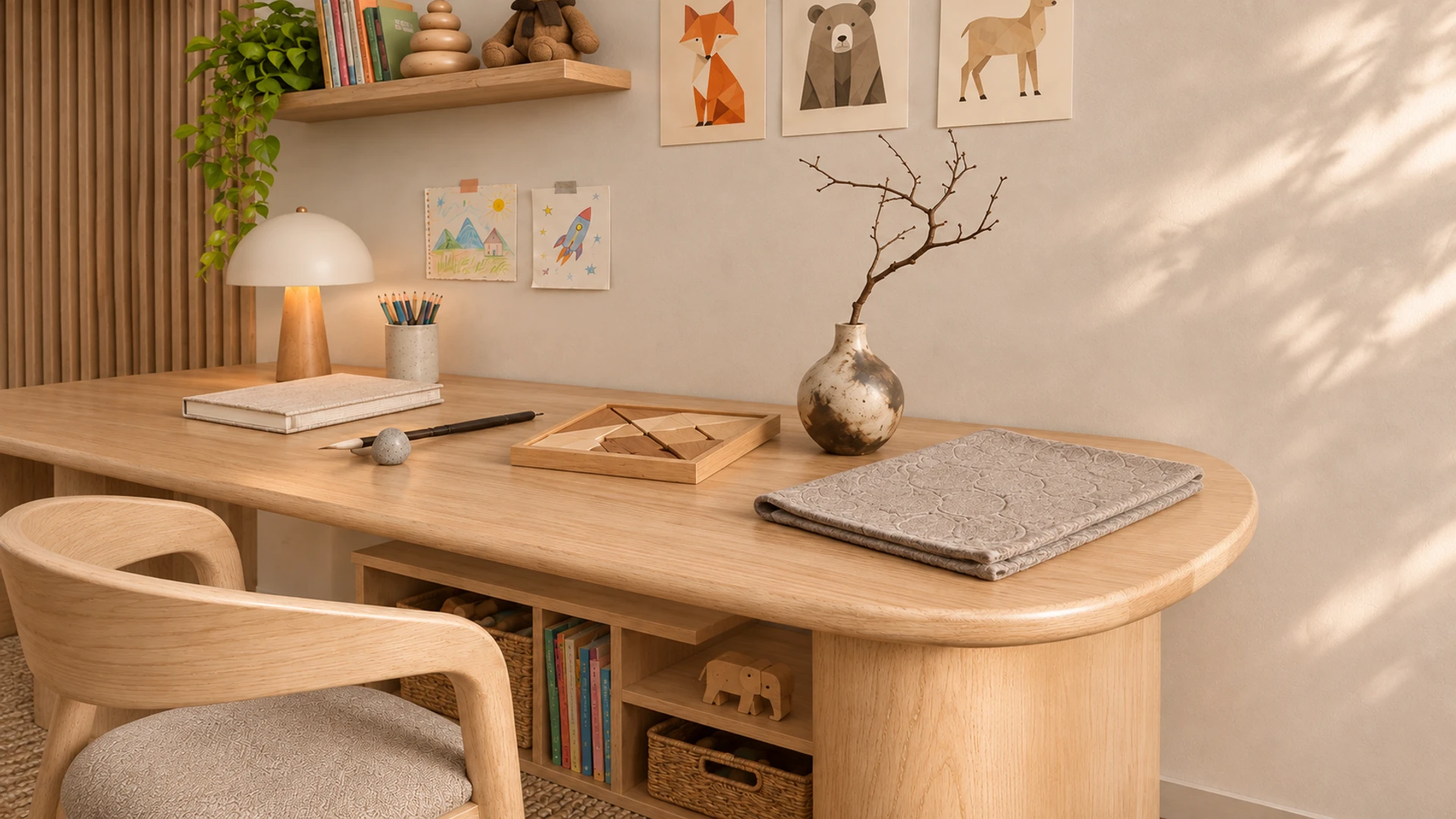
The close view from the right shows the rounded desktop edge and the broad face of its support. The chair’s curved wooden frame, cushion and folded taupe fabric introduce different textures within a similar palette. Irregular markings on the vase contrast with the orderly puzzle pieces.
Keeping colors close lets you mix textures without making every object compete for attention. Before adding more decoration, compare the covers of your books, a cushion and small containers you already own. The images do not establish fiber content or finishes, so treat the visual effect separately from material specifications.
The round lampshade casts a soft glow on the wall, while the bare branch draws a fine upward line. Although the lamp contributes to the styling, the image cannot tell you whether it provides suitable reading light or where hand shadows would fall. Check that with paper in place at your usual working time.
Wood finishes need not match exactly to work together. Similar lightness and undertones are useful starting points. Instead of relying on color names on a screen, compare samples or existing objects side by side under the lighting in your room.
What the low bookcase does beneath the desk
A low, three-cubby bookcase sits beneath the right side. Upright books fill the middle, with baskets on either side. A short book stack, elephant figure and small windmill ornament make its top a second surface below desk level.
Book spines stay visible for choosing, while baskets gather smaller items. Rather than clearing the desktop by moving everything far away, the arrangement gives nearby space below a distinct purpose. You can swap the roles of the cubbies to suit what you reach for most often.
Under-desk storage needs to be considered alongside knee and foot room. The bookcase looks shallower than the desk, but we do not have its measurements. Sit down, tuck the chair in and pull out a basket in turn. If your feet meet the storage, try another position.
Even a low bookcase should be installed and secured according to its product instructions. Do not assume it is attached to the desk. If ornaments get in the way of taking out a book, begin by simplifying what sits on the top surface.
Animal prints and a shelf give the wall a story
From the front, three animal prints follow the desk’s long horizontal line. An orange fox, gray bear and brown deer stay close to the surrounding wood tones. Mountain and rocket drawings below vary the linework and color, loosening the otherwise orderly display.
The left shelf holds books, a teddy bear and rounded stacking pieces, with leaves trailing downward. Their varied heights bring a different rhythm to the straight-edged prints. The shelf’s load rating and fixings, and the plant species, have not been verified.
At home, start by gathering drawings and favorite book covers you already have. Try a few pieces within your seated view before filling the wall. Aligning their lower edges or repeating one color can be enough to make them feel connected.
Separating things you use on the desk from things you enjoy looking at on the wall helps preserve the work surface. In a child’s space, also consider reachable heights, items that might be pulled down, and suitable fixings for the actual wall.
What would you keep, and what would you clear?
The atmosphere comes from rounded furniture, low storage and closely related colors working together, rather than from one signature ornament. On your existing desk, begin with the book and tools you need today and give everything else a nearby place to return to.
Before looking for new furniture, open a book in the middle and try pulling out the chair and sitting down. Wall art and folded textiles can follow. Leaving room for your own activities makes the openness of the scene more useful than collecting the same objects.
For a practical sequence covering curves, color and storage placement, see the Japandi study space guide. Explore the overall mood and portrait views in the Japandi desk gallery.
TAKEAWAY
Ideas to take to your own desk
Check open space with your actual books
Start with room for your largest open book and moving arms, rather than how spacious the desktop looks.
Leave foot room beside low storage
Sit down, tuck in the chair and pull out baskets to check knee and foot clearance.
Compare surfaces before adding colors
Use the textures of existing book covers, fabrics and small containers to vary a quiet palette.
- #Japandi
- #Curved furniture
- #Screen-free desk
- #Study space