DESK GUIDE / DeskForTwo
A Face-to-Face Desk for Two: Five Checks Before Moving Furniture
Facing each other feels natural for reading and conversation, but two different working styles may need different amounts of space. Use this layout as a starting point for a practical trial in your own room.
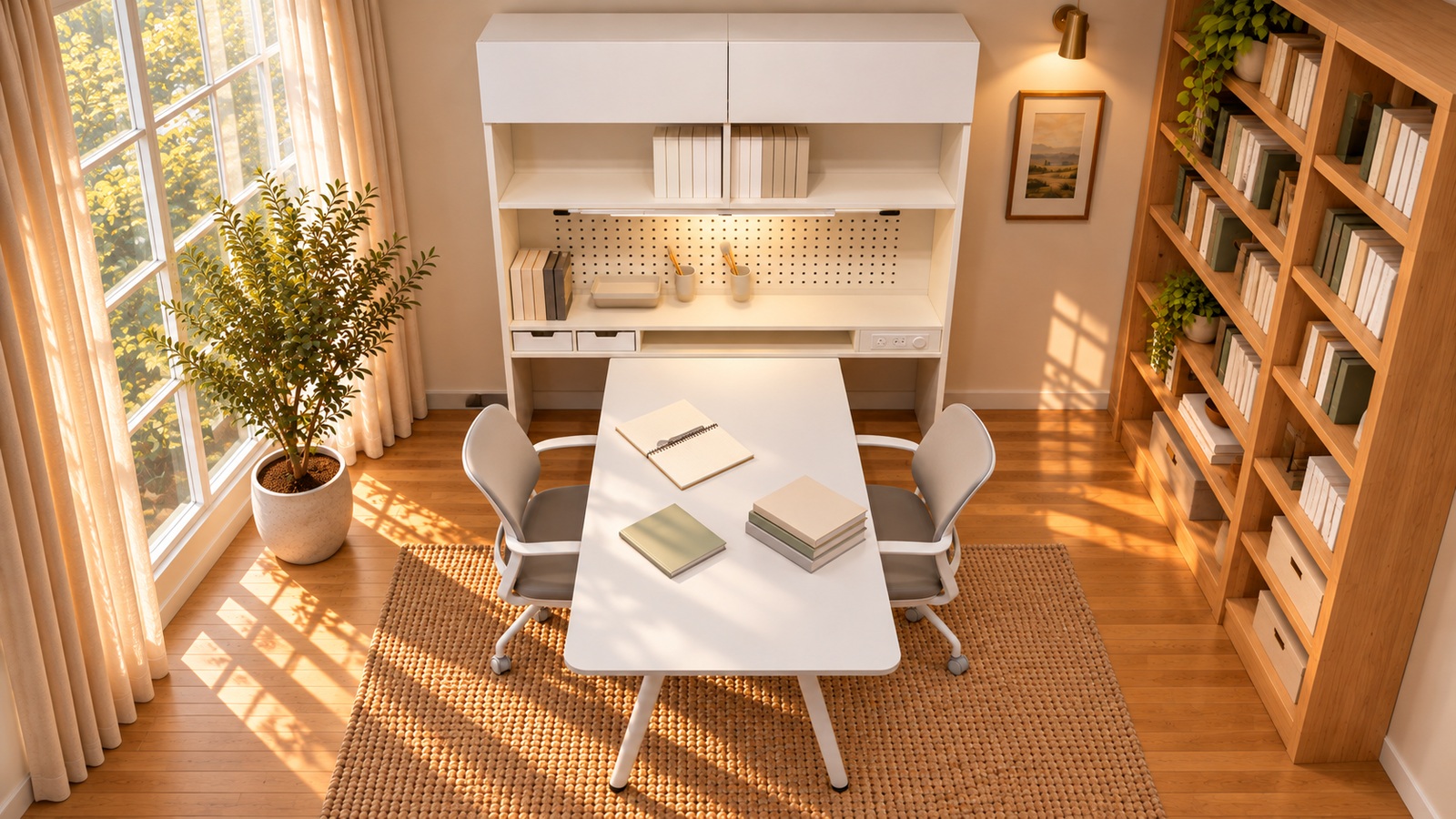
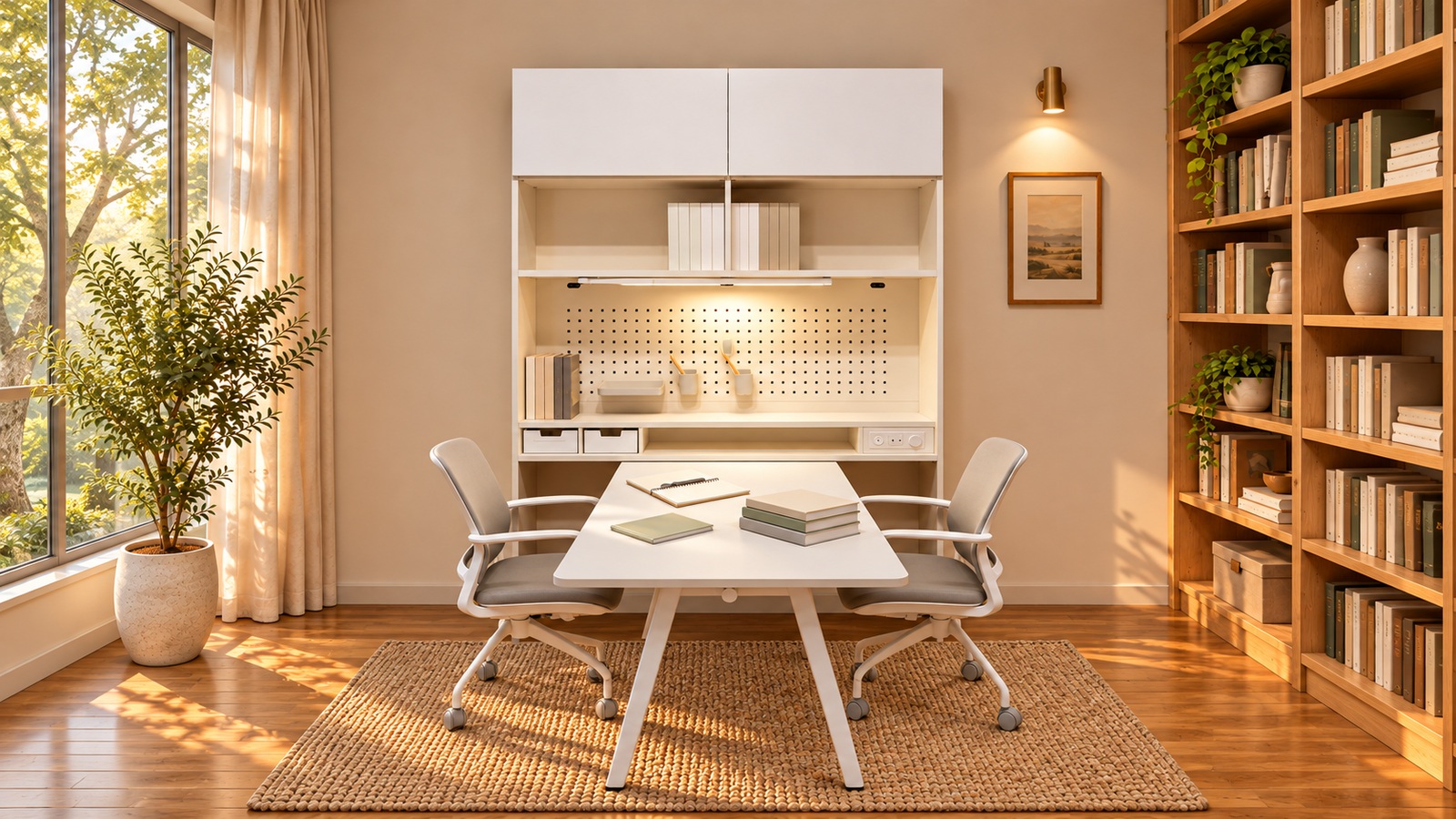
Image note: Supplied photos of the same space were recomposed with generative tools into landscape views. This is not a hands-on review based on verified measurements, furniture models or personal use.
1. Lay out the work you will do together
First distinguish between separate notebooks, shared reference material and two laptops. Spread out your books and tools on the floor or an existing table to see how much area each person needs.
The photo shows notebooks and books, not proof of enough space for two laptops or monitors. Every extra tool reduces the part that can remain shared and open.

2. Chairs and legs may clash before the desktop fills up
Look beyond overall dimensions to the positions of legs and braces, clearance for chair armrests and where opposite knees may meet. Sloping A-frame legs can leave different amounts of space at different seats.
The retail alternative TROTTEN 160 × 80 cm is 75 cm high, with 73 cm clearance beneath. FLINTAN armrests range from 69 to 81 cm, so they will not necessarily fit under the top at every setting. If combining these products, test interference at your own seat height.
3. Test the moment both people stand up
Mark the candidate desk’s footprint on the floor, place actual chairs at both sides and pull them back together. Check whether someone else can pass and whether shelves or drawers can still be used.
If wall storage sits close behind the table, retrieving something may mean passing through the other person’s space. The photo suggests open circulation but cannot guarantee a particular walkway width.
4. Compare light and shared storage from both seats
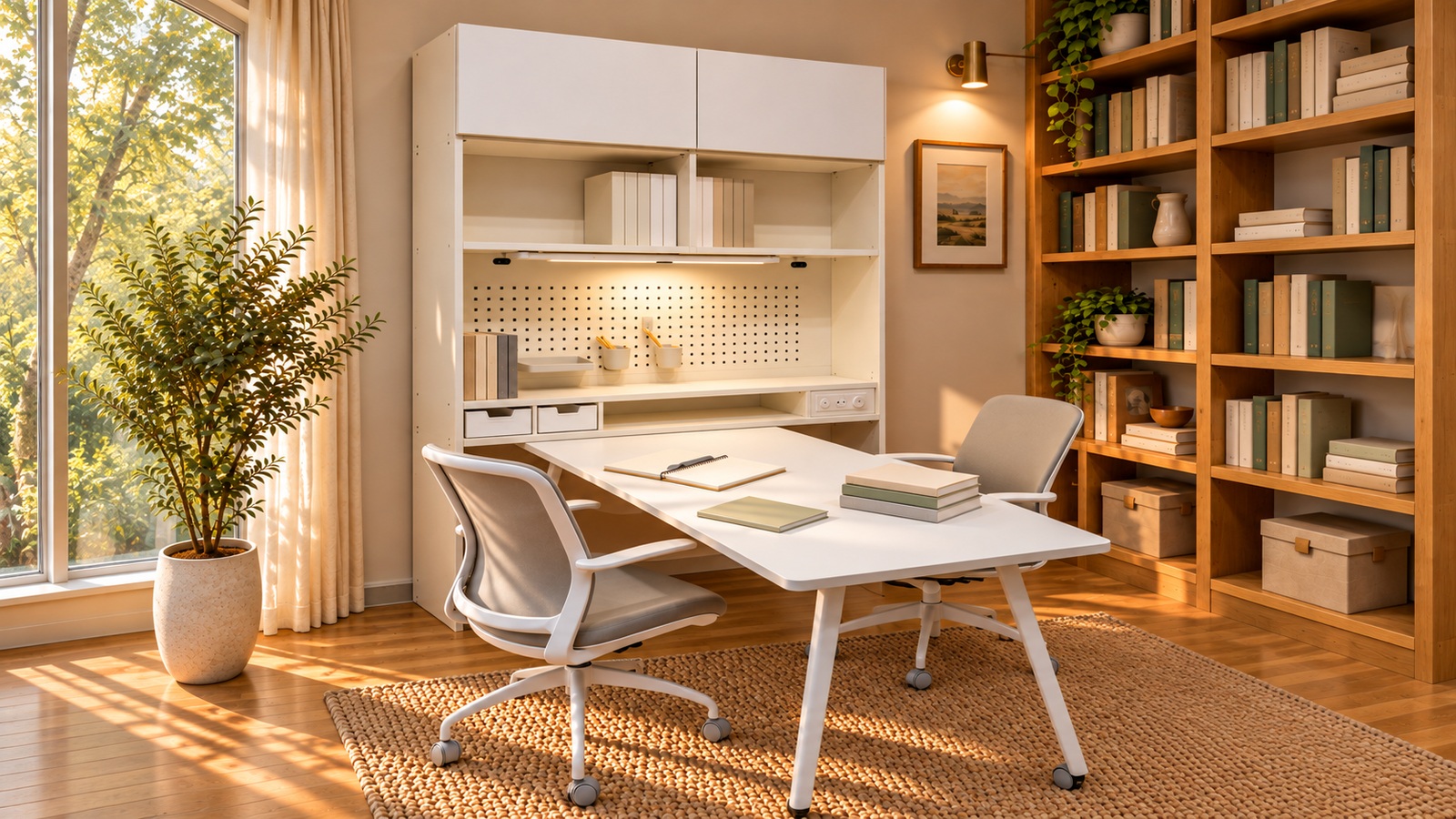
Light that feels comfortable on one side can cause glare from the other. Sit in both seats at the usual time of use, move the curtains, and compare reflections on paper and screens.
Start with a shared pen holder reachable from both sides but small enough not to obstruct the center. Wall tools that require standing are more realistic for less frequently used items.
5. Finish by giving belongings a place to return
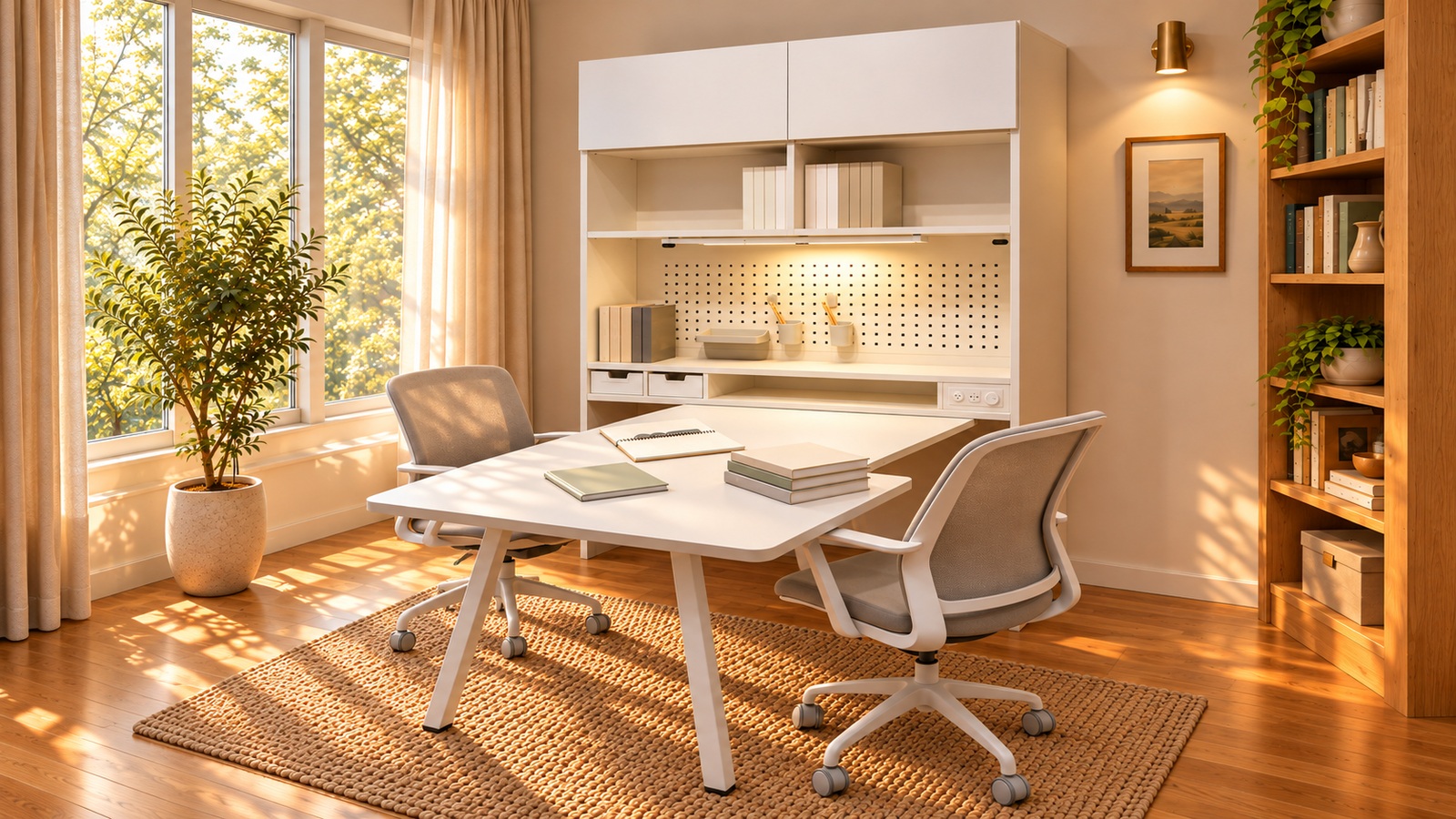
Assign roles first: an open central area for notebooks, two compartments for personal items and one shared-tool spot. Test whether the middle can be cleared at the end of the day.
If your concentration schedules differ, compare side-by-side seating or separate desks too. The linked products below are alternatives for comparing dimensions and construction, not confirmed matches to the photo.
CHECK BEFORE YOU FINISH
One last check
Tick off each item once you've checked it at your desk.
Products in this post
2 products · Prices as listed for the linked products below
- DesksIKEATROTTEN desk, white, 160 × 80 cm₩199,000
- ChairsIKEAFLINTAN office chair with armrests, beige₩151,690
Prices are as of when they were added and aren't updated in real time. Check the product page for the final price.