DESK GUIDE / Organize your study desk
Children's study desk organization guide, pegboard, dividing roles into shelves and drawers
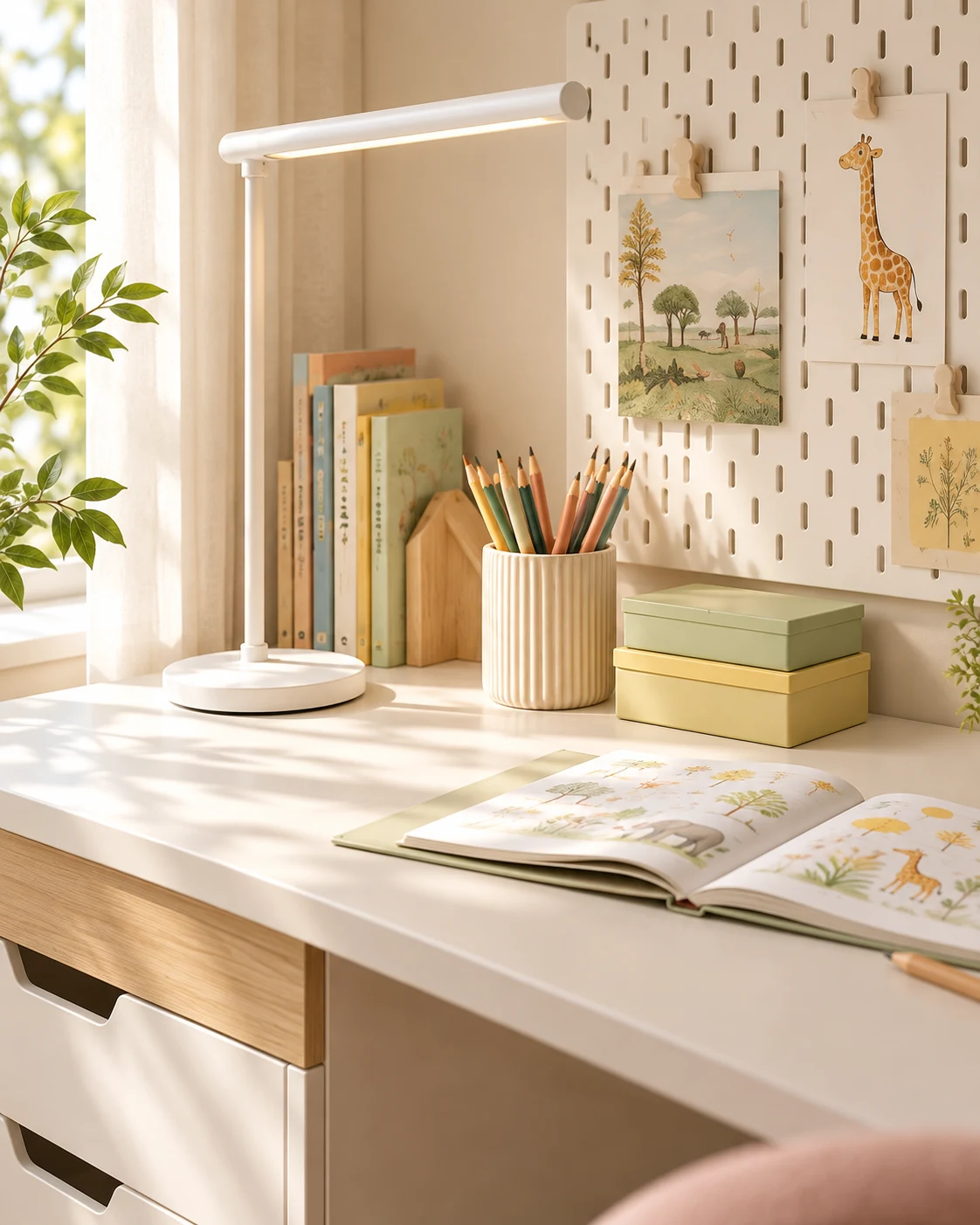
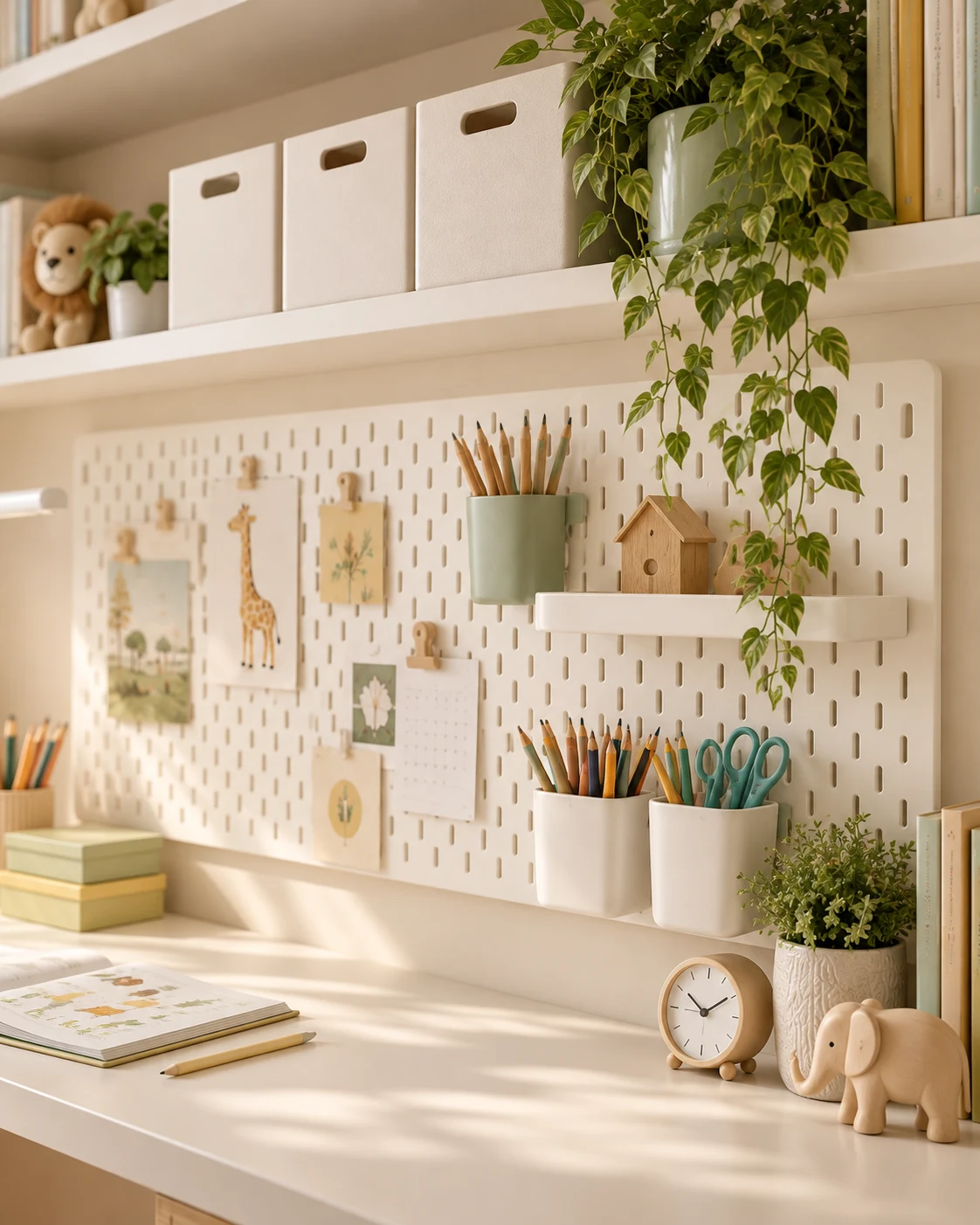
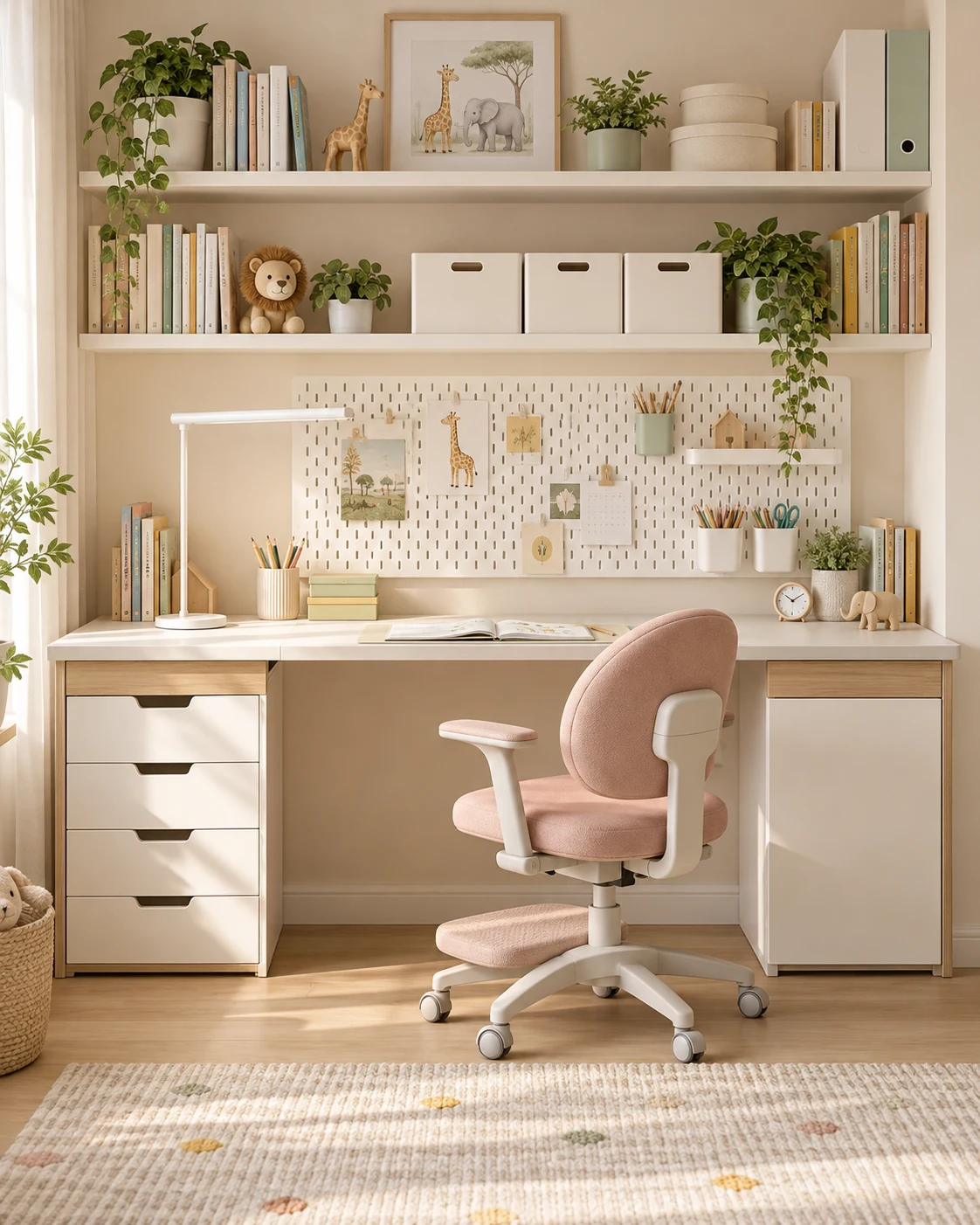
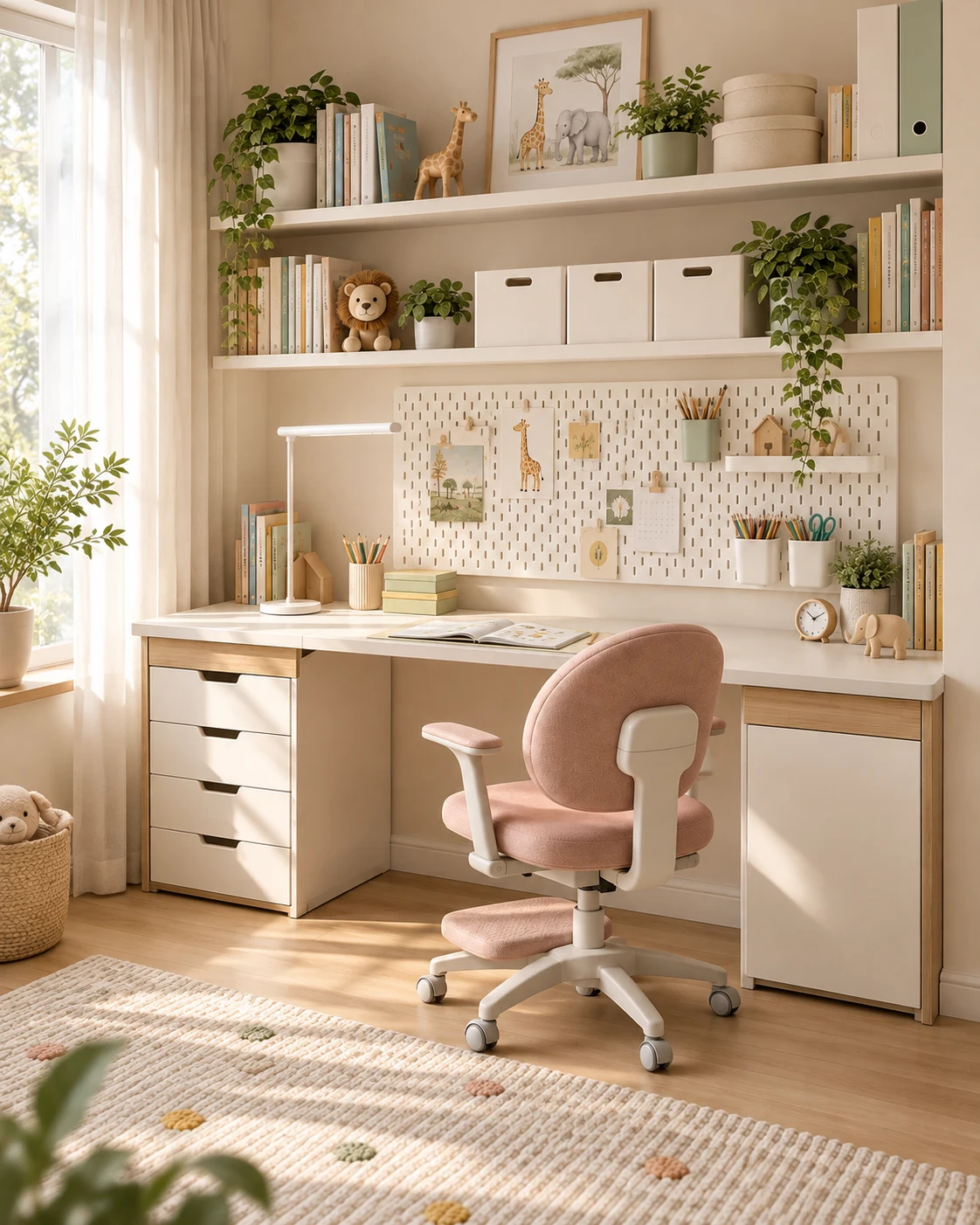
If you don't have enough space to spread books even after organizing your child's study desk, start by looking at the scene of use rather than the storage box. The order of dividing items into pegboard, shelves, and drawers was organized along with the actual operation, leaving a space for unfolding textbooks and notes.
This guide starts before you even choose an organizing tool. The procedure is to reproduce the activities you usually do on desktop, classify items based on their positions, and then assign roles to pegboard and shelves and drawers. You can try it first with the desk and storage box you have.
Do not use the proportions in the photo as actual measurements. Please check the steps below based on your textbooks, tools, and the reach of actual users.
Before you empty your desk, start by creating a scene where you normally study.
Don't put everything in drawers from the beginning. Bring the textbooks, notebooks, and writing utensils you usually use together and lay them out as you would actually use them. If you are looking at a book and writing in a notebook, place the two books side by side, and if you are drawing, try changing the direction of the paper. The area needed for a few closed books is different from the area needed for activities.
After opening the book, try moving your hands and arms. Check where you hit each time you hold a pencil, pick up an eraser, or turn a page. If you have to fold a book or move a notebook to retrieve a phrase, the location may be neat for storage, but it may be inconvenient to use.
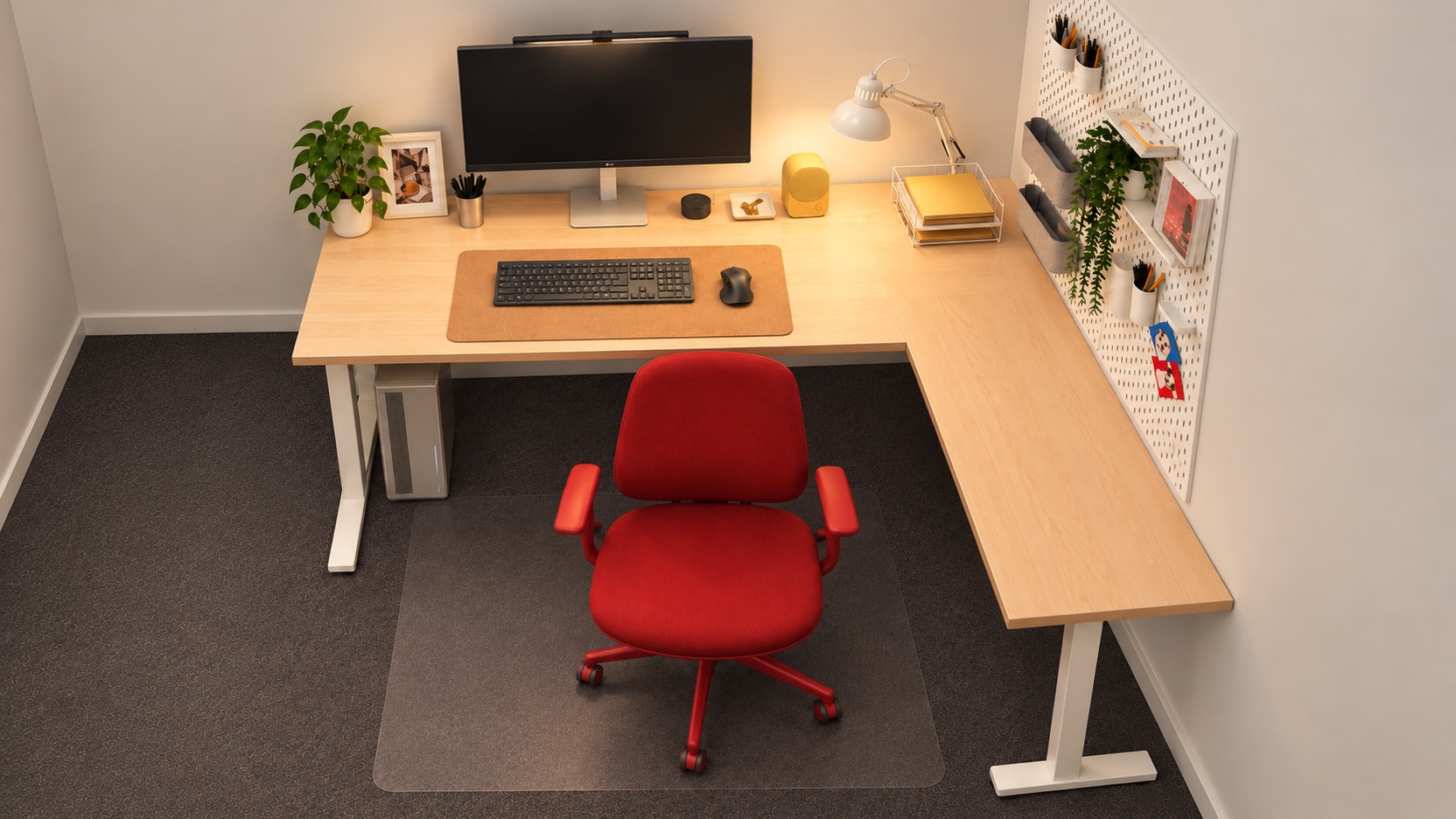
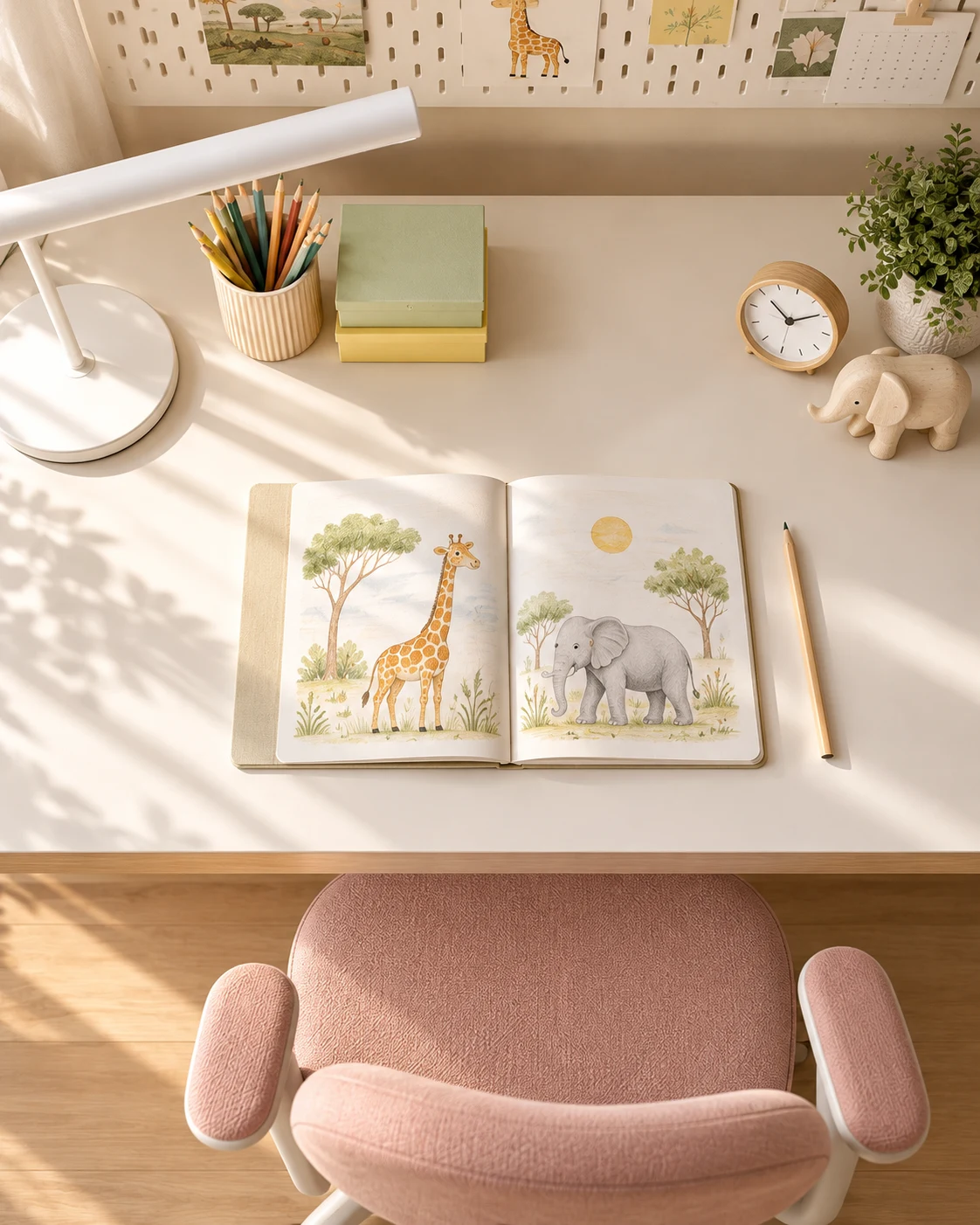
The photo from above shows the entire desktop, making it a good reminder of this step. However, don't judge that your study space is sufficient just by looking at a picture of a picture book. If you actually spread out all of the items you share and simply draw on paper the space you have reserved, it will be easier to notice when you place storage boxes again and encroach on your work surface.
Categorize objects by the moment they are used rather than by their size.
Divide the remaining items into three bundles. These are items that you pick up repeatedly during the current activity, items that you take out when changing activities, and items that are only kept for the time being. Even if it is the same pencil, the one used today and the extra box can go into different bundles.