DESK GUIDE / Desk lighting
Evening desk lighting: one light for the page, another for the shelf
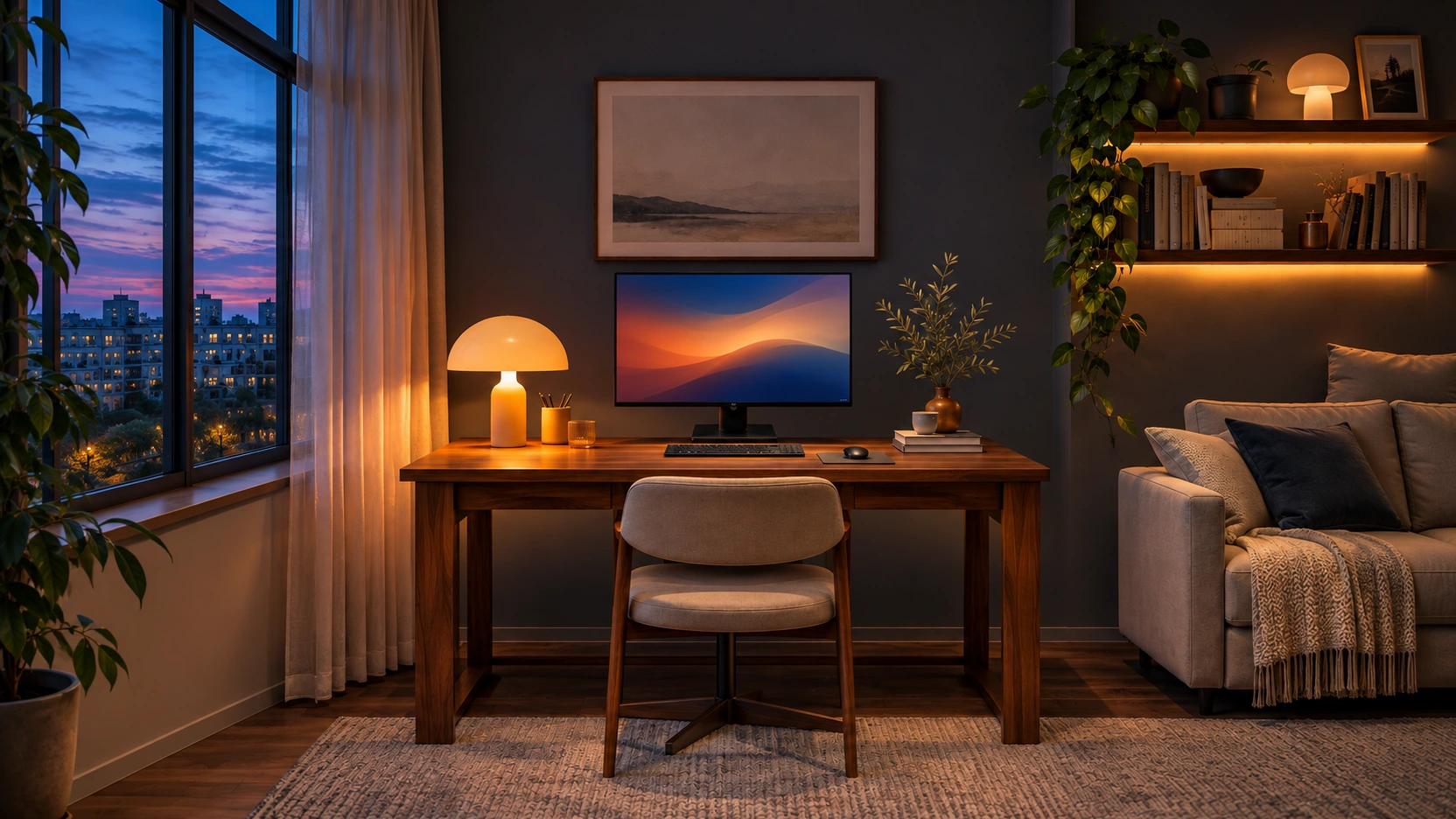
The round lamp at the left pools light on the wood. A long light beneath the shelf on the right picks out the wall beside the sofa. Both look warm against the blue evening outside, but they reach different places. Start with where you’ll sit and what you’ll do there.
This guide draws on an evening desk concept and six 16:9 views generated by extending the scene sideways. The images aren’t a measured day-to-night comparison or a hands-on review. Models, color temperature, illuminance and dimming features are unknown. Use the visible relationships as a starting point for testing your room.
1. Start with three activities: looking at a screen, using paper and resting
The front view shows a chair facing the monitor and a sofa beside it. In the same room, your eye level and direction change as you move. List what needs to be visible from each seat.
At the monitor, notice reflected sources and bright surfaces around it. For writing, the page at the front of the desk is what matters. Lean back on the sofa and you may see straight under the shelf.
List the room lights and lamps you already have. Try each activity with them, even if you don’t have shelf lighting. Where does the light fall short, and where does it shine straight into your eyes?
Move from desk to sofa and try the switches in the order you use them. Thinking through the evening as a sequence makes it easier to spot what needs to change.
2. Set aside the working surface before finding a home for the lamp
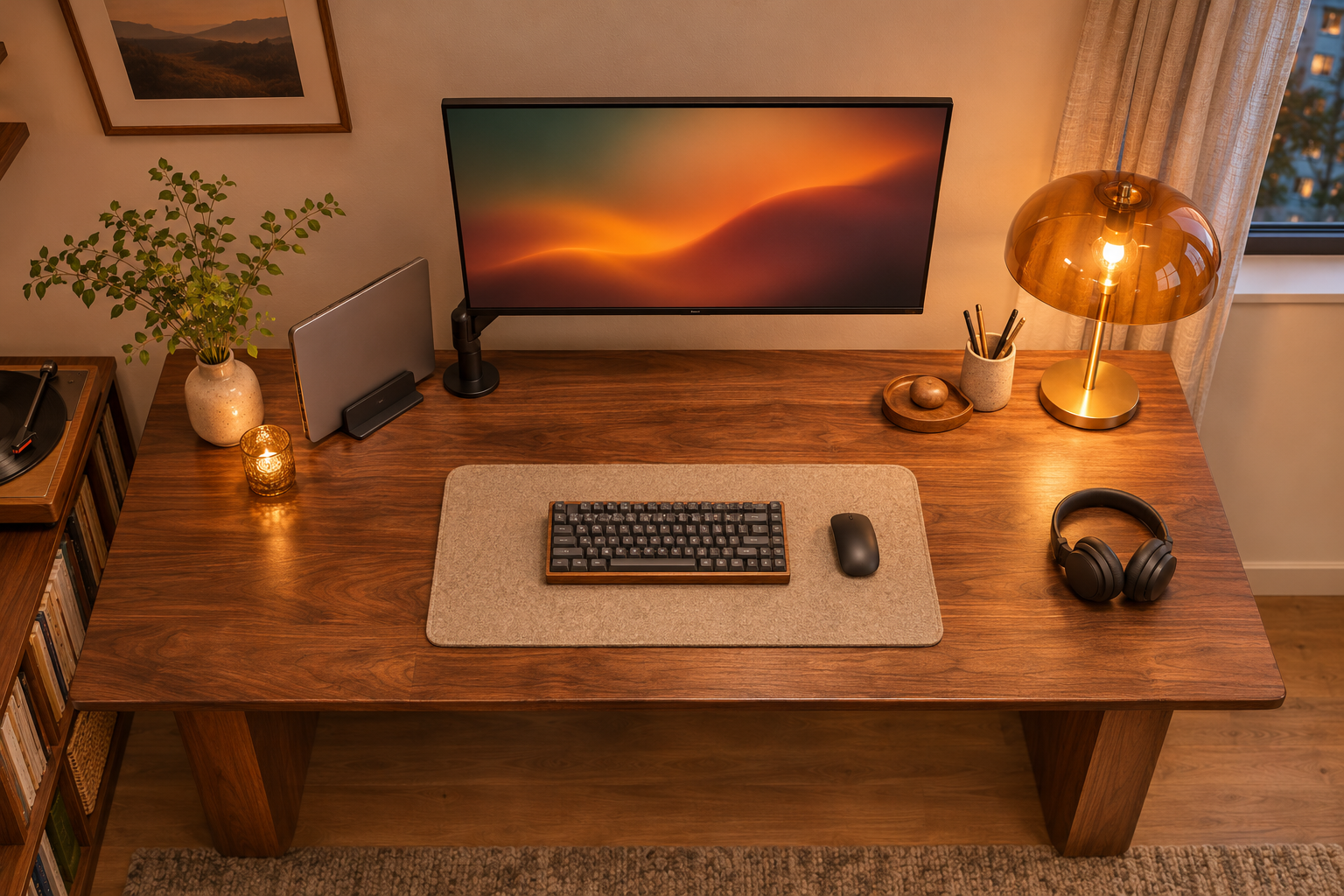
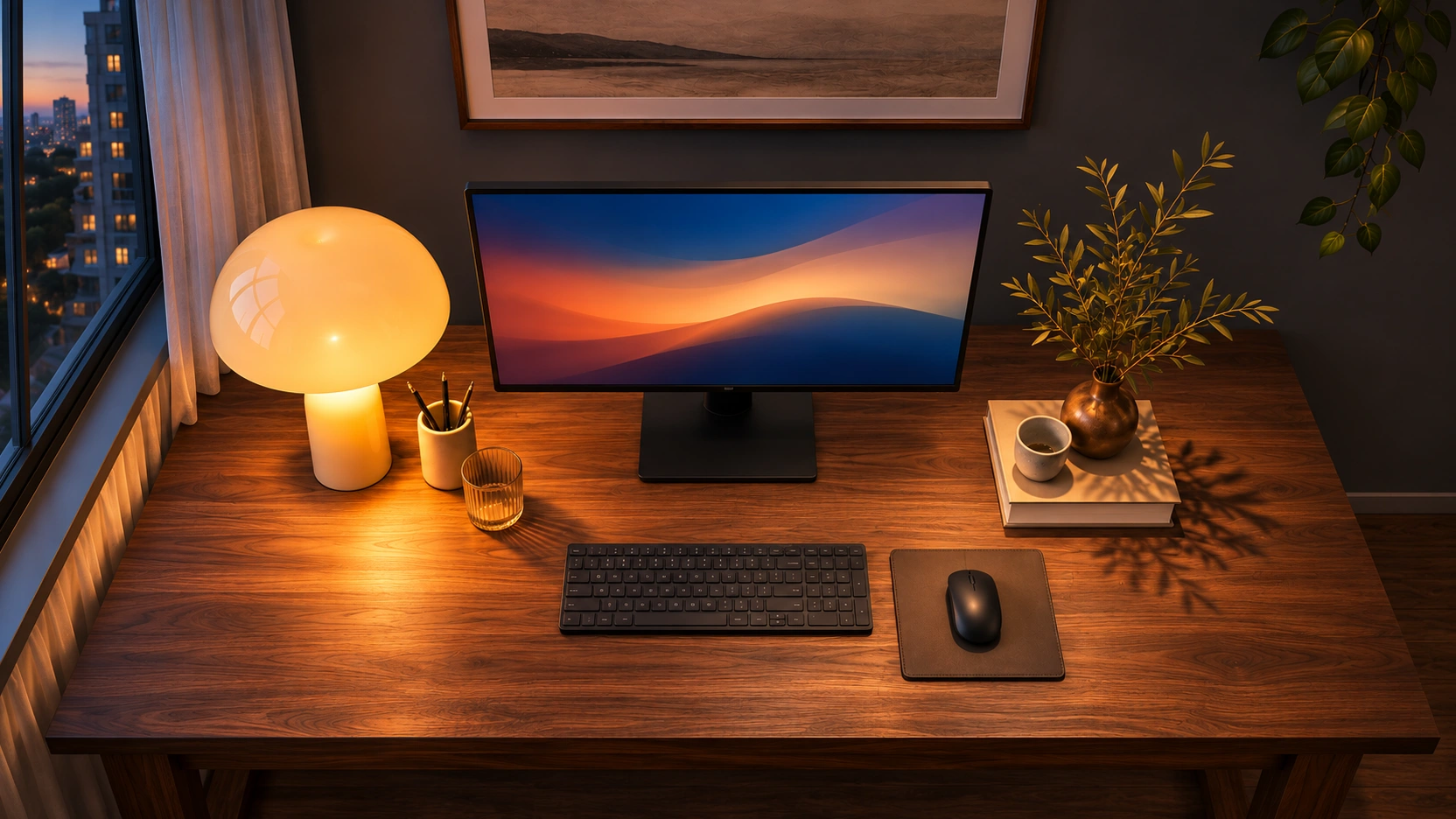
From above, the keyboard sits front and center, with a little mouse pad to its right. The lamp, pen cup and glass gather on the left, books and a vase on the right. Notice the difference between wood that catches a lovely light and wood your hands need.
Sit down, type, move the mouse and open a notebook. Then try the lamp base. If you have to move it every time you write, or shift a glass to alternate between paper and screen, rearrange the accessories first.
Your desk and monitor stand may take up quite different proportions. Use paper or objects you already have to mark out the footprint. Leave a place for things you put down briefly as you switch activities.
Lift the glass and move the vase. Do you reach over electronics with a drink or brush the screen with the plant? Once those movements work, you’ll have a realistic area in which to test the lamp.
3. Position the desk lamp by the light you see from your seat
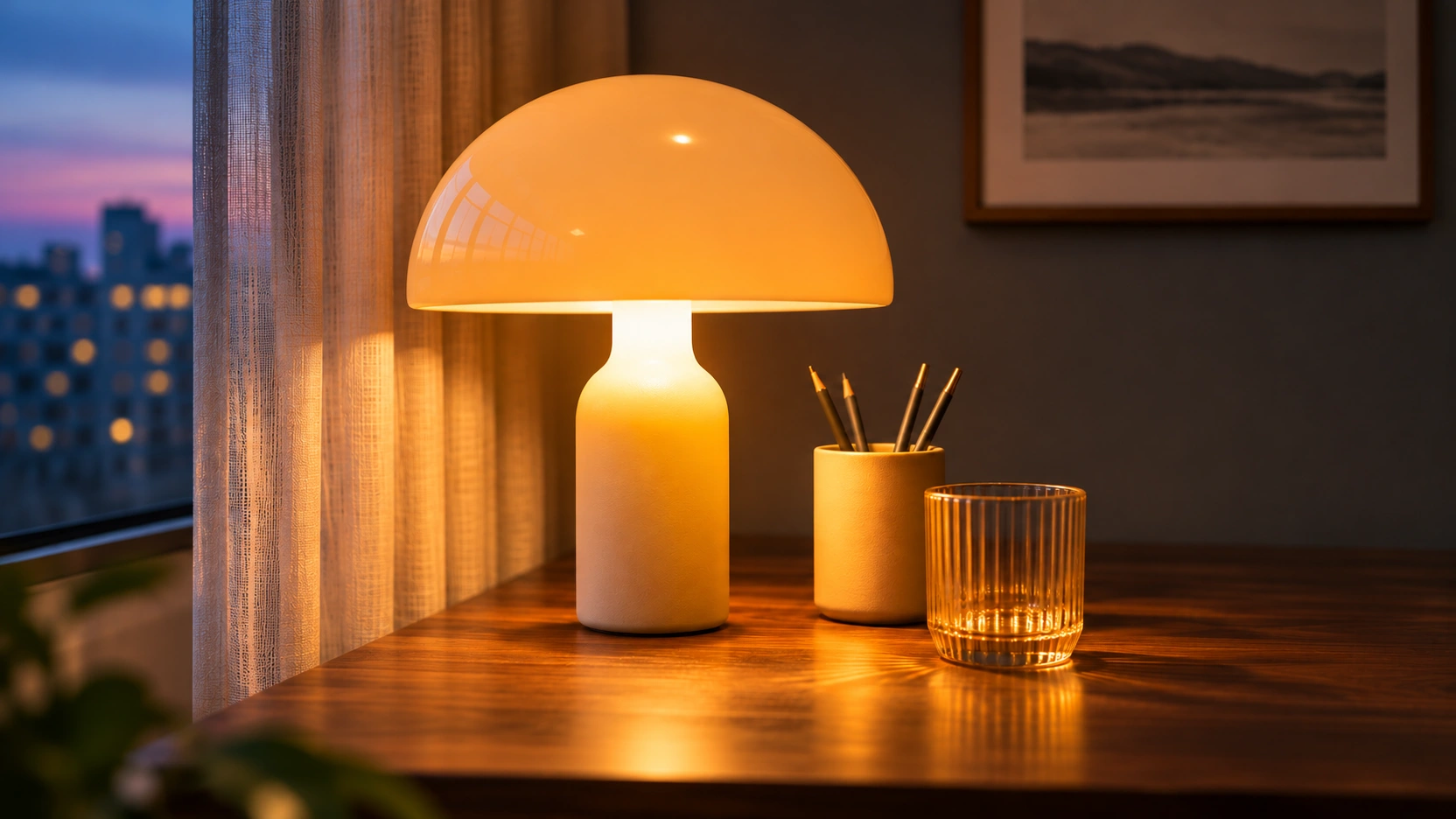
The close-up shows a large domed shade, a bright stem and warm light spilling onto the wood. Orange catches the curtain and reflects in the glass. The shape gives the room a focus, but only a seated test will tell you where the light goes and whether the source is exposed.
Set the lamp to one side and look between screen and paper. Can you see the bright underside of the shade? Move it a little and repeat, adjusting height or angle only as the actual lamp allows.
The left side in the photo is just one option. Your writing hand, paper angle and monitor position change where shadows fall. Write a paragraph or read a page. Warm-looking light alone doesn’t tell you whether the page is bright enough.
Follow the lamp’s specified clearance, including with the curtain moving. Leave room to reach the base and switch without rearranging accessories each evening.
4. Look for reflections against both bright and dark content
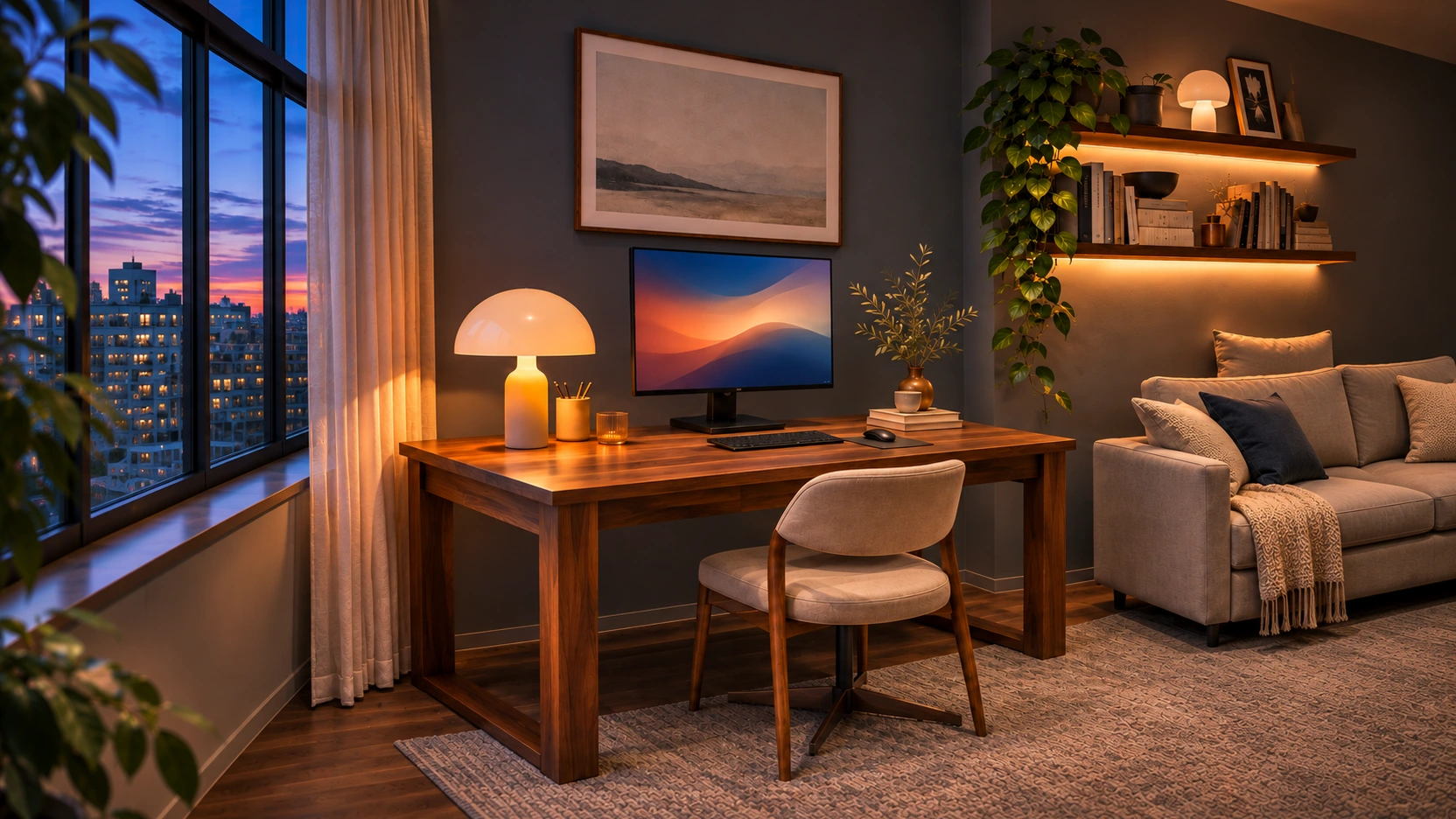
The oblique view brings window, lamp and monitor together, with blue evening outside and warm light indoors. A clear-looking screen in a single picture says little about other content or viewing angles.
Open your usual work and then a dark background. Stay in your working position. Look for the window frame, shade or shelf light in the screen. If a reflection disappears only when you lean sideways, revisit the monitor angle and lamp position.
Adjust one thing at a time within its range of movement. Avoid trading a reflection for an unreadable viewing angle or switching off the only light reaching your page.
Compare curtain positions at dusk and after dark. The images don’t show daylight conditions. A short note about what works at the hours you actually sit here is more useful than guessing.
5. Try the shelf light from the desk and from the sofa
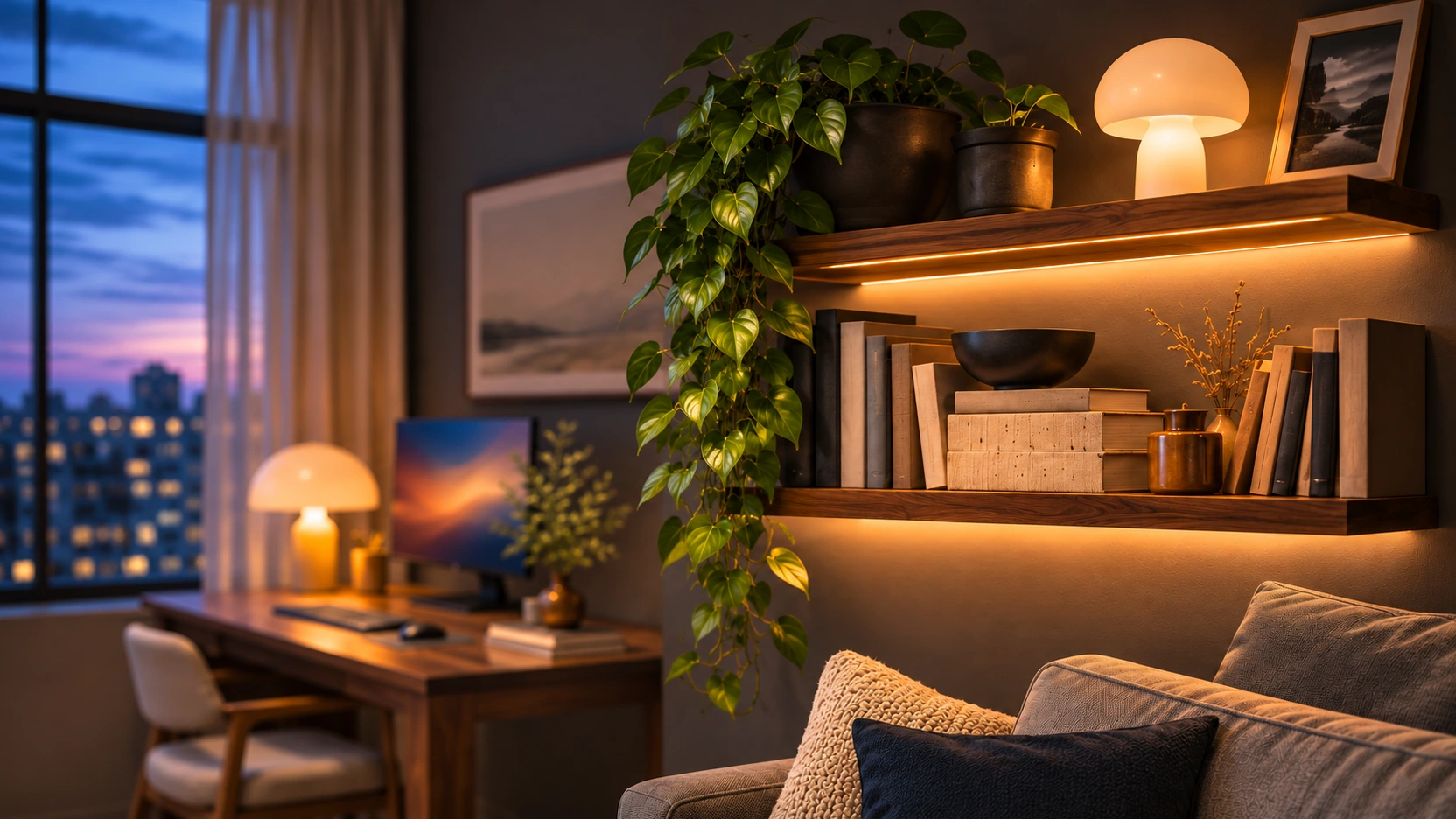
Under the wood shelf, a long band of light spreads onto the wall. A small lamp and plant sit above it, books and containers below. The light outlines the shelving; how much reaches the front of the desk is unknown.
Sit at the desk and then lean back low on the sofa. Where does the source itself come into view? The shelf’s actual height and the fitting’s profile change what you can see.
Turn on the room light and shelf light separately if possible. Decide whether you want to wash the wall, see objects or light a walking route. If the page stays dark, assess the task light separately.
Follow the shelf and light manufacturers’ fixing, heat and power instructions. The photo isn’t a wiring diagram. Check the shelf load before adding anything, and leave a way to move or water plants clear of the lighting and electronics.
6. Note a combination for each activity
The desk lamp, small lamp on the shelf and under-shelf light are all on in the image. Try your own combinations if the circuits switch separately. Otherwise, work with positions and the room lighting you can change.
For screen work, read the text, look for the objects around you and check for glare. For writing, look at the whole page and your hand’s shadow, adding the room or task light as needed. From the sofa, look for exposed sources and check the route back to the desk.
A simple note will do: what you switched on for the screen, what you added for writing, and which light caught your eye from the sofa. Include the setting if your lamp dims. Dimming hasn’t been verified for the pictured lights.
Find a sequence you’ll actually use. If changing activities means a trip around the furniture to reach a switch, look at switch and outlet access before adding a controller.
7. Separate what looks warm in a photo from what a fixture can deliver
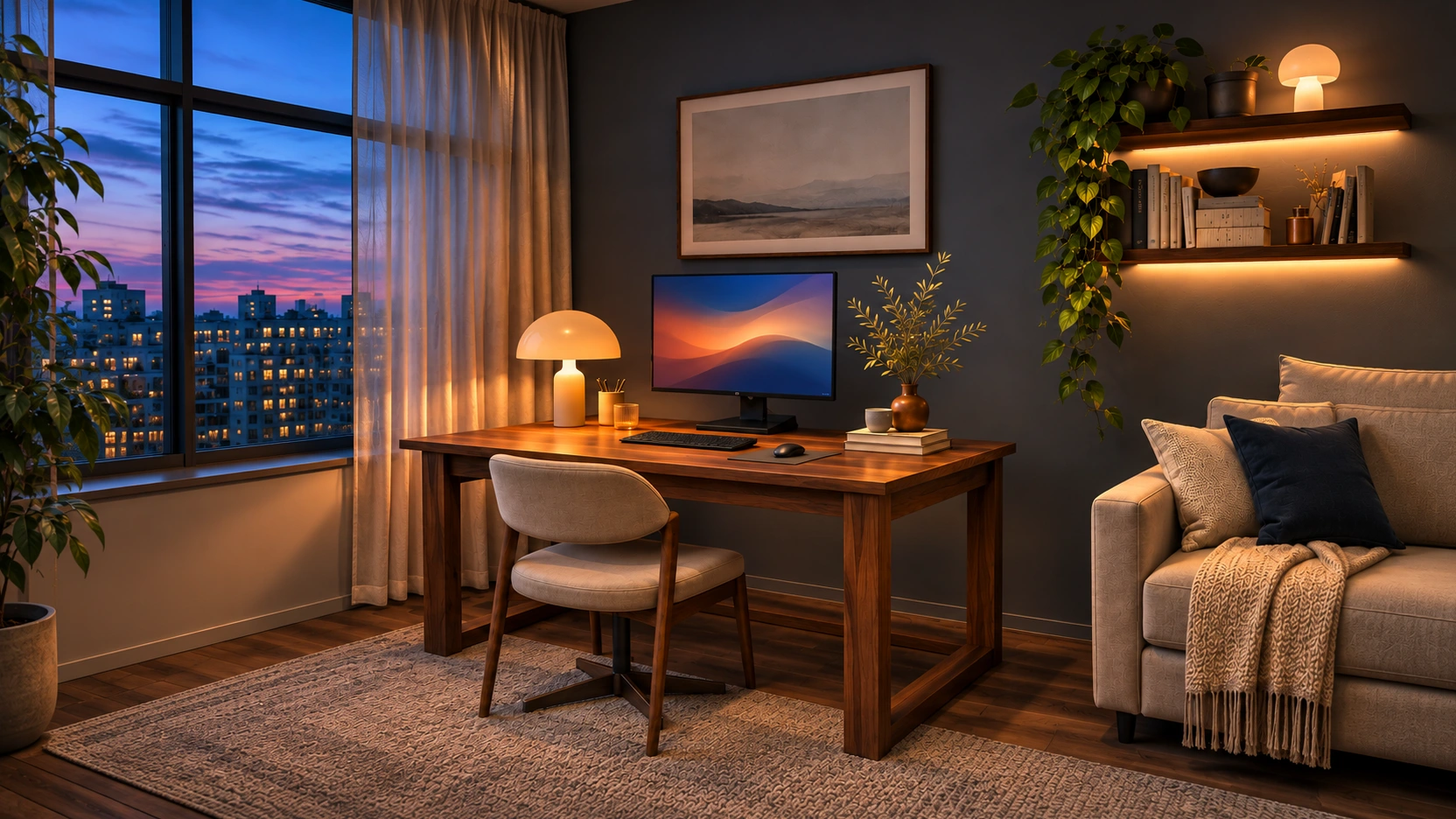
Warm light falls across a wood top, dark wall and pale fabric. The blue of the window makes the orange indoors feel richer. Camera and display settings also affect it, so there’s no reliable bulb specification to read from the color.
Try your current lights in the room. Look at the wood, curtains and upholstery; then do something at the desk. Can you see what you need, and do the lights look good together? Name the problem before picking a number.
If you need a new fitting, list its footprint, mounting method, power supply, light output, color and controls. Compare those features with your needs rather than guessing the model in the image.
Use an object of similar size to mock up a shade you like. If it crowds the desk or catches the curtain, test another spot. The profile can inspire a choice, but real dimensions and movement determine the final position.
8. Live with the layout for an evening
Work at the screen, open a book, then move to the sofa. Which lights do you turn on or off? Is a switch beyond reach or a cord across the way? An evening’s routine reveals more than a moment staged for a photograph.
Move the chair and open the window while checking the power and charging leads. Moving the lamp shouldn’t pull its cord tight. Follow the equipment instructions; the concealed runs in the picture aren’t a routing plan.
The next day, change one thing: shift the lamp, move the glass or revisit the shelf light from the sofa. Test again so you can tell what improved the page or view. Consider another light only for a need that remains.
Use the checklist to record what you can see and how you move between screen, paper and sofa. Keep the switch sequence that fits your evening.
CHECK BEFORE YOU FINISH
One last check
Tick off each item once you've checked it at your desk.