DESK STORY · Study
A Japandi Study Corner with Soft Curves and Room to Create
Wood & Natural · Study desk setup

URITRIP
November 7, 2026
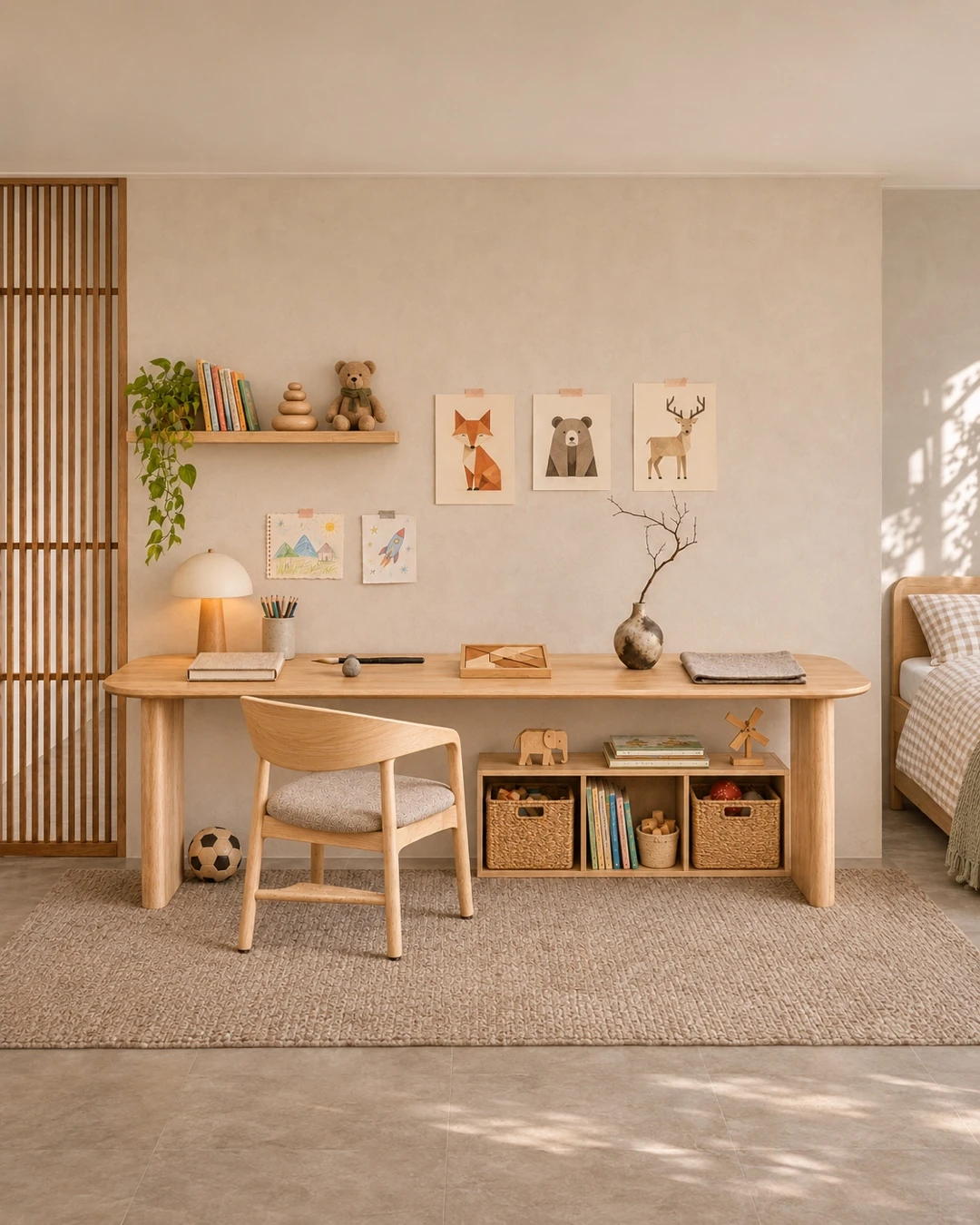
Books, a brush and a wooden puzzle take the place of a screen on this desk. A pale wood finish, curved chair, beige wall and textured rug set a quiet backdrop. This Japandi study concept gives each object enough space for its shape to stand out.
There is plenty to notice within the muted palette. The ceramic vase has mottled markings, while the book cover and folded fabric bring subtler texture. A closer look reveals more variety than a room matched in one shade of beige.
A rounded desk and chair set the tone
The long desktop has rounded ends and two broad supports beneath it. The chair back and arms follow a continuous curve. Against the straight edges of the paper artwork and the vertical slats on the left, these softer outlines become the focal point. The images do not establish the wood species, whether the furniture is solid wood, or its dimensions.
Leave the middle ready for the next activity
The book sits on the left and the wooden puzzle just right of center. Bare desktop shows between the brush and small stone, while the vase and fabric on the right are spaced apart. The open area reads as somewhere to open a book and move your hands, rather than leftover space between decorations.
No notebook is open in the images, so they cannot tell us how much writing space is available. To try this arrangement at home, open your largest notebook first and decide where the puzzle or folded cloth can move temporarily.
A small lamp and brush suggest time spent making
The dome lamp, light-colored pencil pot and apparently clothbound book form a group on the left. The brush and wooden pieces suggest writing, drawing or working through shapes by hand. With no computer in the scene, these smaller objects have a clearer presence.
Keep storage below the display
A low bookcase sits beneath the right side of the desk. Books stand in the middle, with smaller objects gathered in baskets on either side. A short stack of books and small wooden ornaments sit on top. Instead of adding more to the desktop, the arrangement gives nearby space below its own role.
The images do not show whether the bookcase and desk are designed as one unit. In a real room, check knee and foot room and whether you can pull out the baskets without twisting awkwardly.
Paper artwork and a shelf tell a small story
The fox, bear and deer prints use orange, brown and gray tones that sit comfortably with the desk. Mountain and rocket drawings below bring a playful note to the orderly wall. Books, a teddy bear and trailing leaves on the left shelf vary the heights and rhythm.
Vary the texture within a close palette
The rug and chair cushion contrast with smoother wood surfaces and patterned ceramic, all in closely related colors. Small checks on the bedding carry the light brown tones to the right. Before adding anything new, compare the fabrics, paper and book covers you already own.
The branch in the vase draws a slender line upward, while the low puzzle tray spreads horizontally. Spacing objects of different heights lets their individual shapes remain visible. Rather than matching the vase exactly, allow room for your view and the movement of your arms when seated.
Three ideas to bring home
Pair curved furniture with straight-edged storage and stay close to wood tones and beige.
Reserve space for an open book first, then give puzzles and tools a low, nearby home.
Explore the contrast between paper, ceramic and fabric before adding more decoration.
Explore the desk and its surroundings in the Japandi desk tour, then work through furniture placement and storage in the Japandi study space guide.
Products in this photo 0
You can also tap + on the photo to see them