DESK TOUR
A pale wood desk along the wall beside the bed
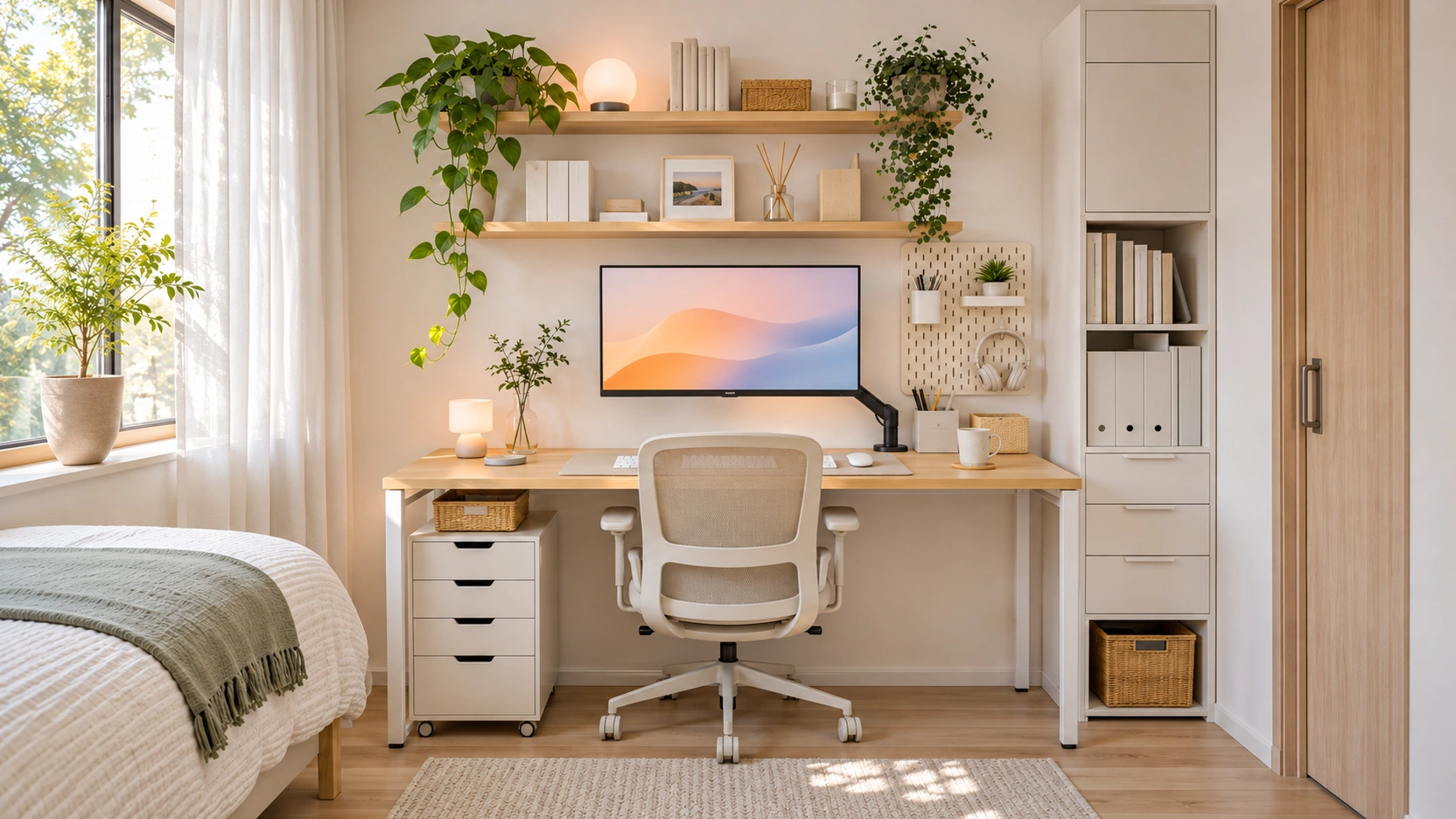
The bed and window are on the left, the pale wood desk in the middle and a tall cabinet on the right. Two shelves and a small pegboard climb the wall above the desk. Behind the chair, the floor stays open. This compact bedroom concept gathers work and storage along one wall.
- Layout
- Desk beside the bed and window, wall shelves, pegboard and tall storage
- Colors and textures
- Pale wood, white and cream, woven baskets and green foliage
- Key pieces
- Monitor arm, wall pegboard, rolling drawers and a mesh-look chair
- About the images
- Six supplied concept images. Room and furniture dimensions, models, actual materials and performance are unverified. Accessories may vary between views.
The tour follows the colors, shapes and positions visible in the images. It explores ideas for sleeping and working in one room; it doesn’t draw on a resident’s experience.
One working wall between the bed and the cabinet
From the front, the desk draws a horizontal line toward the upright cabinet. A corner of the bed appears at the left with curtains and window behind it. Keeping the desk against the wall gathers the working area in one direction.
The cabinet mixes open cubbies, closed drawers and an upper door. Book spines and files can remain visible while other things sit behind a front. We can’t see the contents, but the different openings offer alternatives to desktop storage.
Beneath the desk, drawers sit to the left and the chair occupies the middle. Storage stops short of the center, leaving space for feet as well as the seat.
At home, get out of bed, sit down and pull the chair back. Can you still get to the door and cabinet? Moving the real furniture tells you more than copying the gaps in the image.
A window to the side and a curtain that lets the light through
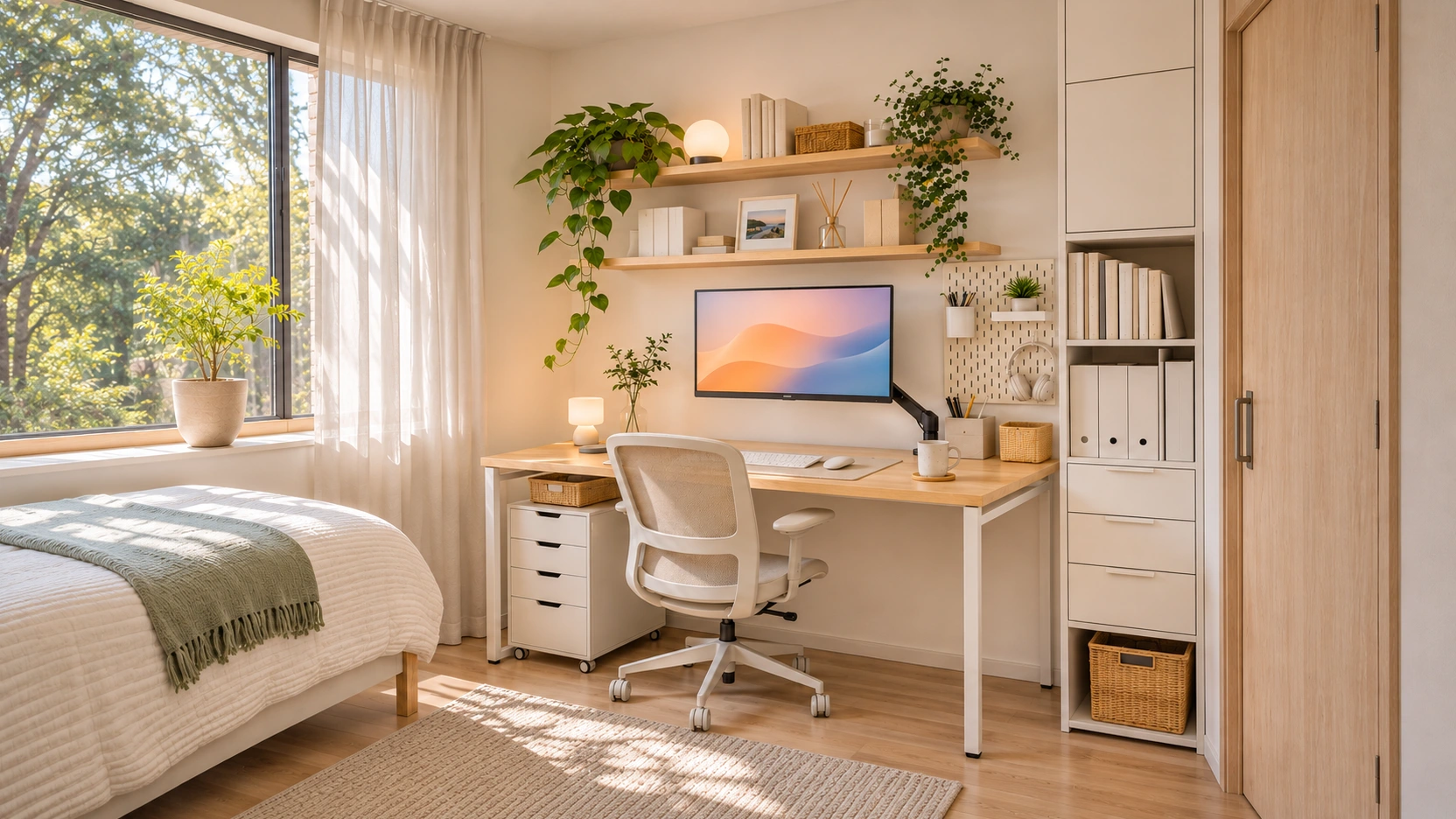
The left-hand view shows daylight filtering through the curtain and leaf shadows falling on the desk and floor. A plant on the window ledge adds green at a different height from the vase on the desk.
Pale bedding and a light green throw carry the beige and foliage colors into the sleeping area. Variations in texture and the size of each patch let one palette run through the whole room.
The curtain hangs almost to the floor beside the desk end, drawers and bed. Allow a path for your hand to draw it, open the window or reach the plant for watering.
The daylight in the image captures one moment. Check glare and direct light at your usual working hour. The side window is an idea to borrow; curtain opacity and monitor angle are choices to make in your room.
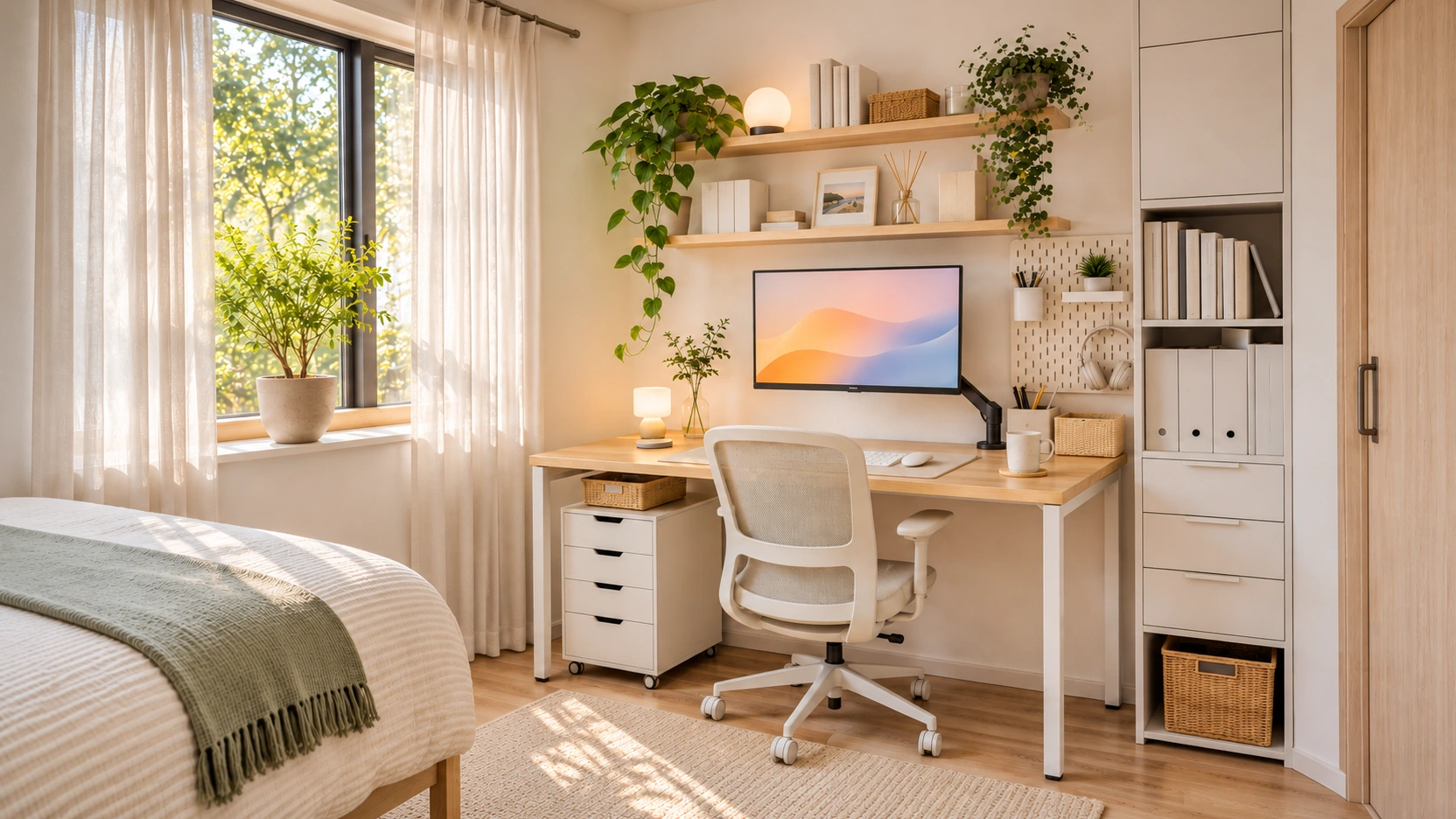
White frames and pale wood set the background
From the right, light finishes repeat on the desk legs, chair, drawers and tall unit. Wood color runs across the desktop and shelves, then reappears on the floor and door. Large pieces work together without needing a different color for each.
The long desk and shelves contrast with the upright cabinet. The rounded chair back and curved little lamp break up the rectangles, giving a restrained palette some movement.
The basket’s chunky weave, fine curtain and close-textured chair back bring detail between larger surfaces. The materials themselves aren’t verified.
Slightly different whites can live together. Start with the largest surfaces you already own and hold a mat or basket against them. What travels well from this room is the repetition, rather than an exact white or a particular wood species.
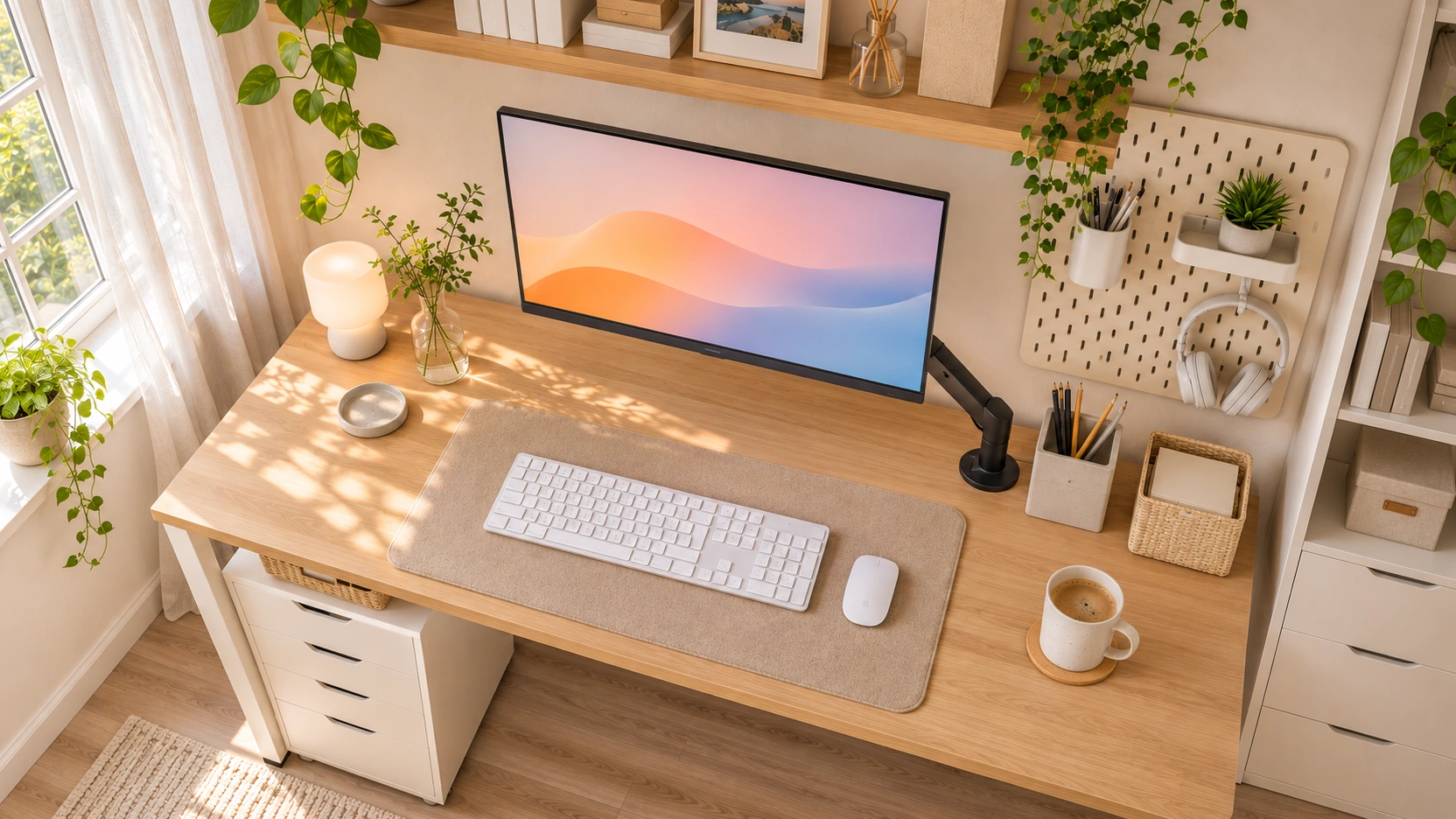
The center is for the tools being used today
Seen from above, the keyboard and mouse sit on a pale mat. An arm reaches in from the back right to hold the screen, with no separate riser visible. The front and middle are available for input.
A small lamp and clear vase sit at the far left; a pen cup, basket and drinking cup gather at the right. There are plenty of things on the desk, but the main hand movements have their own area.
The image doesn’t show books or writing in progress. If you switch from work to studying, open your book in front of, or beside, the keyboard. A layout that fits a monitor may still need adjustment for paper.
Even a little dish or cup needs somewhere to return. Notice what repeatedly finds its way back to the middle. Giving those things a home makes the clear surface easier to keep.
Headphones and small tools on the wall
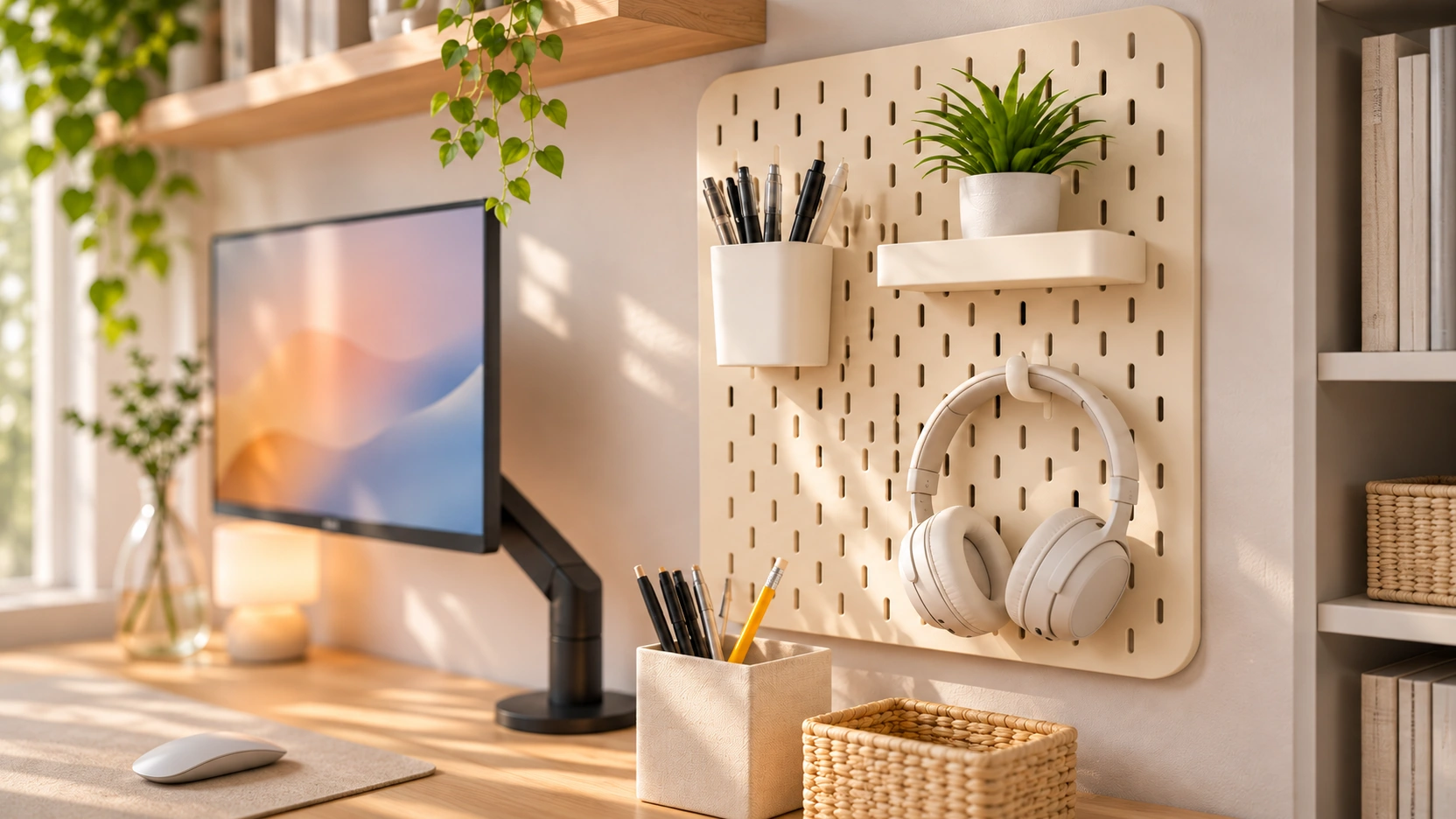
To the right of the monitor, a cream board with elongated slots carries a pen cup, small shelf and headphone hook. A few things that might otherwise cover the wood have moved up onto the wall.
Another pen holder stands below the board. The images don’t tell us how the owner sorts stationery. At home, frequently used pens and spare supplies might be a reason to keep two locations.
The headphones hang in profile, clear of the mat. Try retrieving and rehanging yours with one hand from the chair. A height that looks balanced may still bring your hand up against the screen.
Plenty of slots are empty. Choose fittings for the few things you use. Mount the board according to the wall, hardware and rated load.
Rolling drawers and a shallow basket next to the chair
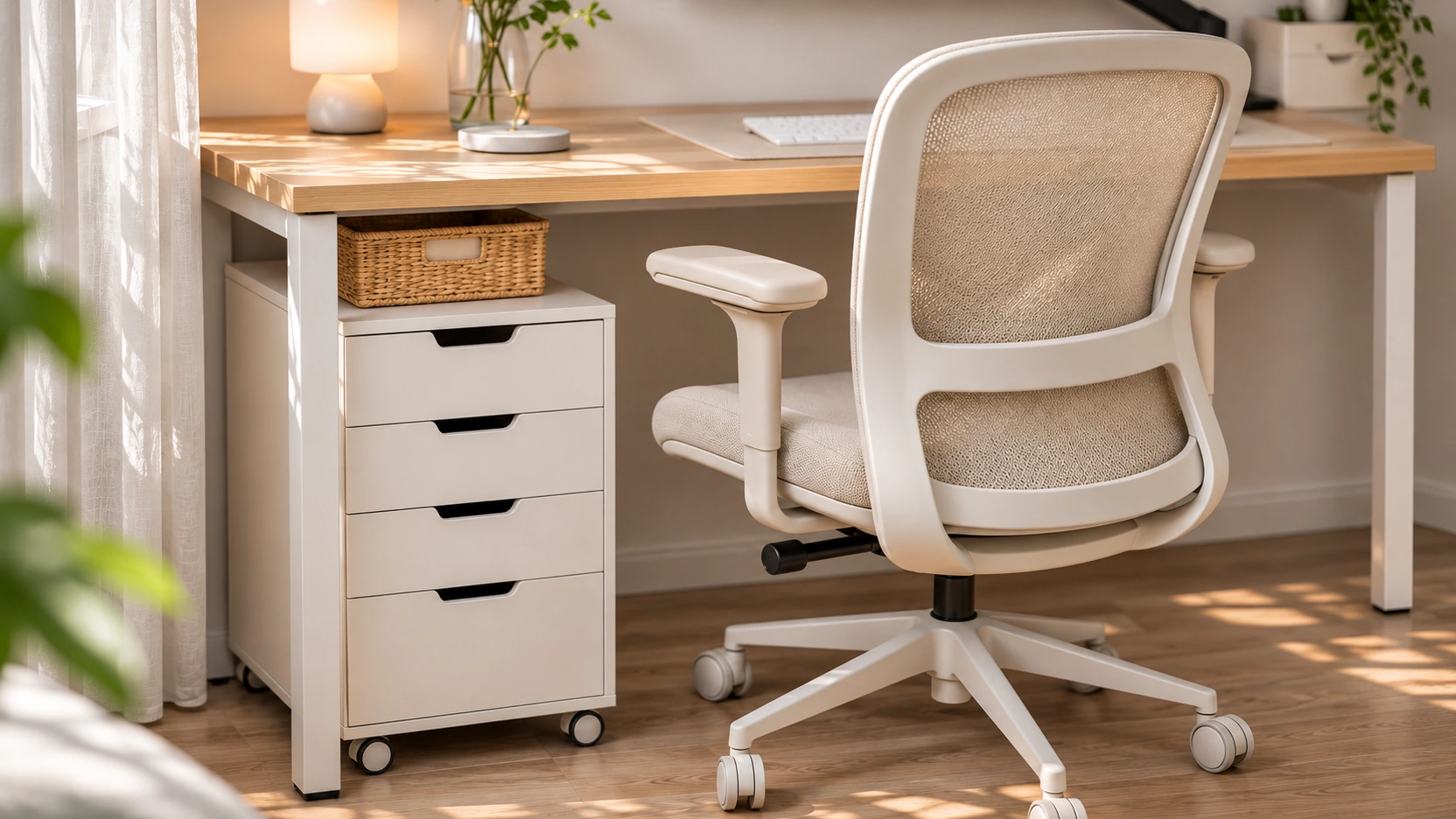
In close-up, the drawer fronts have recessed pulls and the unit sits on casters. A shallow basket fits in the gap beneath the desk, adding storage of a different size above the drawers.
It all sits left of the chair. The armrests, back and wheelbase have room of their own, showing how storage and seated movement can share the space.
Try opening a drawer, turning the wheels and bringing the armrests close to the top. The chair in the image appears to have a mesh surface; its model, adjustments and comfort can’t be judged from the picture.
A basket is useful for carrying several things together, provided it comes out without shifting the cabinet every time. Check retrieval as well as fit.
Books and trailing green at different heights
Two long shelves hold books, small boxes, a frame, lighting and plants. Leaves fall from the ends while books and boxes make upright lines. The wall does storage work without looking like a row of identical objects.
The tall unit on the right also holds books, files and baskets. Open shelves keep things visible, while lower furniture can hold groups together. The contents and frequency of use are unknown, but size and retrieval suggest different homes.
Reach toward a high shelf before assigning it everyday items. Lighter display pieces or seldom-used things may suit it better. The wall and shelf rating determine how many books and plants can go there.
Green repeats at the window, on the desk and overhead. Borrow the visual rhythm separately from the plant-care plan. Check light, watering and access before deciding how many to keep.
Which surface would you clear first?
The room gives each surface a job. The desk stays available for input, hooks take hanging items, and drawers, baskets and tall storage take the rest at different heights. Pale finishes draw the pieces together.
Before collecting white furniture or buying a pegboard, list what you reach for in one day. Separate what lives on the desk, what lands there briefly and what needs to go back elsewhere. You may only need to move what you have.
For the practical sequence, see Organizing a small bedroom desk, from the desktop to the pegboard and drawers. Start with a relationship you like in the tour and test it against your own movements.
TAKEAWAY
Ideas to take to your own desk
Check moving furniture first
Pull out the chair and drawers and try the route between bed and door.
Hang what you actually reach for
Start with the hooks and cups you need and leave some slots free.
Store things in useful groups
Separate desktop items, loose drawer contents and kits that travel together in a basket.
- #Small-room desks
- #White and wood
- #Wall storage
- #Bedroom desks