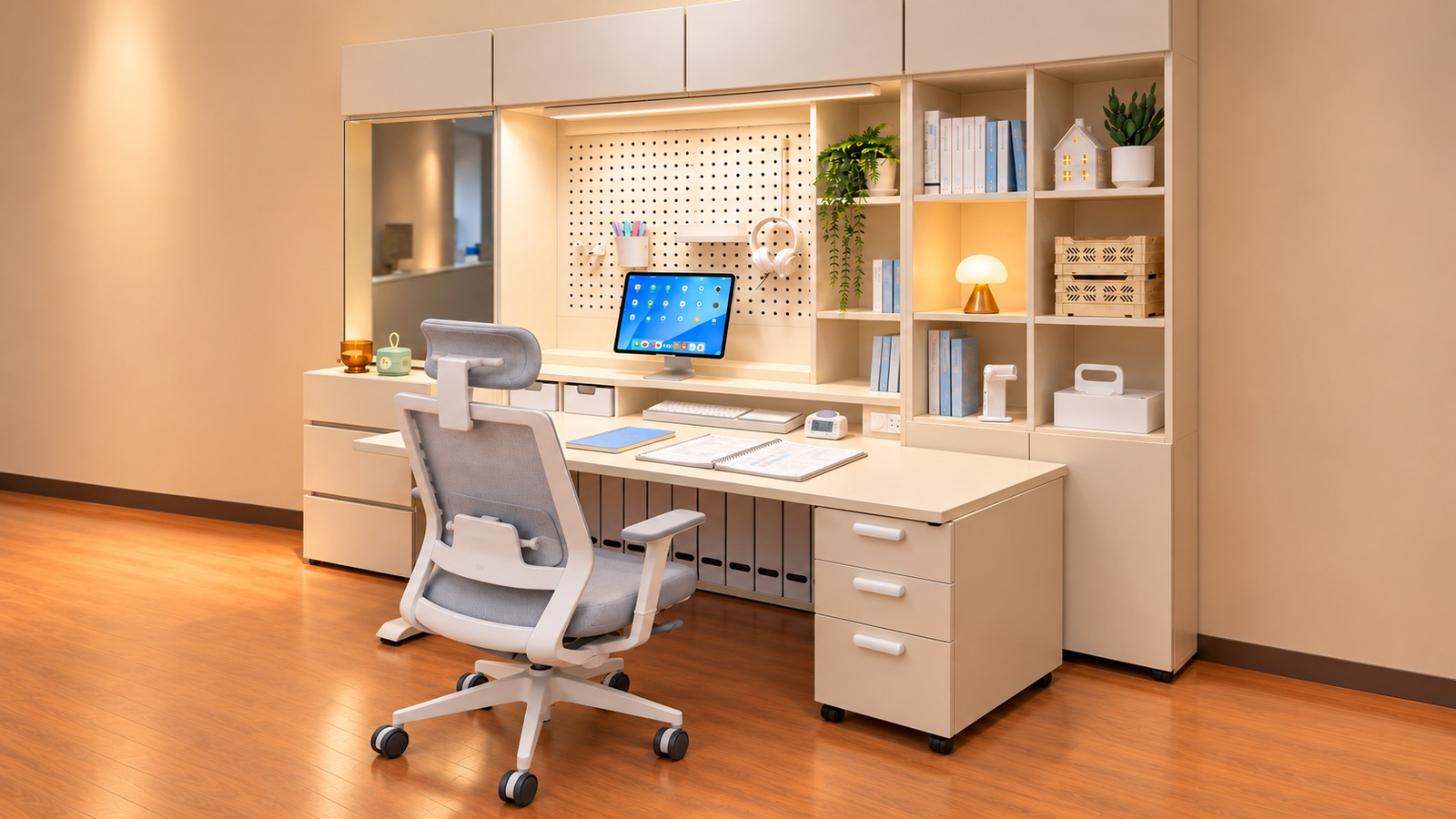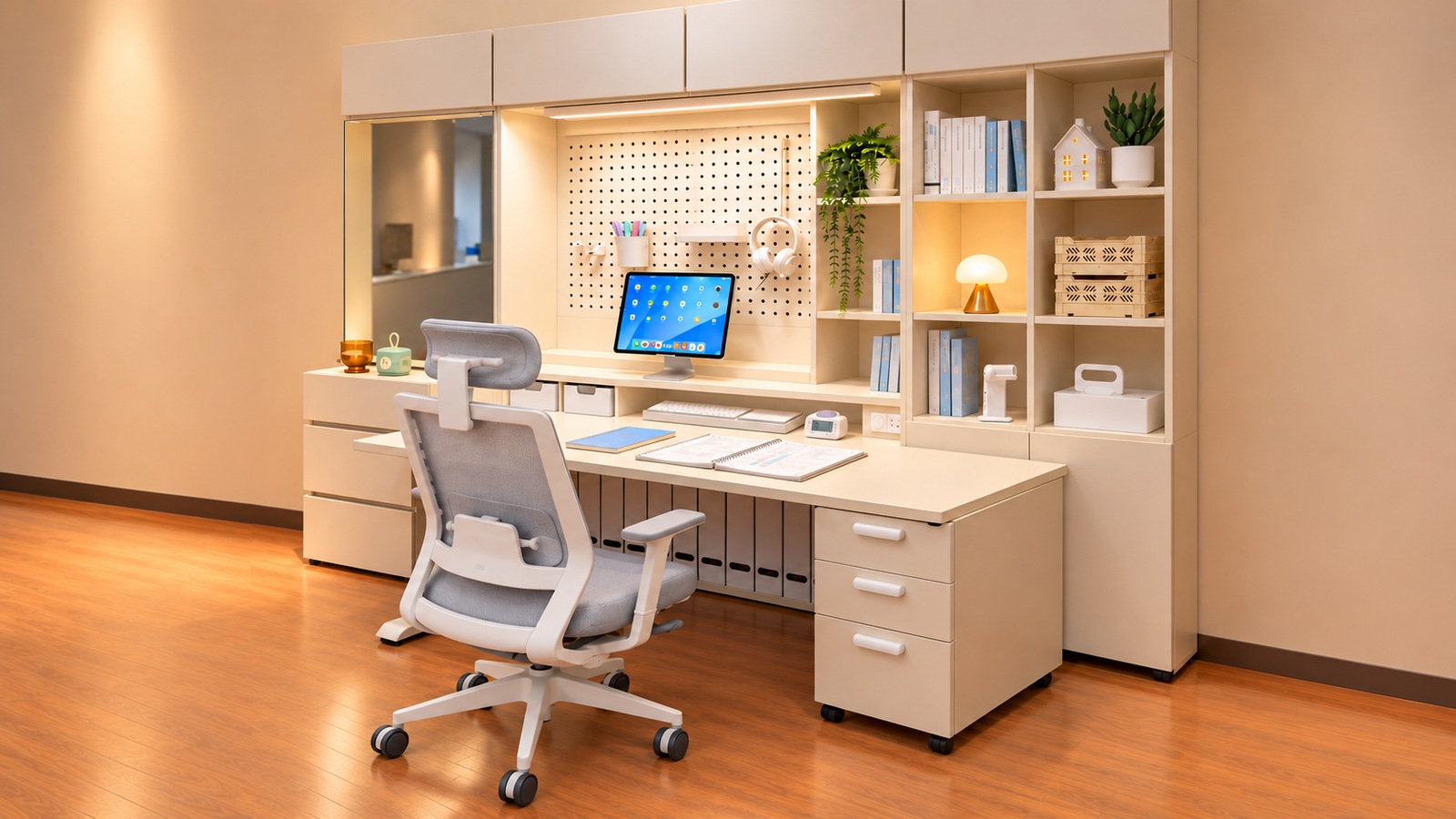
DESK GUIDE / Small rooms
Organizing a small bedroom desk, from the desktop to the pegboard and drawers
Moving things off the desk and onto the wall only works if you can reach them. A full pegboard or a drawer that makes you move your chair can create a new problem. Start by watching where you stand, reach and sit when you actually use the room.
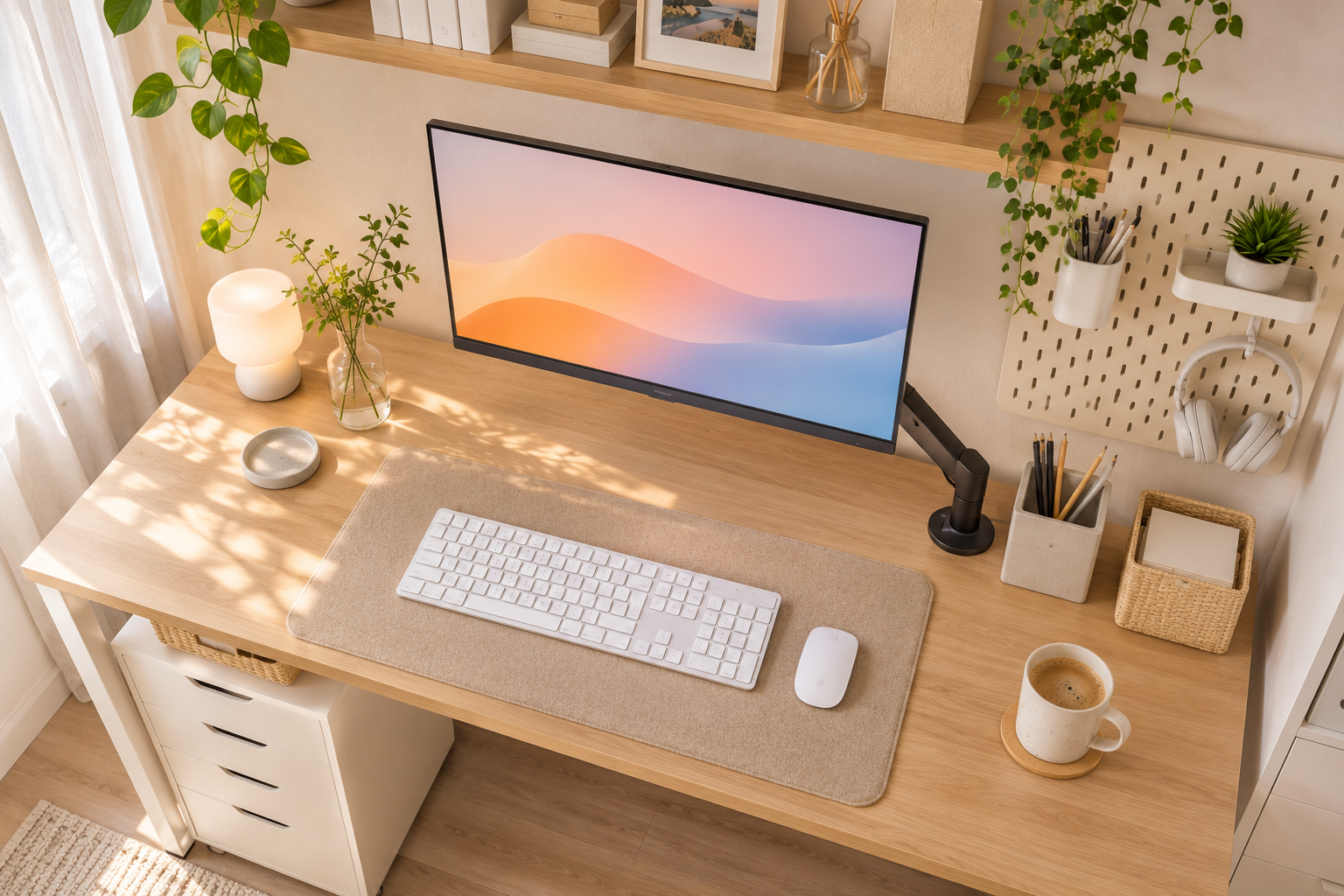
Six concept views of a pale wood desk, wall shelf, pegboard and rolling drawers inspired this guide. The room, furniture and fixings haven’t been measured. Try each step with your own furniture and routines.
1. Walk the route from bed to desk before organizing the surface
Get up from the bed, sit at the desk, roll back and leave the room. When the bed is close, the gap between the two pieces of furniture is a route your body needs to use.
Open the door, cabinet and drawers as far as you normally would. Try it with someone sitting and again with the chair pulled back. If you mark the floor, trace the space the furniture actually sweeps through.
A photo can’t give you the right aisle width. Bodies, furniture and door swings differ. Stand in front of the cabinet, turn to make the bed and, if you share the room, let the other person walk past.
Where paths overlap, try moving the drawer unit to the other side or removing the basket by the chair. Leave room for the furniture to open and people to move before filling another gap.
2. Lay out the task you do most often
Set out the tools for your usual job, whether that’s a keyboard and mouse or an open book and pen. Move both hands. The space left after that is where accessories can go.
Try switching activities. Where does the keyboard go when the book opens? Does the mouse hit your cup? Is a charging device sitting on the paper? A patch of bare wood makes a good temporary landing place.
Measure for the mat once you know that footprint. Try shifting your existing mat for a few days before looking for the beige one in the image. You may find that position matters more than size.
Set aside what came off the desktop. Sort it loosely into everyday tools, occasional items and things that never had a home. That will tell you what the wall and drawers need to hold.
3. Start the pegboard with things worth hanging
Lay everything out. Headphones need a hook, pens a cup, and a few things may need a little shelf. Choose attachments for the objects you actually plan to move.
Mock up the board position with paper. From your seat, can you reach each item, see past it and put the headphones back without hitting the monitor arm or pen cup? Leave space for your fingers around the object.
Follow the board maker’s instructions for your wall and load. If mounting is impractical, use existing furniture or another approved mounting method. Check weight and watering access separately for any plant on a shelf.
Watch what makes it back onto the board. A hook that’s too high or awkward may explain why the headphones keep landing on the desk. Empty holes give you room to adjust.
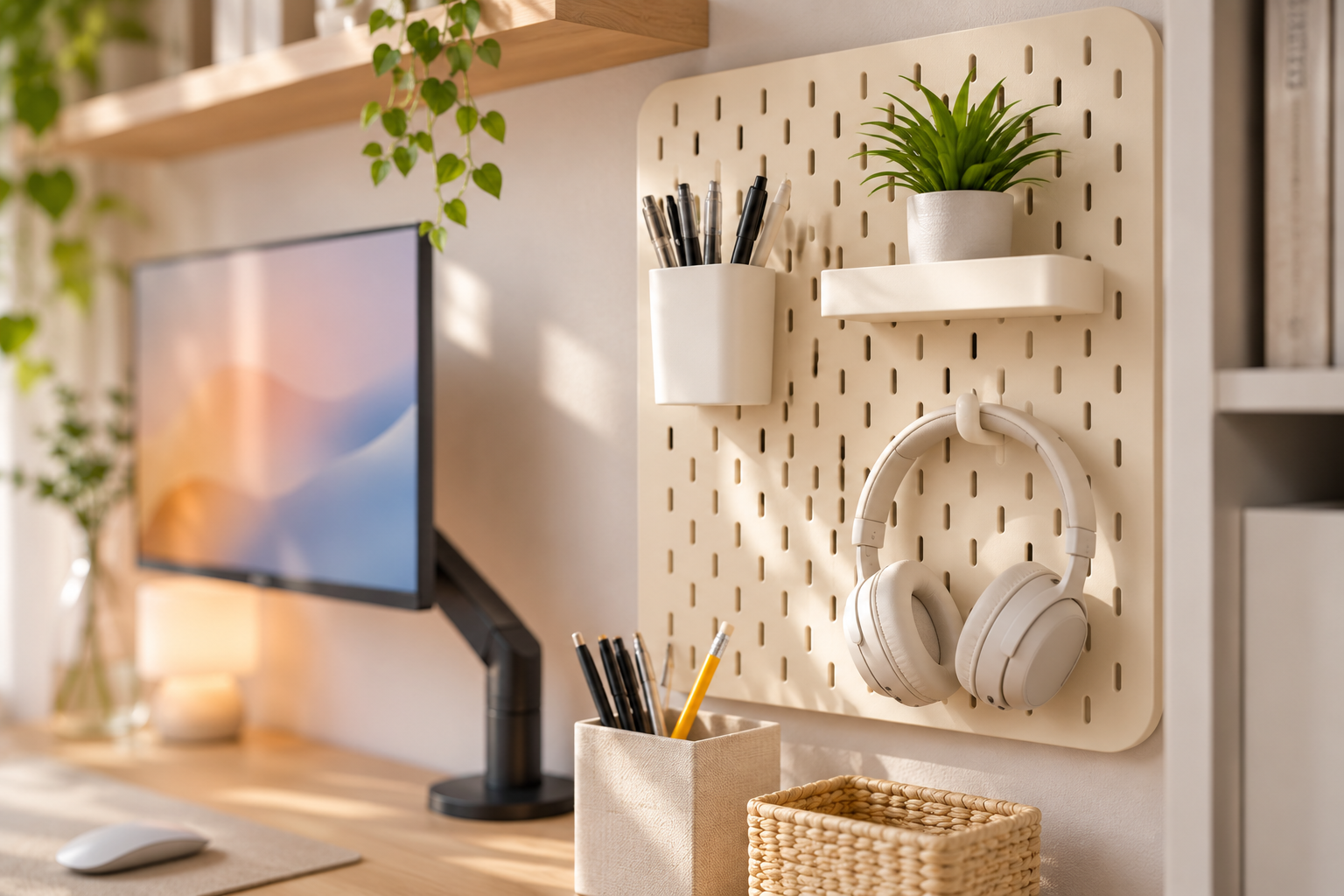
4. Use drawers for individual items and baskets for things that travel together
Think about what you look for one at a time and what you’d carry as a kit. Spare pens might share a drawer organizer, while a basket holds everything for one activity.
Start with a few frequently used things. Test the easiest compartment against one you have to reach deep into. If the categories are too fine to put things back easily, combine a couple. The photo can’t tell us what belongs in every drawer.
Open under-desk drawers while sitting. Check your knees, feet and chair wheels, and try lifting out a basket without twisting or shifting furniture. Measure the gap above the cabinet and check what its top can support.
A small room benefits from a little unassigned space for moving the chair or setting work aside. Before adding a drawer, name what will go in it and try the route you’ll use to reach it.
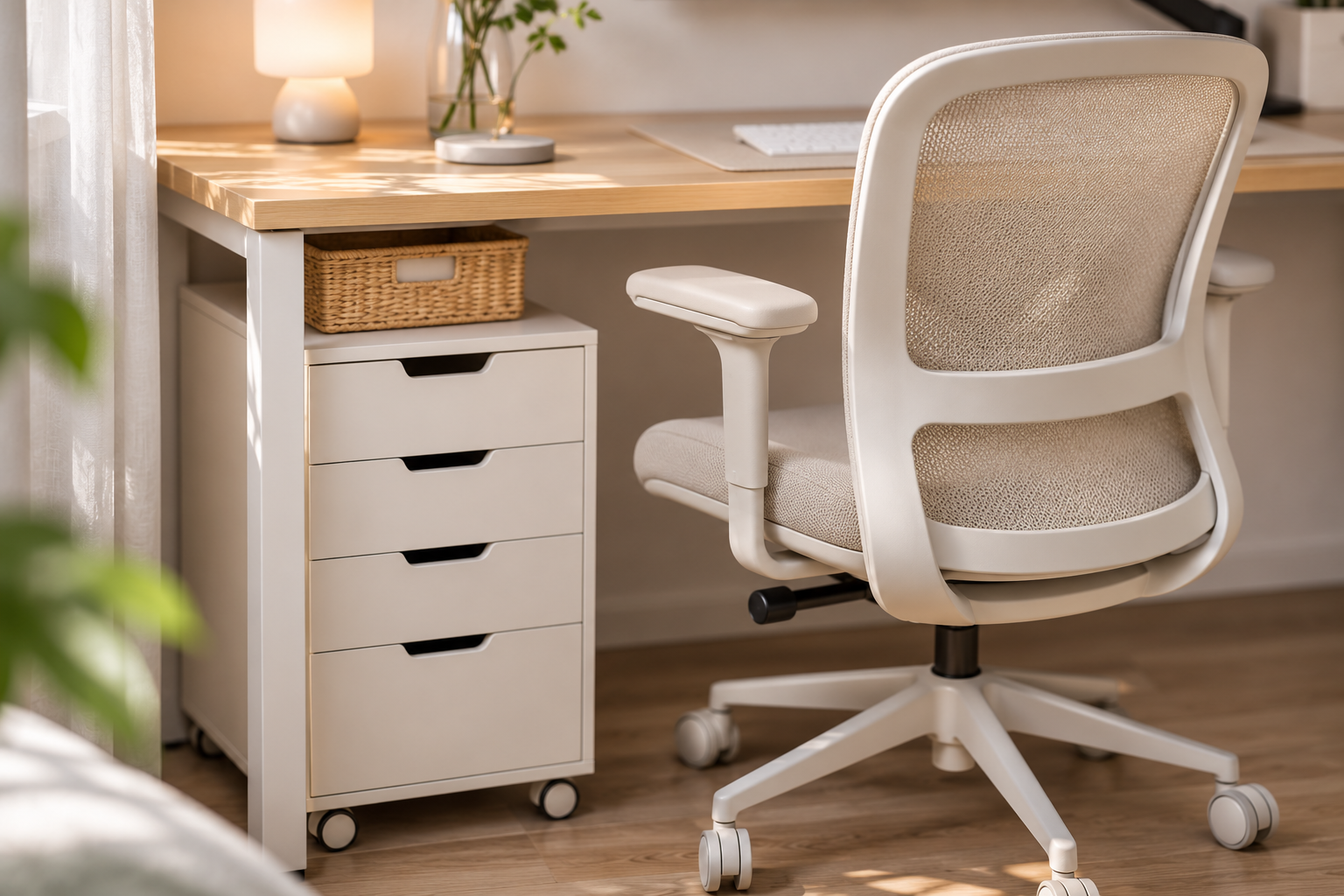
5. Choose high-shelf storage by reach and upkeep
Try the reach before deciding what belongs up high. Keep everyday items closer. If reaching a shelf means standing on a chair, rethink how you’ll use that shelf day to day.
Check the shelf’s installation and load guidance before putting books or boxes on it. The wall and fixings set the limit. Look at what could fall onto or interfere with the monitor and light below.
Plan where a plant will be watered as well as displayed. Can you lift it out without shifting electronics? Could trailing leaves cover the screen? Choose for your room’s daylight and care routine. The pictured species and its condition are unconfirmed.
Leave gaps between boxes and books so you can clean and rearrange them. When there’s already enough storage, a manageable shelf is more useful than another layer of ornaments.
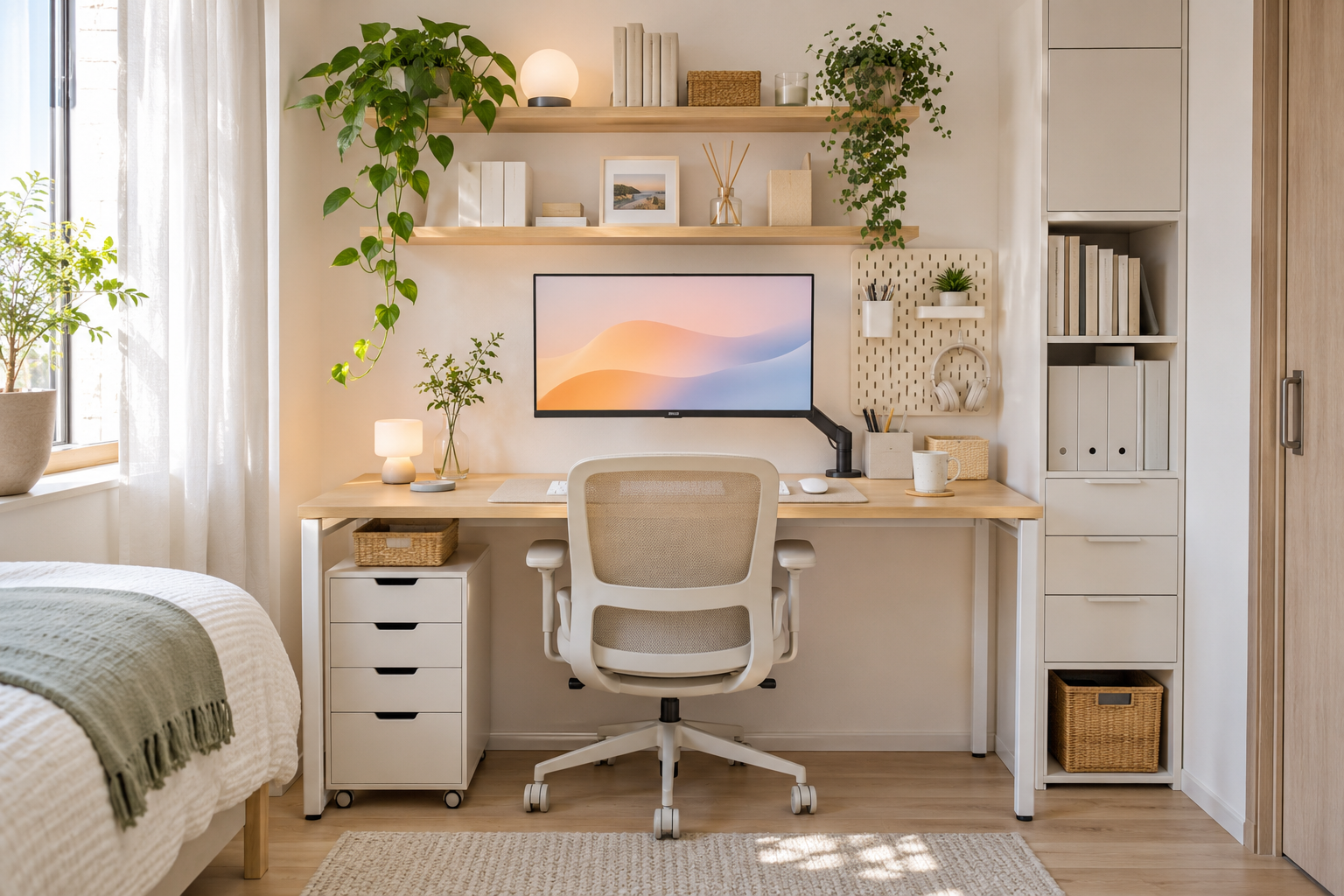
6. Check the window and lamp at the time you work
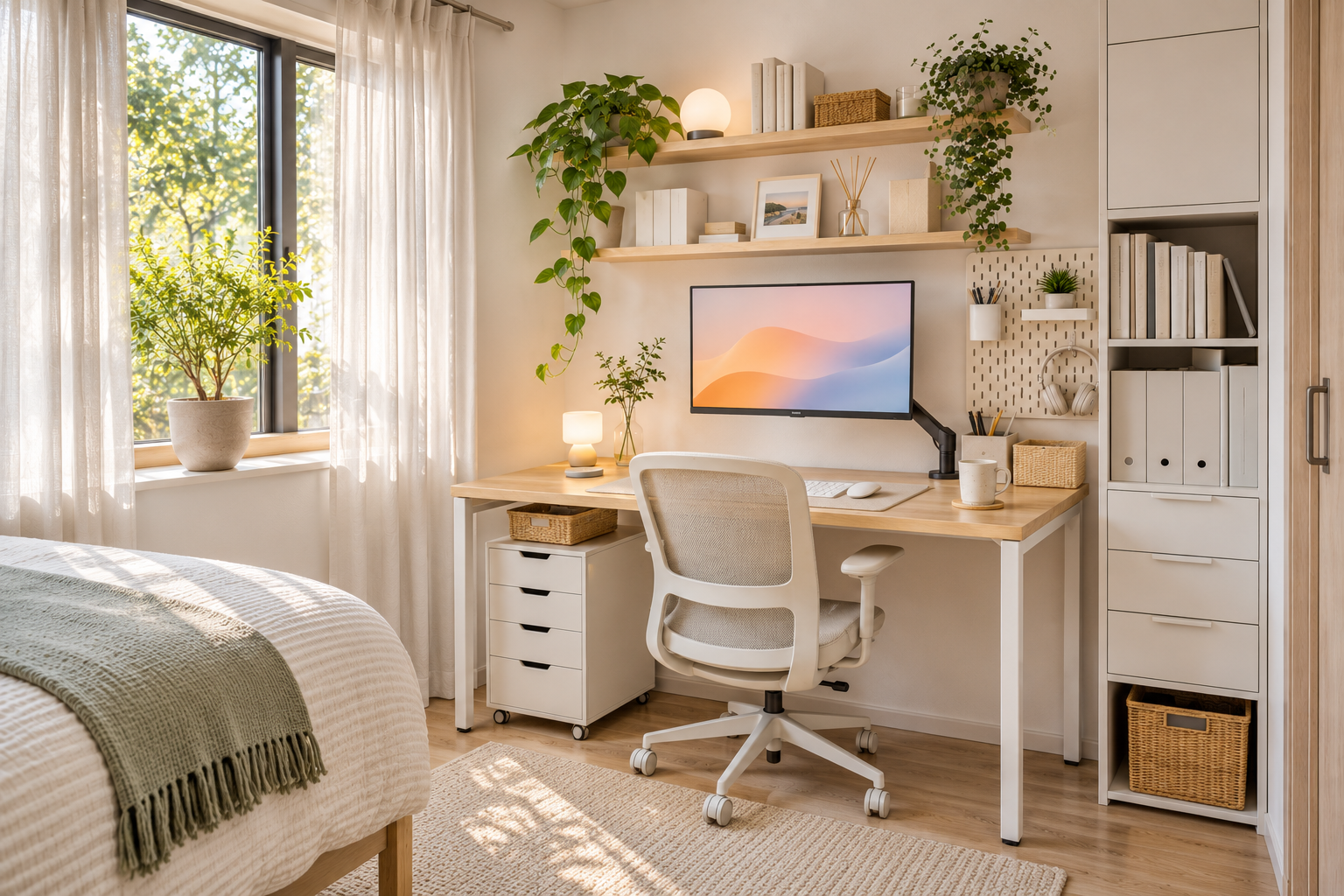
The light through the curtain looks gentle, but the screen may tell a different story. Sit down at your usual hour and try the monitor on and off. Look for the outline of the window or direct light in your eyes, then adjust the curtain or screen angle.
Paper may need light from another direction. Write with your usual hand and watch the shadow. The small lamp at the left of the image has no verified brightness or task-light rating.
Open the curtain and window as you normally would. Is the plant in the way? Do you need to shift something to air the room? Keep watering separate from electronics and follow the light and equipment instructions.
Test an arrangement made in daylight again after dark. Try the room and desk lights together and read both screen and paper. Adjust what you have before specifying a new light.
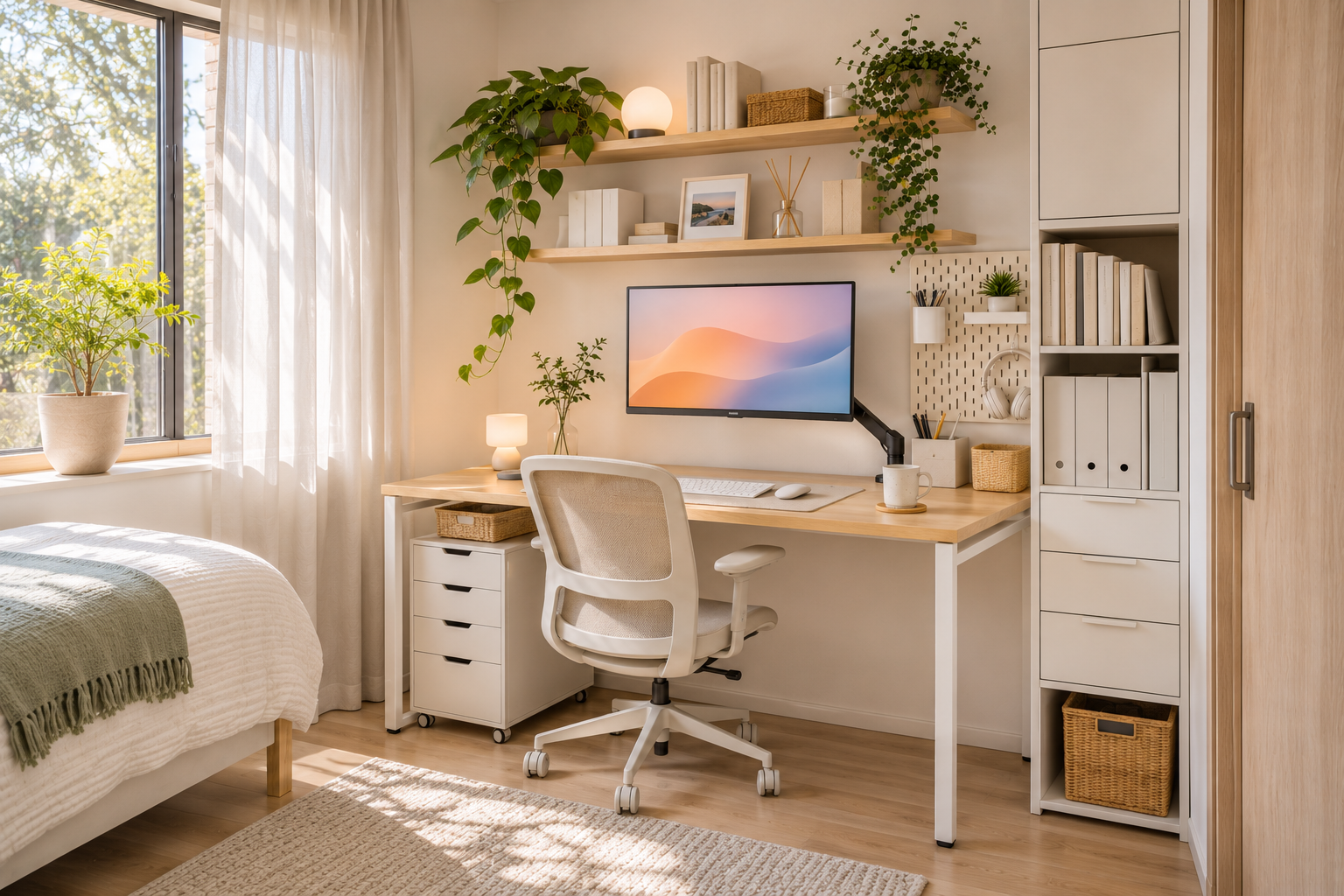
7. Route the cables with the equipment connected and moving
The pictured monitor arm reaches in from the right. Check your monitor mount, desk construction and clearance from the wall before choosing one. Try clearing space around your current base first.
Trace power, display and charging leads to their outlets. Open the drawers, move the chair and swing the monitor. Allow enough slack for those movements and follow the equipment instructions.
Keep daily connectors within reach. A concealed charger that requires pulling out a basket every time needs a different home. Long fixed runs can go underneath while frequently used ends stay near your hand. Keep power devices accessible as directed.
Type, charge a device and fetch something from a drawer. See which cord wanders back to the middle. Give that routine a usable route, separate unused connections, and avoid guessing at settings or connections from the image.
8. Let the things left out show you what to change
After a few days, look for patterns. Do the headphones live beside the keyboard? Are papers collecting under the cup? Where does the favorite pen land? Those are clues about the layout.
Change one thing at a time. Lower the headphone hook, switch the everyday drawer or move the basket. Take an item out and put it back several times before changing anything else.
Only then consider another purchase. List what must fit, the dimensions and a position clear of the door and chair. An empty wall may be better left alone if rearranging the storage already solves the problem.
See how the pale furniture, plants, bed and desk fit together in A pale wood desk along the wall beside the bed. Pick an idea you like, then use the checklist to test it in your room.
CHECK BEFORE YOU FINISH
One last check
Tick off each item once you've checked it at your desk.