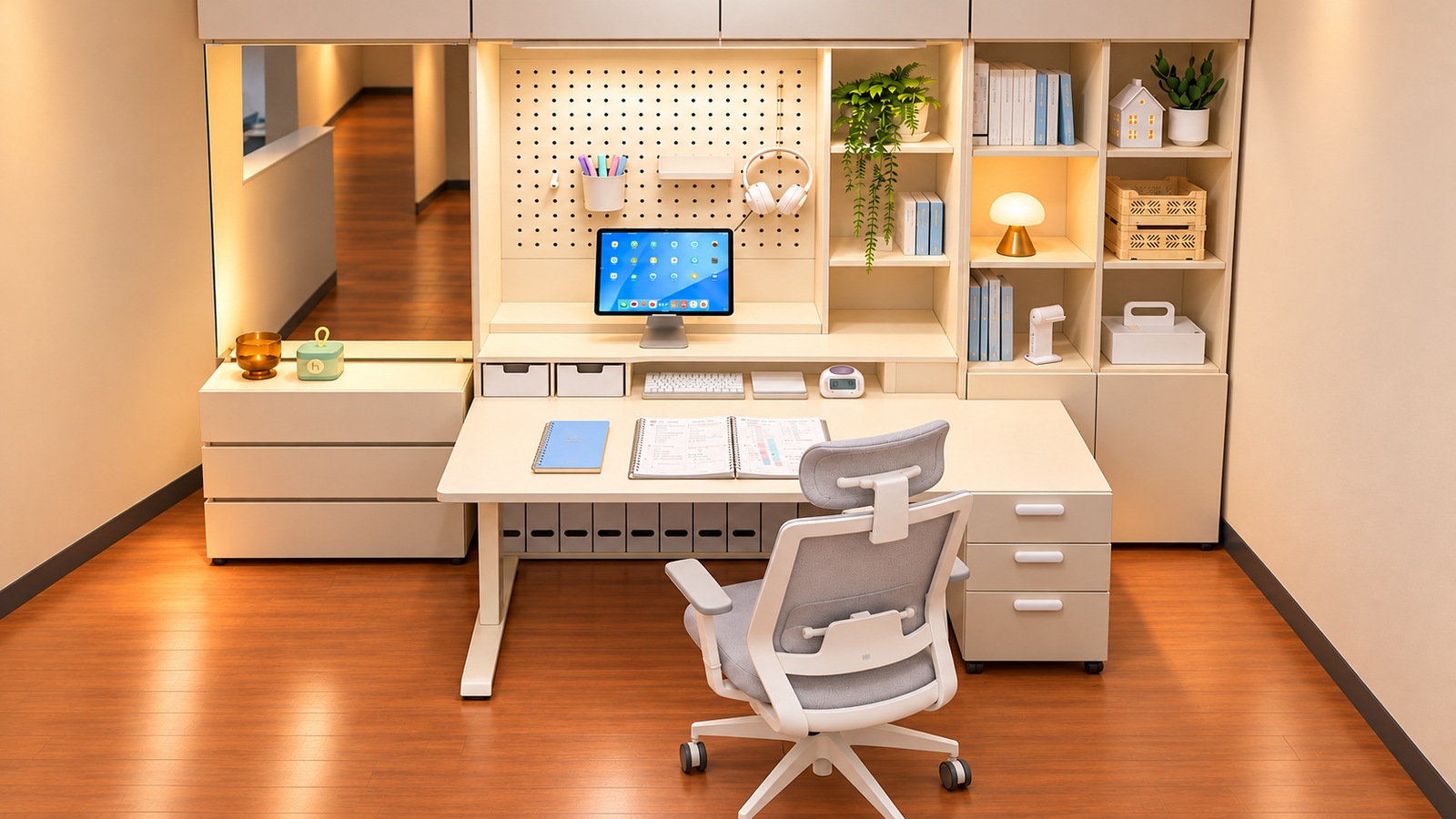
DESK GUIDE / Desk storage
How to Organize a Study Desk: Give Pegboards, Shelves and Drawers Clear Roles
Before buying more containers, separate the surface you work on from the places you store things. This guide walks through assigning everyday tools to a pegboard, books to shelves and small items to drawers, with practical movement checks along the way.
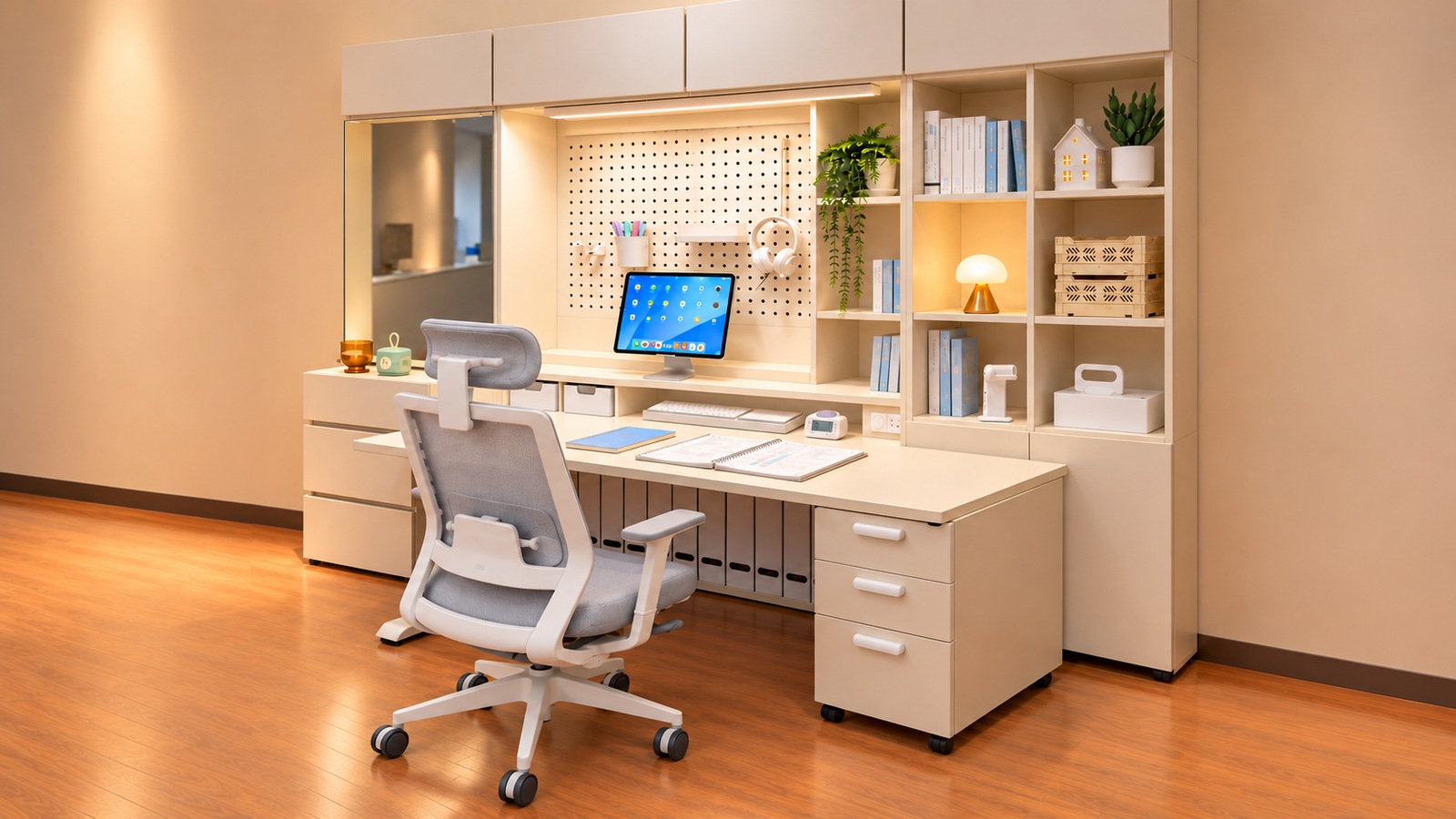
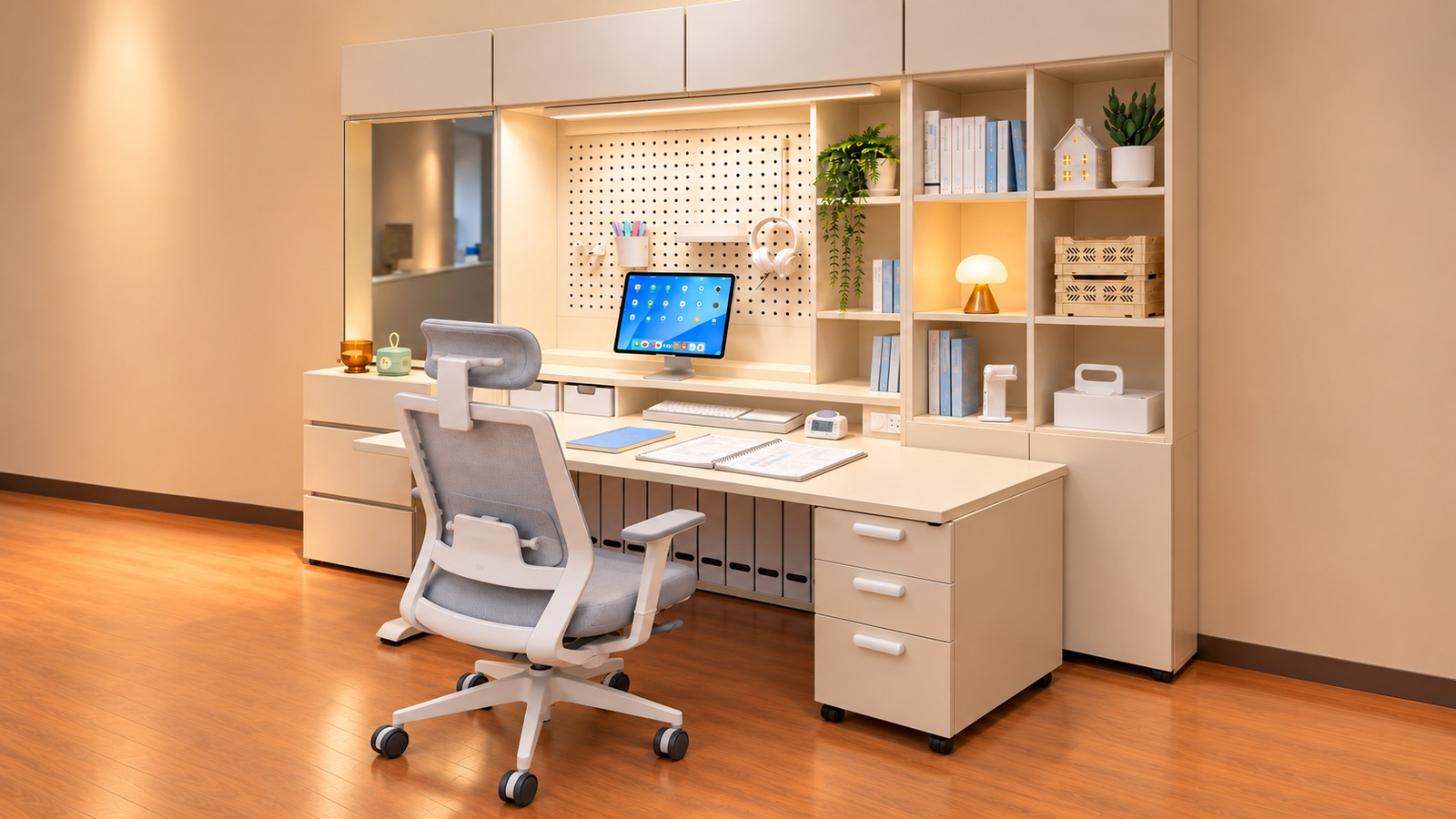
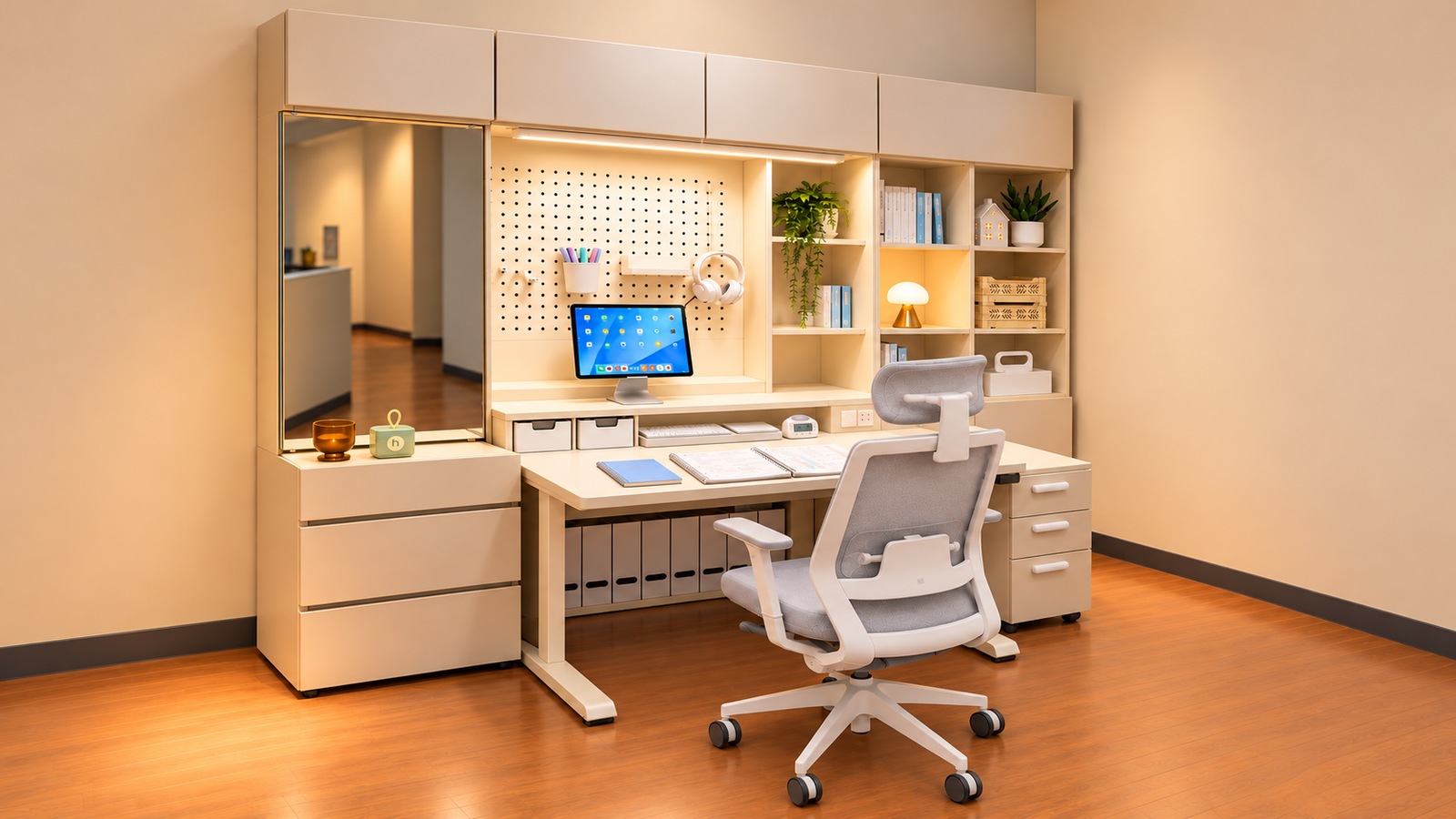
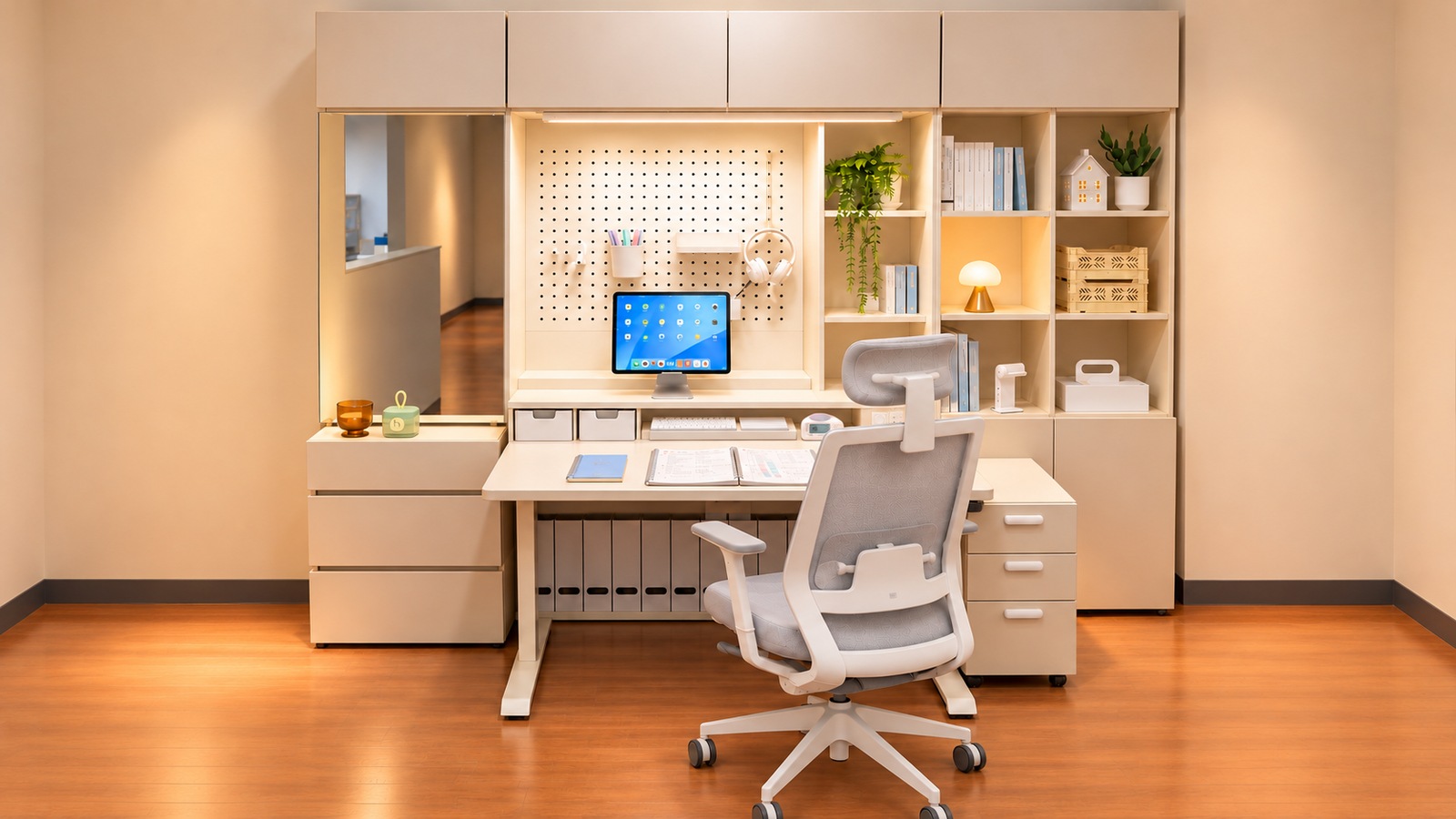
These ideas take the photographed layout as a starting point. Drawer contents and the user’s habits are unknown. Generative tools were used to recompose the supplied photos into landscape 16:9 styling views. They reference the original furniture and arrangement; extended walls and flooring cannot reveal the actual room size.
1. Open the books and notebooks you use together
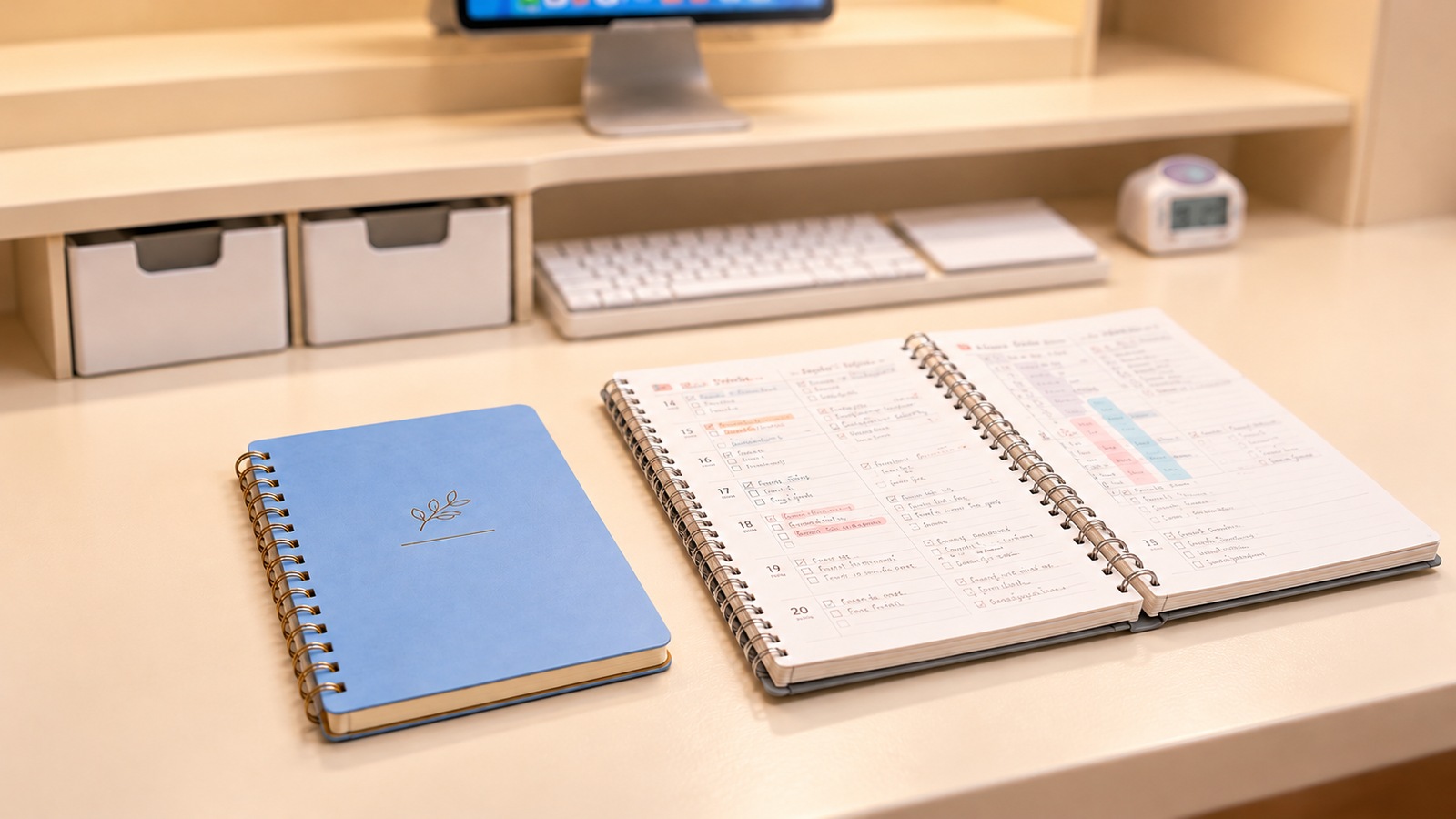
Before sorting objects, lay out the combination that takes the most space during a study session. A textbook, notebook and tablet used together need more room than one closed book. Allow for turning pages and moving your hands as well.
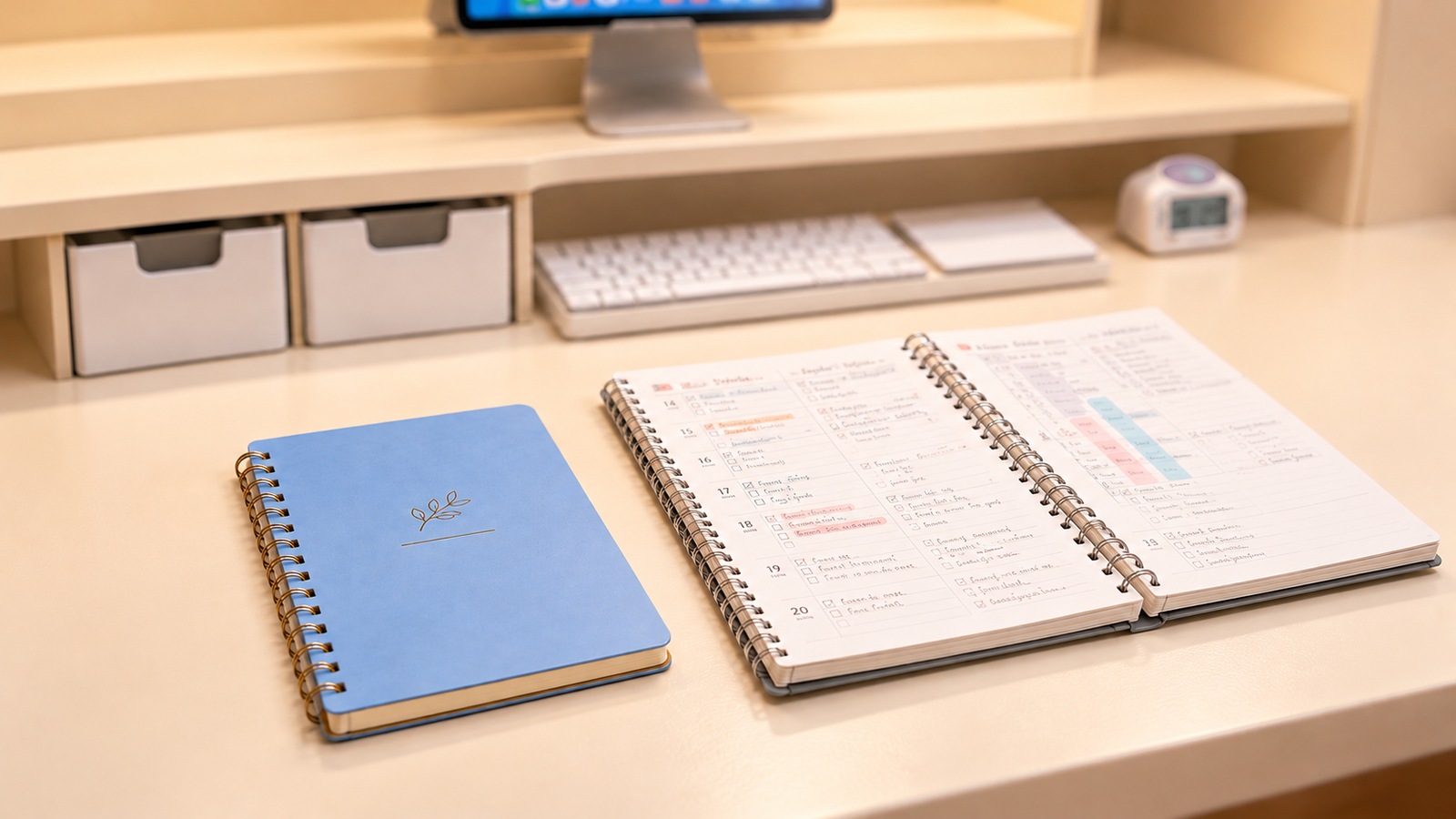
In the photo, an open planner sits in the center with a blue notebook beside it. If storage boxes take that area first, you will still need to move things every time you start studying. Define the working area before finding homes for everything else.
2. Move only frequently used small tools to the pegboard
Do not choose items simply to fill the holes. Start with tools you reach for often on the desktop, such as a few pens and headphones. Distinctive objects with clear positions also make it easy to notice an empty spot.
Take each tool down and hang it back up while seated. Adjust the height and spacing if your hand meets the screen or a shelf. Check hole shapes, hooks, mounting surface and fixings against product instructions. Do not assume accessories for the pictured board and the linked alternative are interchangeable.