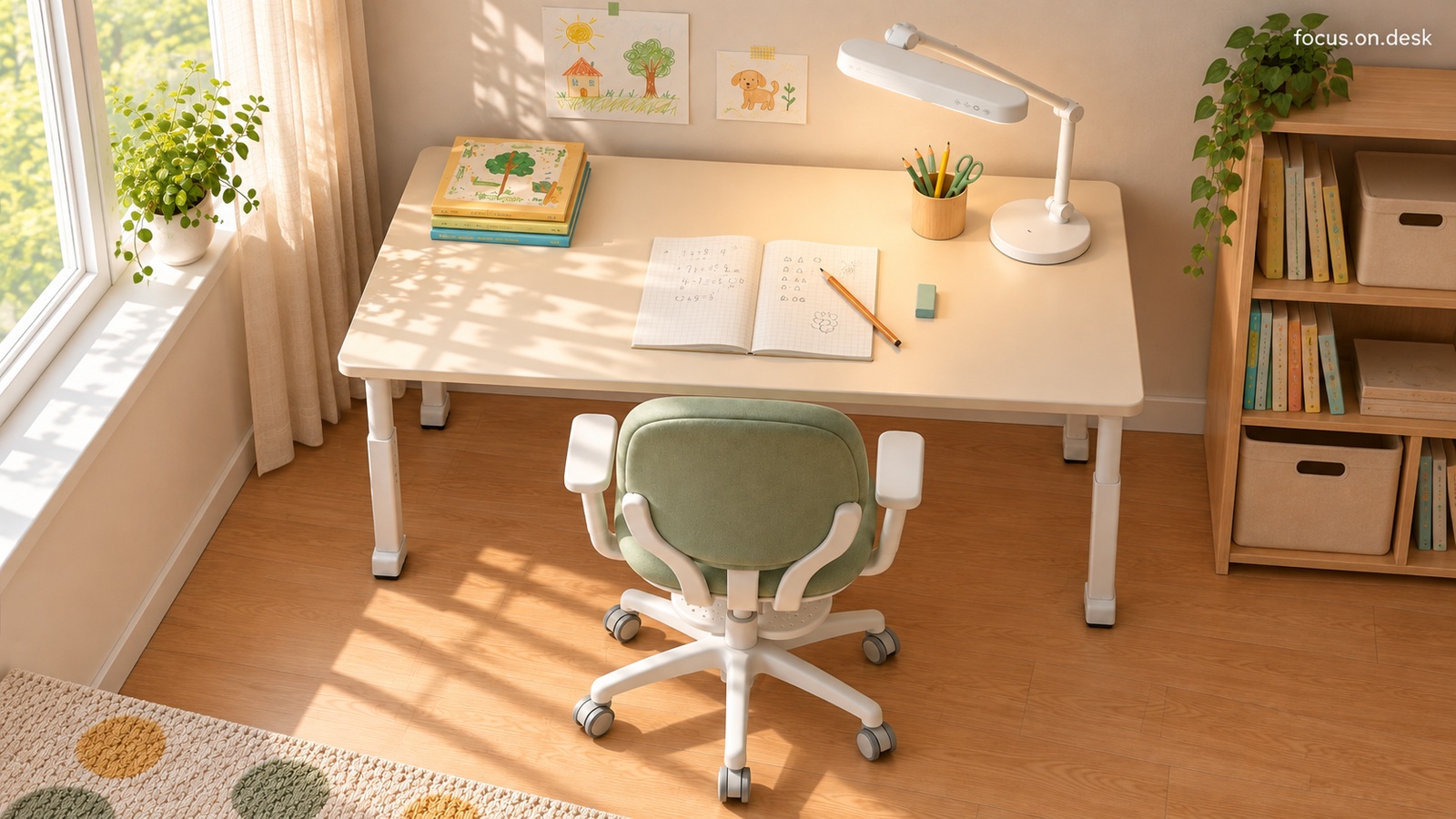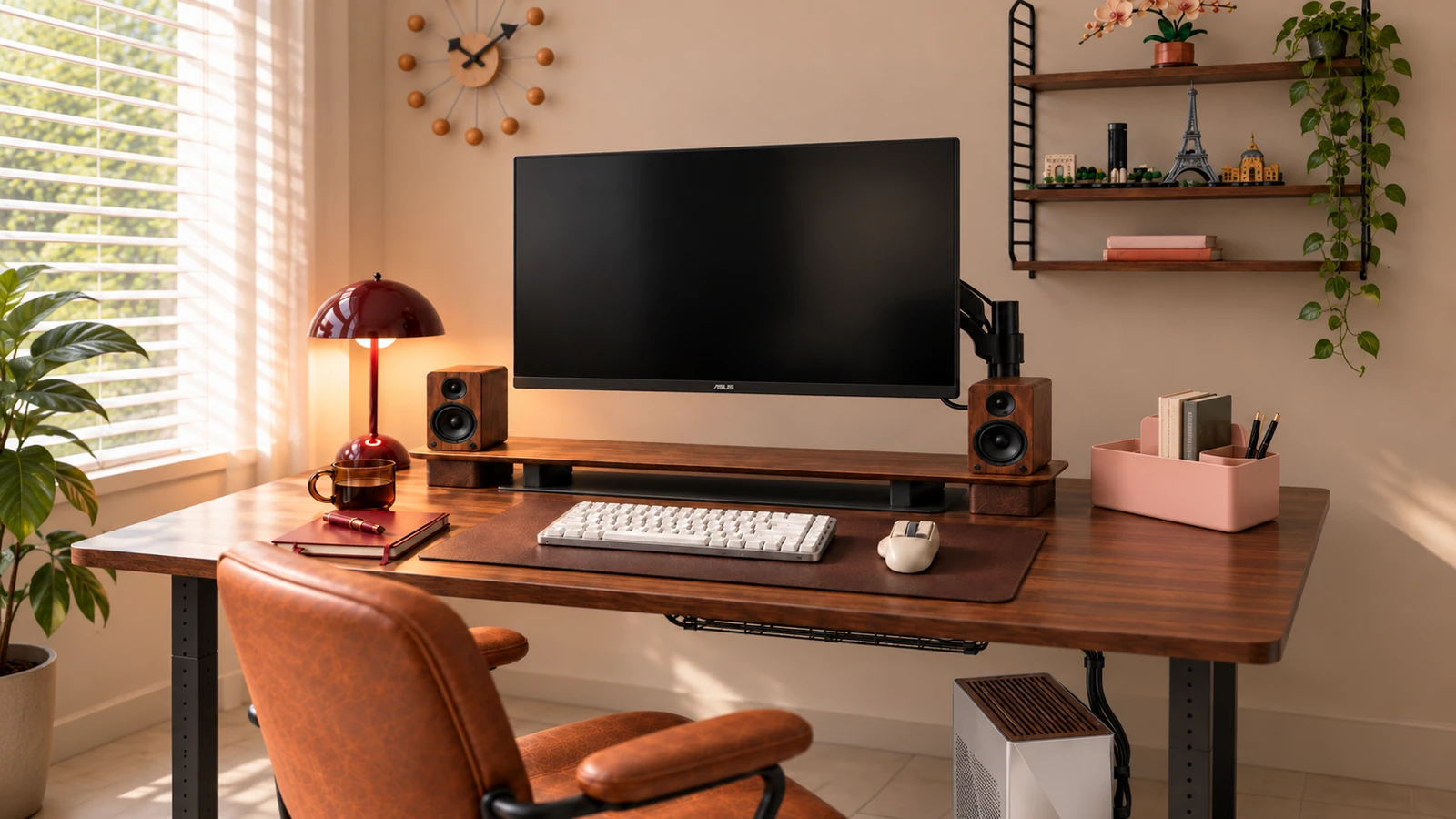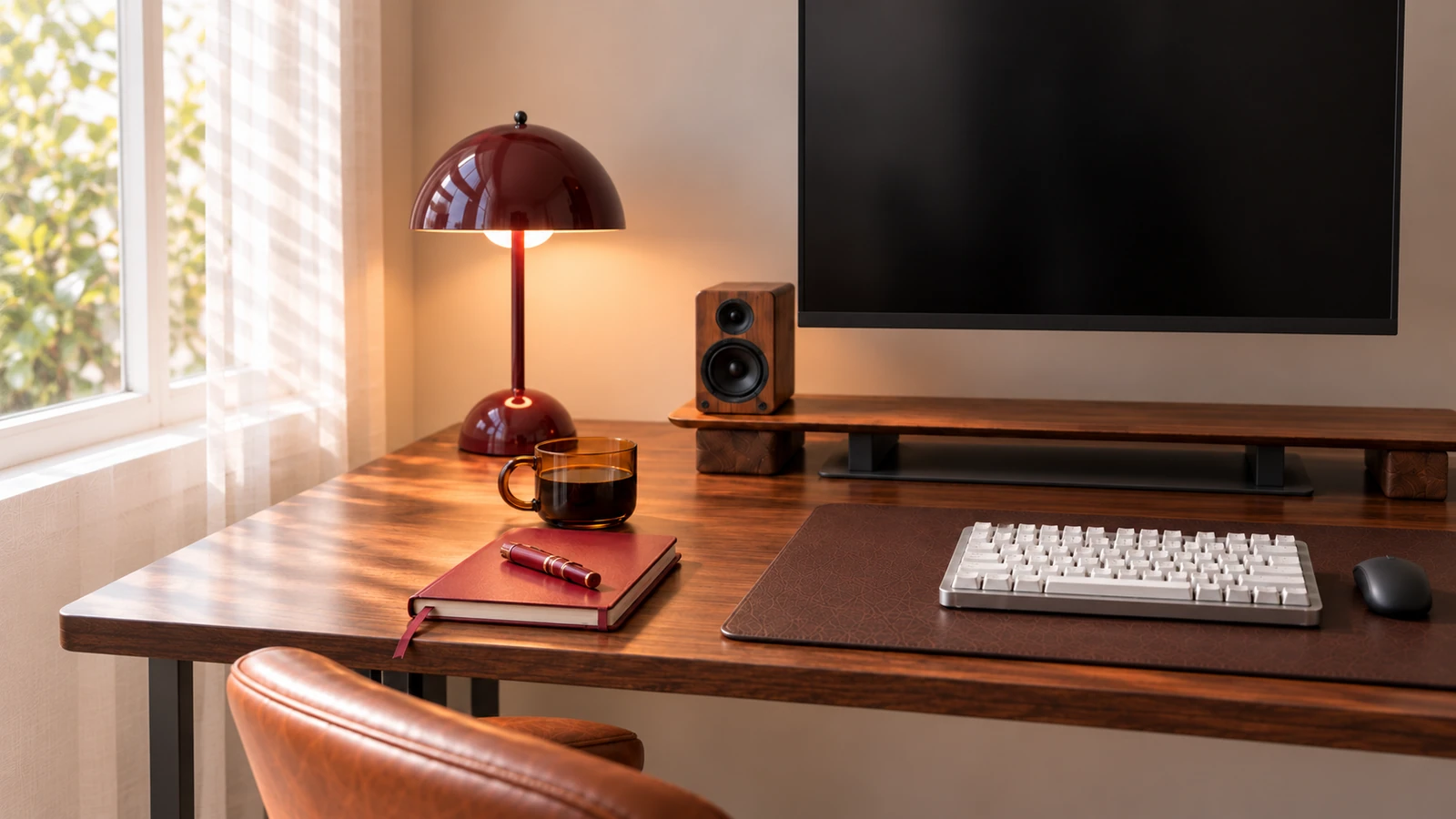
DESK GUIDE / placement
Criteria for determining desk location in a small room
Are you worried about screen reflections or the passage behind your chair after moving your desk in a small room? Don't just decide on the length of the blank wall, but also look at the opening range of windows, outlets, and doors. This is the order of sitting down and comparing during actual work time.
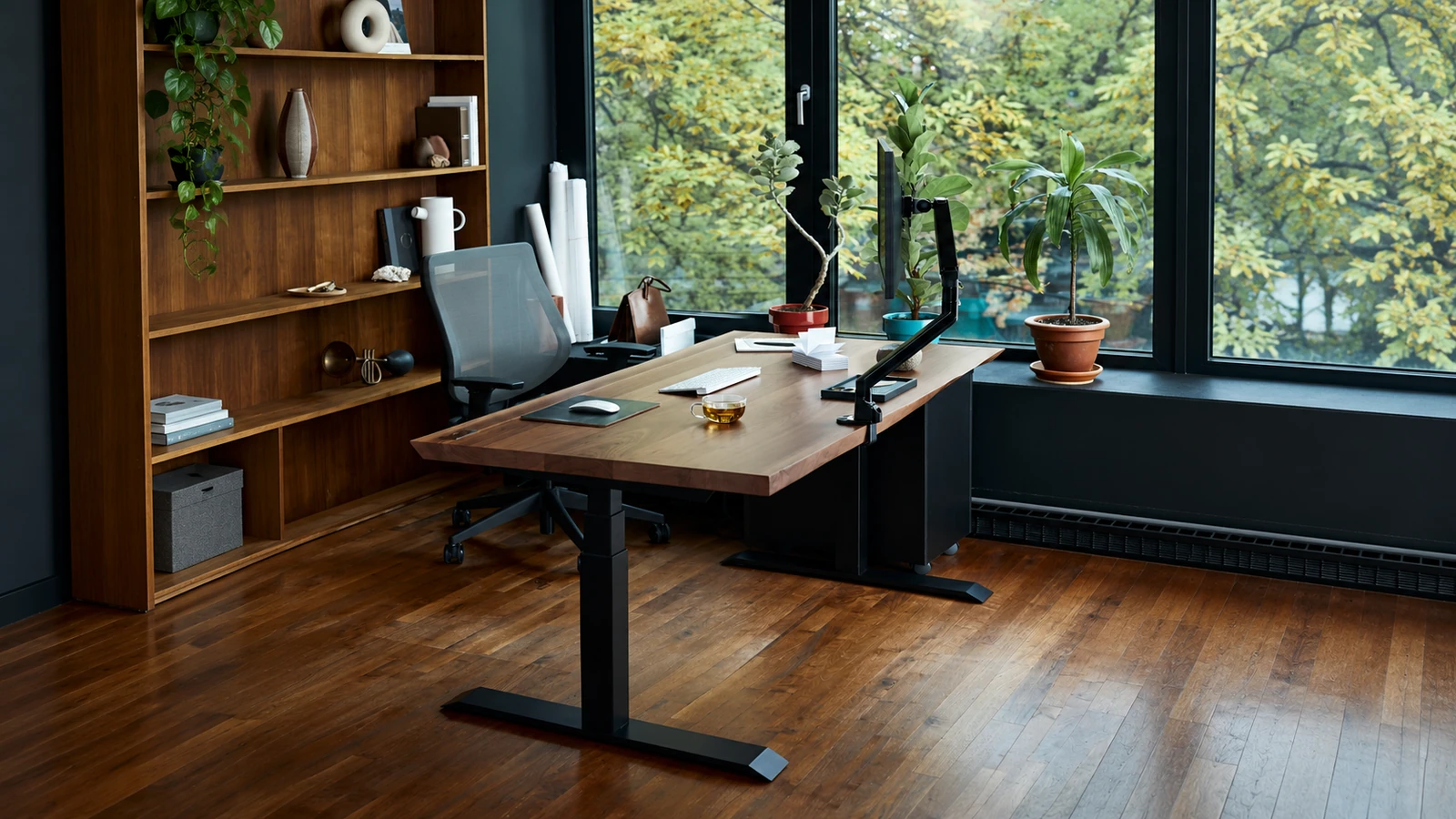
The space, furniture, and product details of the expanded area may differ from the actual appearance, so please look at it as a layout idea.
Start by drawing the scene of use rather than the appearance of the desk.
Even if the blank wall is longer than the width of the desk, there may not be enough space to remove a chair or open a drawer. Mark the positions of desks and chairs on the floor, and check your daily movements as you sit down and stand up. You should also look at the opening range of the door and cabinet door.
The required depth may be different when using only a laptop and when placing an external monitor. Please estimate the space based on the items you normally use, including the keyboard, mouse, and open notebook.
Windows and screens are compared to actual work time.
Notice how the screen reflection and the light entering your field of view change when you turn your back to the window or face it directly. You can also compare how to turn the window so that it is next to the screen and adjust the curtains.
Just because you like a daytime photo doesn't mean the same conditions apply in the evening. Turn on the screen and read the text during the time you normally work. If reflections bother you, you can try changing the screen angle or light blocking method before moving the entire desk.