DESK GUIDE / Wood desk setups
How to Style a Wood Desk: Brown Seating, Warm Lighting and a Coordinated PC
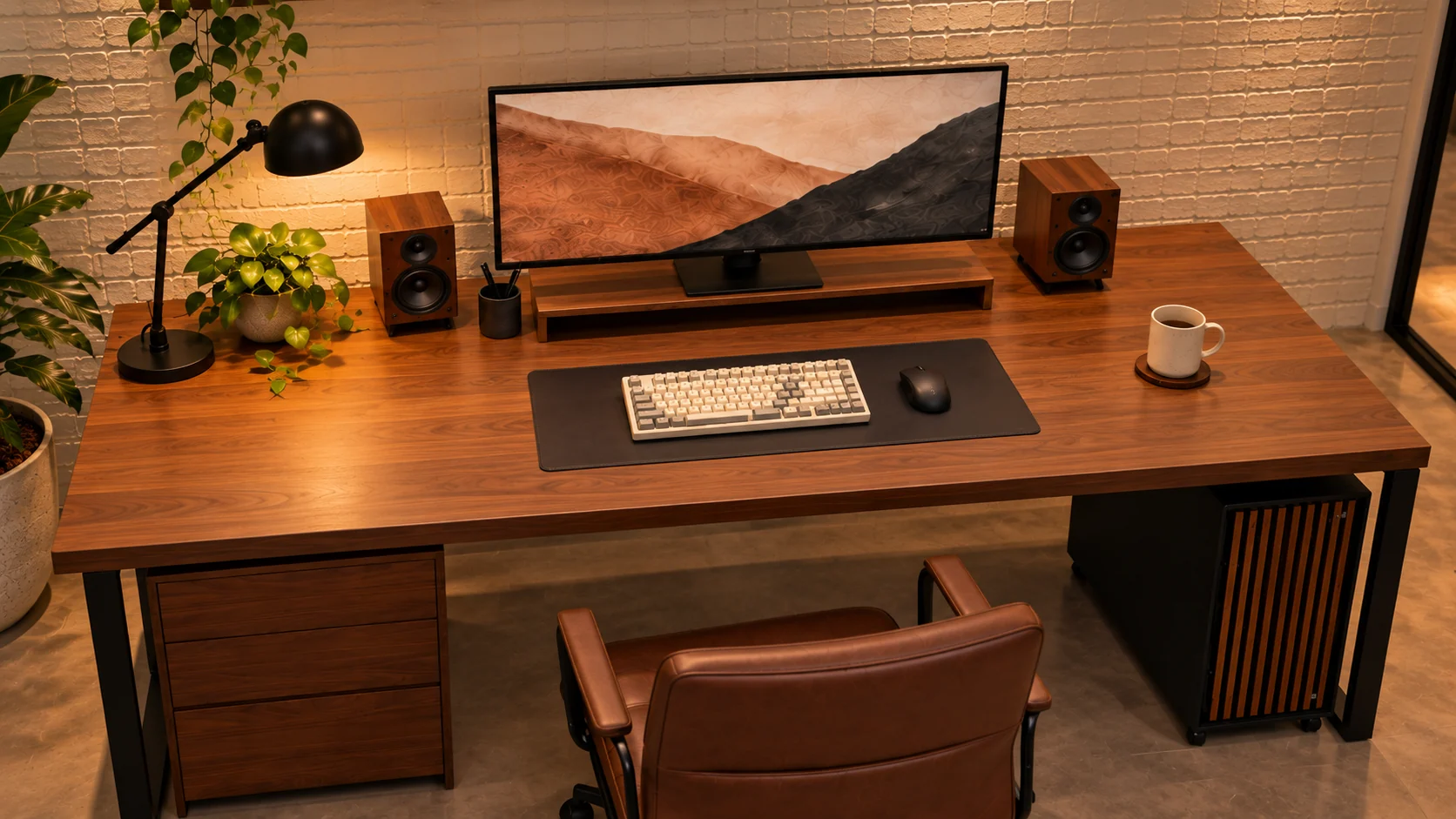
A cohesive wood desk setup depends on how surrounding materials and light work together, not just the color of the desk. Using a dark wood desk against white brick as a reference, this guide explores brown seating, lighting, monitors, speakers and PC placement, then adapts the ideas for a smaller room.
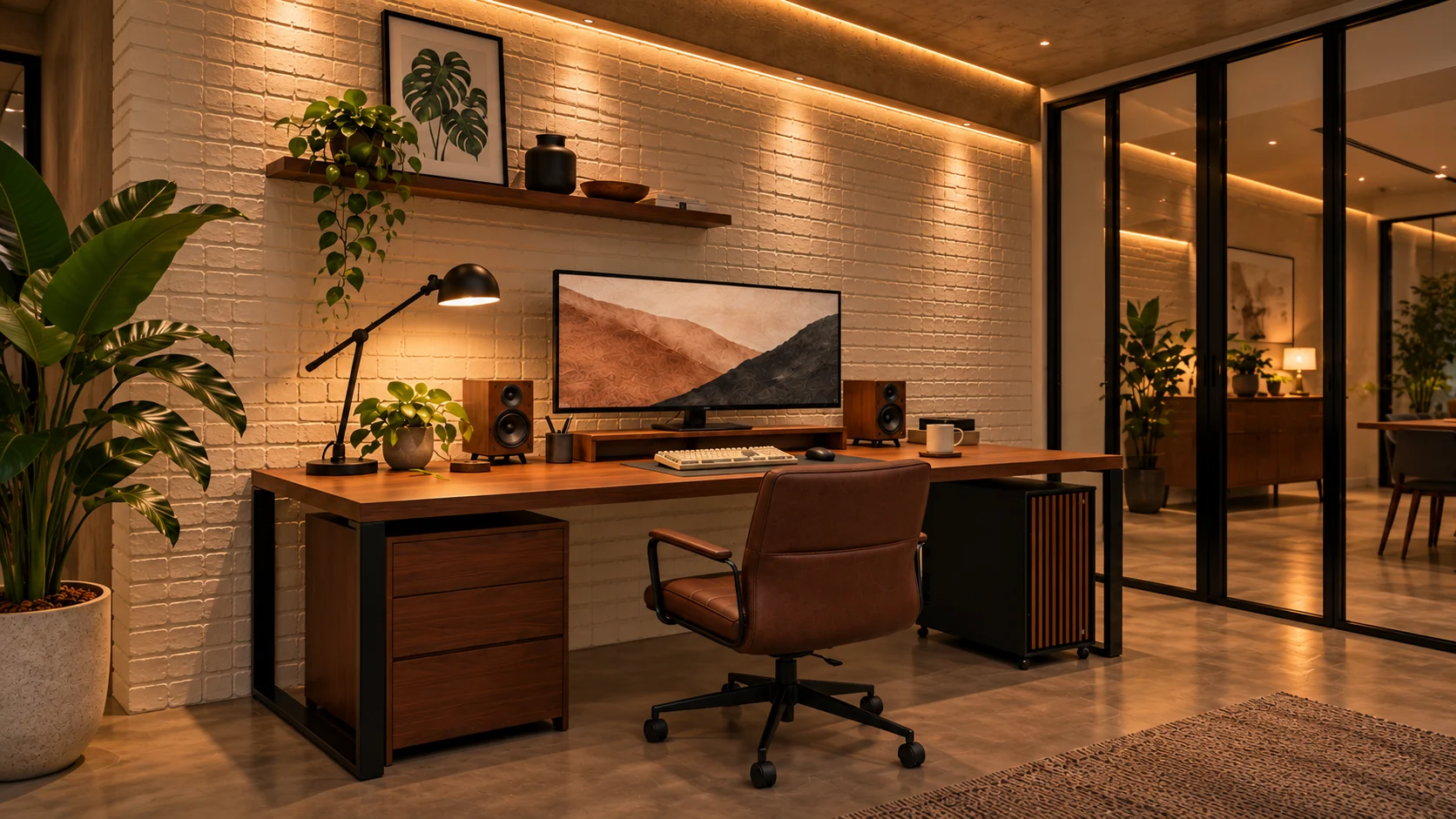
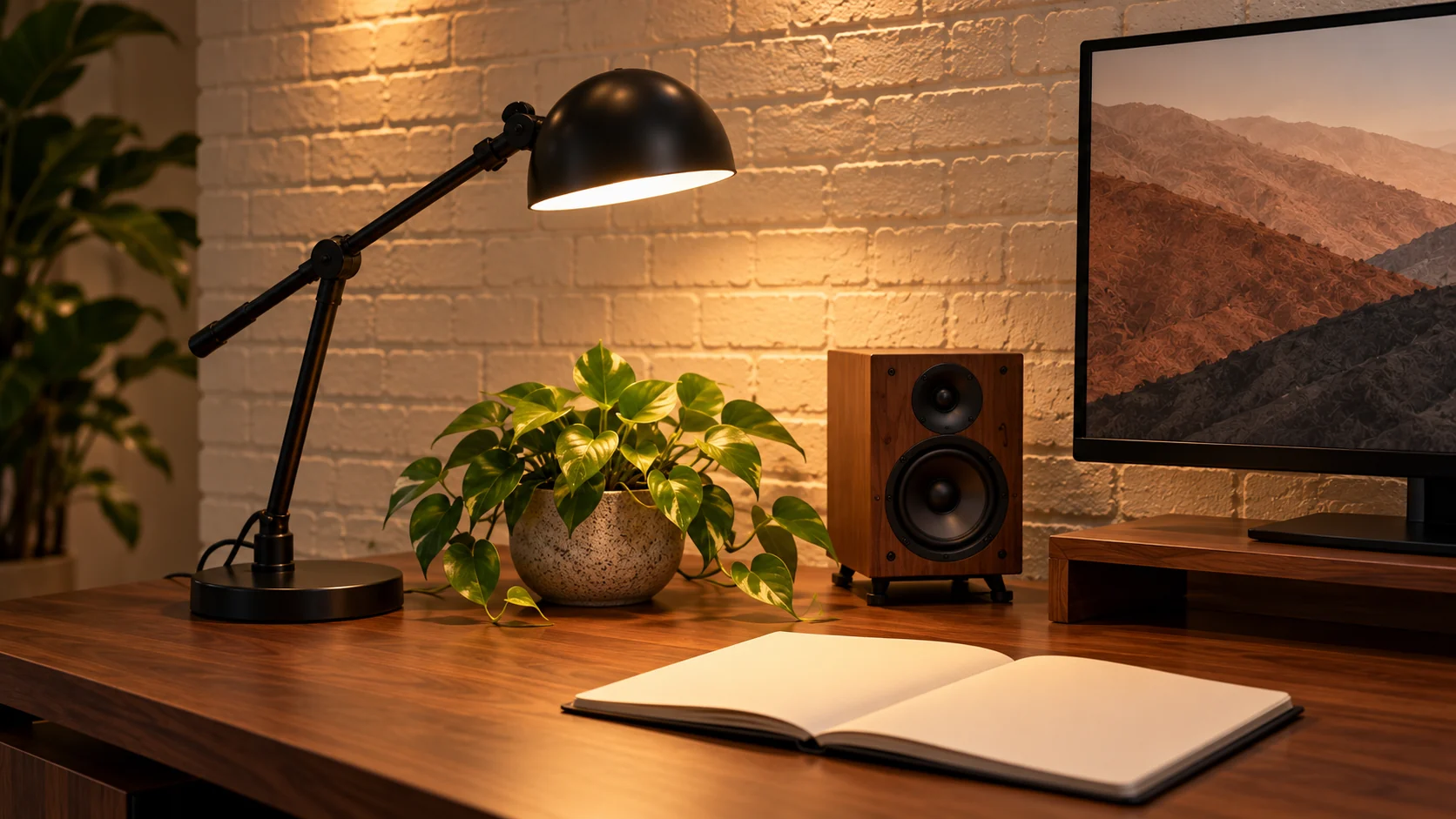
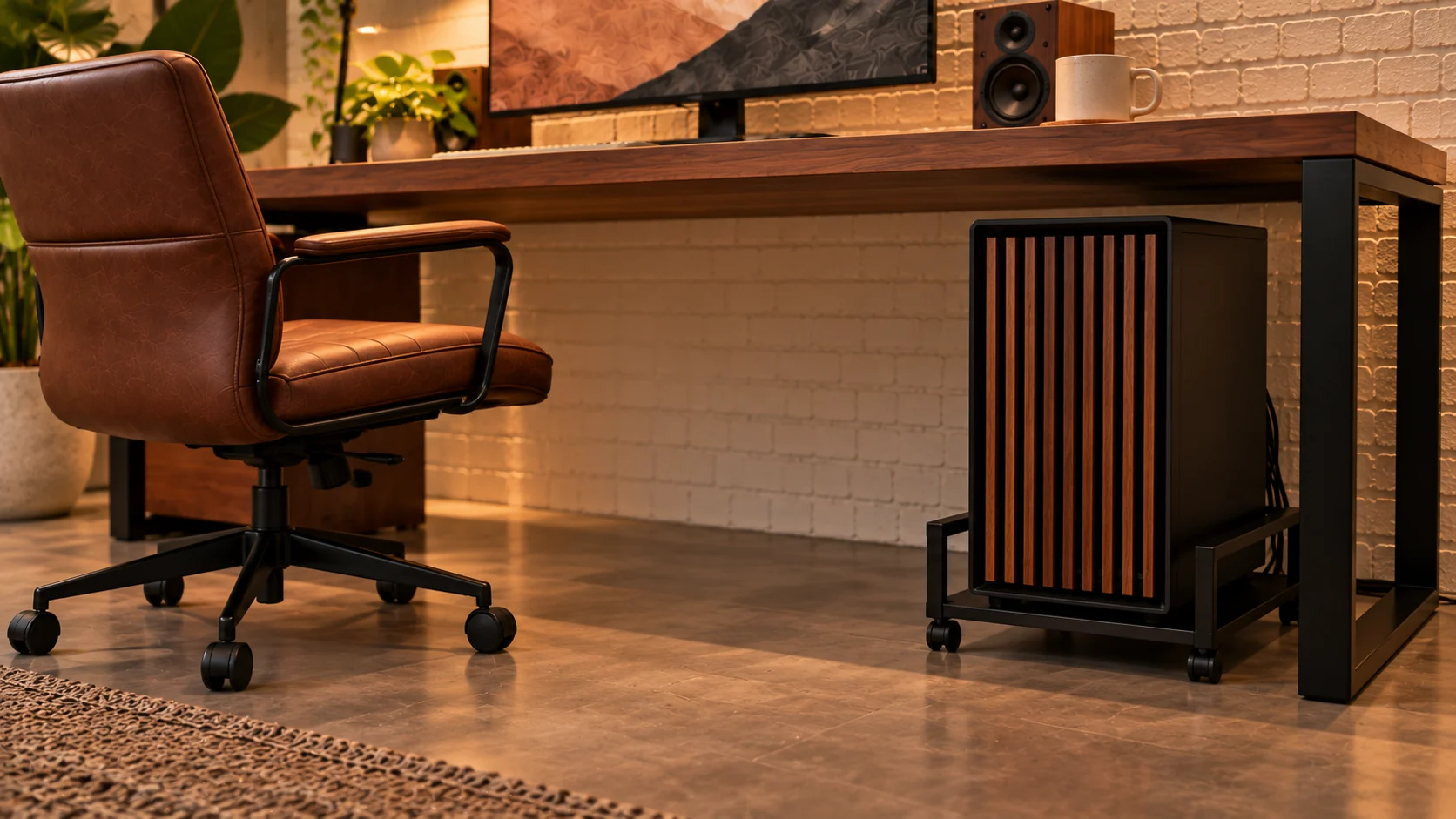
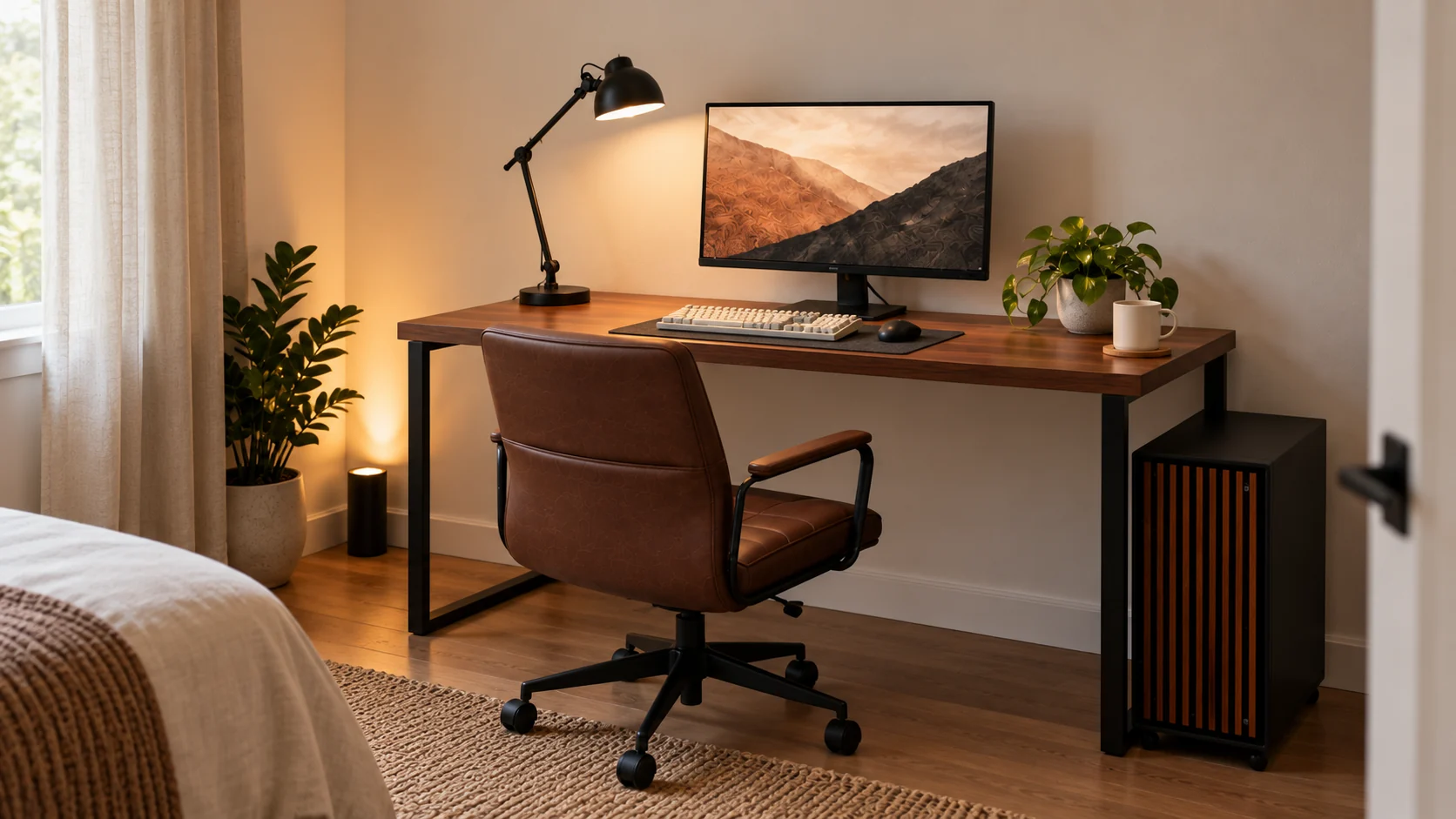
The broad wood desktop anchors the scene. Black frames define the furniture, while a brown chair carries its warmth downward. White brick and cream input devices leave lighter surfaces between the darker pieces. Start by assigning these roles to your own belongings rather than trying to acquire every pictured item.
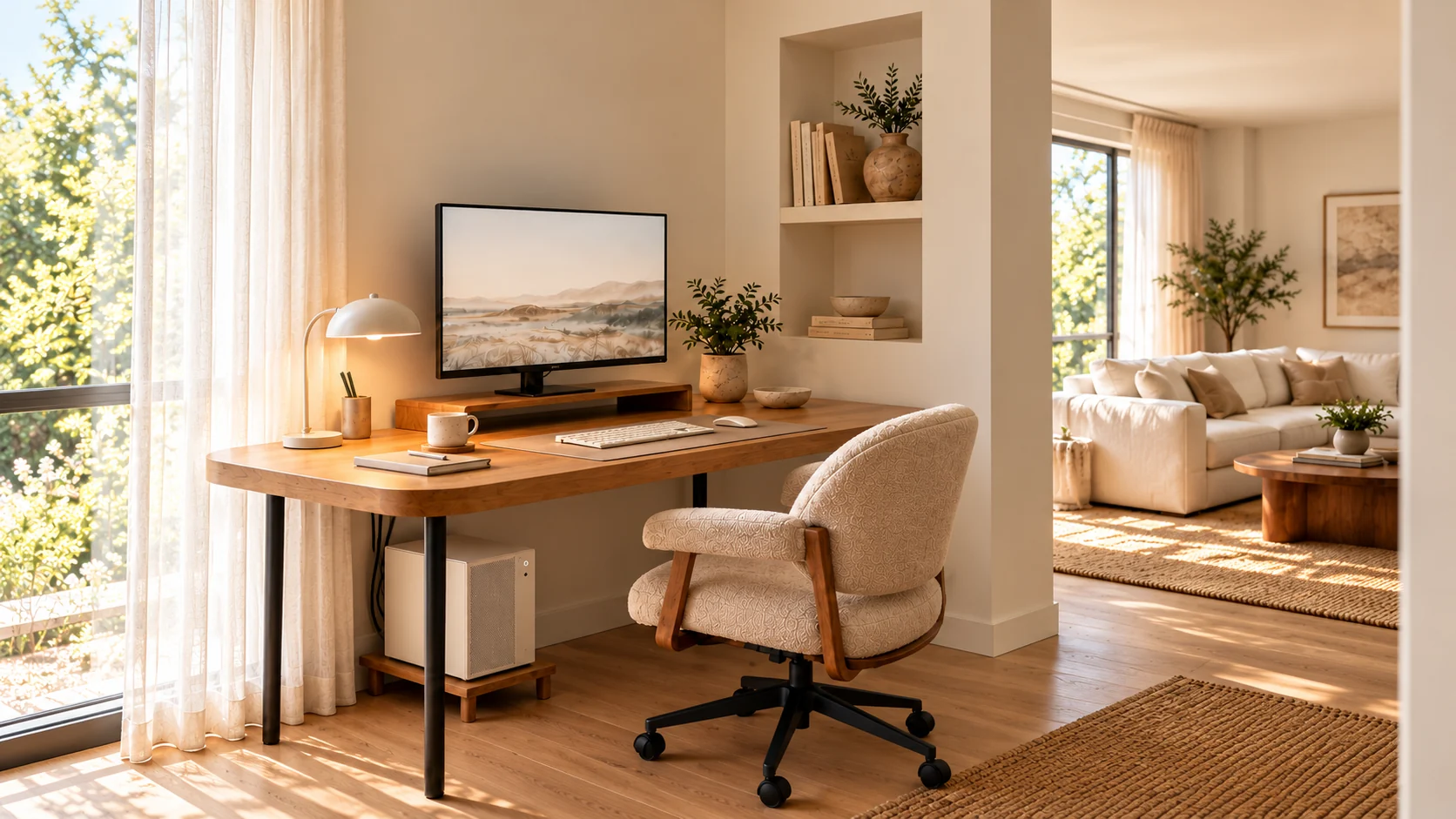
The images are newly created AI styling examples based on the supplied focus.on.desk reference material. The small-room image is a separate adaptation. They do not document actual room dimensions or establish the exact models, materials or performance of pictured products.
Give wood, brown and black different proportions
Stand in front of the desk and identify the largest visible surfaces. Here, the desktop and wall form the backdrop, the chair is a substantial shape in front, and black legs and lighting appear as slimmer lines. Rather than adding wood, brown and black in equal amounts, give each a different position and scale so the focal point remains clear.
If you already own a dark wood desk, compare its tone with any new riser or storage unit. Whenever possible, examine a sample or the real product beside the desk instead of relying only on online photos. Reddish, yellowish and grayish browns give different impressions. Wood grain need not match exactly, but a broad top and long shelf in strongly contrasting tones will both demand attention. Choose a quieter tone for one, or reduce the shelf’s visual area.
A brown chair need not be precisely the same color as the top. A slightly lighter chair makes the distinction between wood and upholstery clearer; a darker one adds visual weight. Repeating black in the desk legs, chair arms and lamp can connect those different materials across the room.
If the darker furniture feels heavy, decide where light surfaces can remain. Use an existing white wall or pale curtain as the backdrop, then repeat cream in a small object such as a keyboard or mug. You do not need a new brick wall to borrow this relationship. Before adding another color, try a smaller black mat to reveal more wood grain.
Take photos from the same position in daylight and after dark. Switching on the lights changes both the wood and the white wall. The aim is to find a combination that works during the hours you actually use the desk, not just in one photograph.